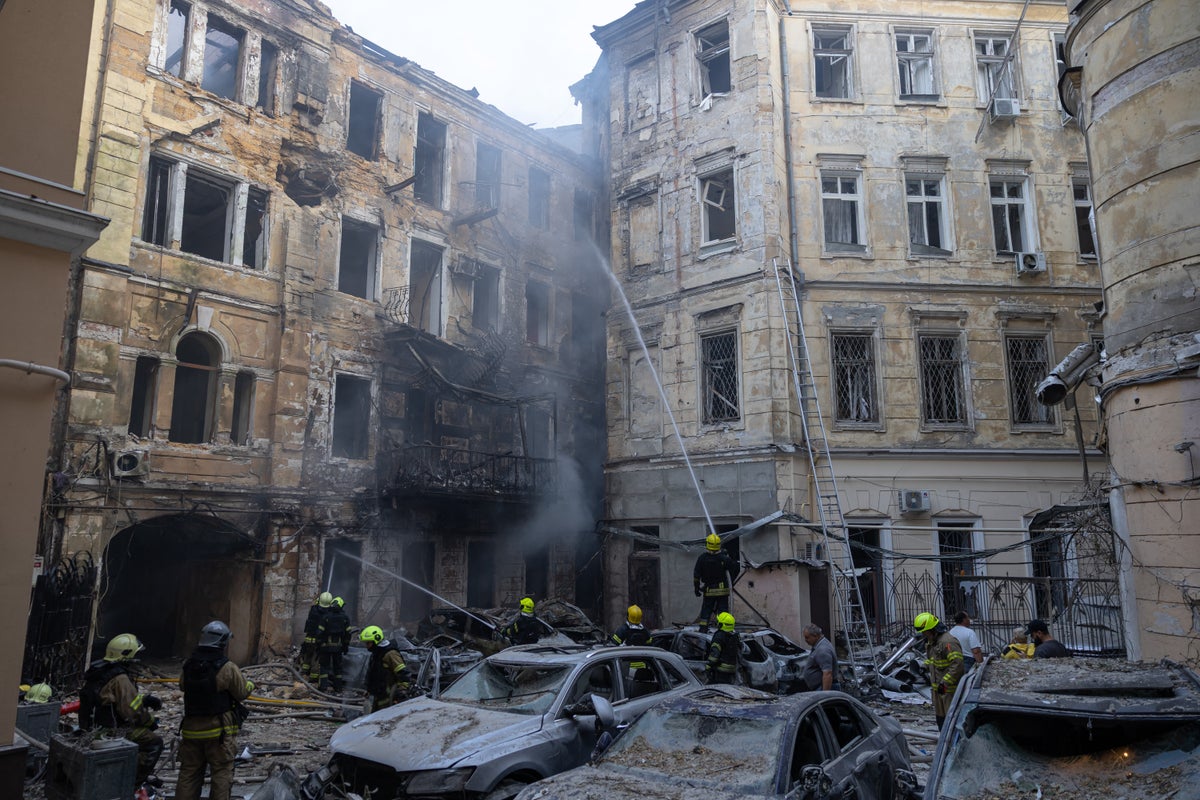
Air raid sirens don't just signal incoming danger anymore. They mark a grim rhythm of escalation that keeps reshaping the ground reality of the Ukraine war. When a Russian strike targeted and flattened a World Health Organization humanitarian warehouse in Dnipro, it wasn't just another concrete building reduced to rubble. It exposed a brutal shift in targeting logistics that directly threaten civilian survival.
Let's look at what actually happened on the ground. WHO Director-General Tedros Adhanom Ghebreyesus confirmed that the facility stored critical medical supplies meant for frontline hospitals. Lives were miraculously spared only because staff managed to evacuate a fraction of the pallets just hours before the impact. But the message sent by the strike remains loud and clear. Civilian infrastructure continues to absorb the brunt of a grinding war of attrition.
The Logistics War Nobody Talks About
You rarely hear about warehouses on the evening news unless they burn. Yet, supply chains dictate the pulse of this entire conflict. Russia has ramped up systematic assaults on civilian storage hubs, commercial distribution networks, and industrial depots.
Think about the sheer scale of destruction over the past few weeks. Facilities belonging to major commercial and industrial partners—including logistics sites linked to Bosch, Intertop, and Puma—have turned into smoking craters following heavy missile and drone bombardments. Kyiv and surrounding regions absorbed massive ballistic barrages that crippled civilian distribution networks.
When you destroy a commercial warehouse or a retail hub, you break the everyday economic lifeline of millions. When you strike a medical depot operated by the United Nations, you strip emergency care away from wounded civilians and front-line medics who rely on those shipments to stop people from bleeding out.
Why International Condemnation Keeps Failing
Leaders are shouting into the wind. Demands that Moscow "must stop" sound hollow when diplomatic pressure yields zero behavioral change on the battlefield.
International humanitarian law explicitly protects medical facilities, relief operations, and warehouses supplying aid. Ignoring these protections has become routine. The Kremlin views every piece of infrastructure—commercial, industrial, or humanitarian—as a legitimate node in an interconnected enemy state.
Ukraine isn't standing idle, either. Kyiv has pushed its own asymmetric retaliation deep into Russian territory, targeting logistics hubs and major retail distribution networks like Wildberries to choke off supply lines feeding the invasion. Both sides are locked in a relentless contest to see whose infrastructure collapses first.
What This Means for the Months Ahead
The destruction of medical and humanitarian assets guarantees a harsher winter for millions of Ukrainians. Hospitals near active combat zones operate on razor-thin margins. Losing localized stockpiles forces emergency responders to rely on erratic, dangerous transit corridors just to secure basic pharmaceuticals and trauma kits.
If you're following this conflict, stop looking solely at troop movements on a static frontline map. The real war is being fought in the warehouses, the supply depots, and the logistics networks that sustain an entire country. Until those hubs receive actual, enforceable protection—or the strikes on non-combat targets face immediate consequences—the humanitarian crisis will only deepen.
Ukrainian drone strikes hit Russian logistics and warehouses
This video provides an inside look at how targeted strikes on supply hubs and warehouses are actively shaping the logistics battle on both sides of the conflict.
http://googleusercontent.com/youtube_content/1