Look past the official diplomatic ambiguity. Defense Minister Wellington Koo recently dropped a reality check for anyone tracking East Asian security, noting that Taiwan and US military cooperation runs far deeper than public perception suggests.
Beijing hates it. Taipei leans into it. Washington coordinates behind the scenes.
If you think ties are limited to occasional arms sales, you are missing the entire architecture of modern Indo-Pacific deterrence. The real action happens through constant operational integration with the US Pacific Command.
The Mechanics of First Island Chain Defense
Geography dictates strategy. Taiwan sits right at the midpoint of the First Island Chain, stretching cleanly from Japan down through the Philippines. Lose Taiwan, and the entire defensive perimeter of the Western Pacific cracks open.
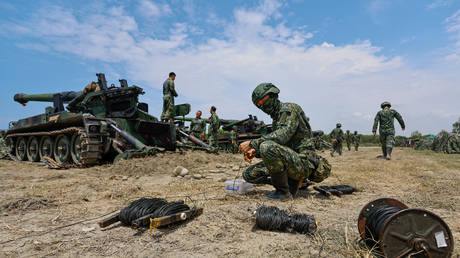
That is why the US Indo-Pacific Command treats defense coordination as an ongoing, multi-layered necessity rather than an abstract diplomatic concept. Wellington Koo pointed out that these military exchanges span multiple levels. They are actively upgrading defensive combat readiness, sharing intelligence concepts, and aligning tactical doctrines.
Troops aren't just running isolated drills. They are building a shared understanding of how regional defense actually functions under pressure.
Breaking Down the Blockade Calculus
China constantly turns up the heat. Coast guard operations near Taiwan's Pacific coastline have become routine, designed to test response times and choke off wartime supply routes. Taipei watches these zones closely because the eastern coast remains a lifeline for external support.
Yet, executing a full maritime blockade is a massive gamble for Beijing. Analysts often talk about naval power, but they ignore economic fragility. A blockade invites heavy international sanctions immediately. China depends heavily on external trade and open global shipping lanes to keep its economy afloat.
Choking off the Taiwan Strait doesn't just squeeze Taipei. It triggers a self-inflicted economic wound in a domestic climate already fighting structural slowdowns.
Political Risks at the Top
Xi Jinping faces severe domestic exposure if a major maritime escalation backfires. Dictatorships hate uncertainty. When you launch a high-stakes military maneuver that threatens global commerce, you invite unpredictable economic shockwaves.
If international sanctions bite hard enough, regime stability takes a direct hit. Taiwan's defense strategy relies on making the math of an invasion or blockade look entirely unviable. By tightening cooperation with American forces, Taipei wants Beijing to calculate that the price of aggression is simply too high to pay.
The partnership is quiet, persistent, and entirely focused on changing how Beijing evaluates risk. Keep your eyes on the Pacific Command coordination lines, because that is where the real deterrence is built every single day.