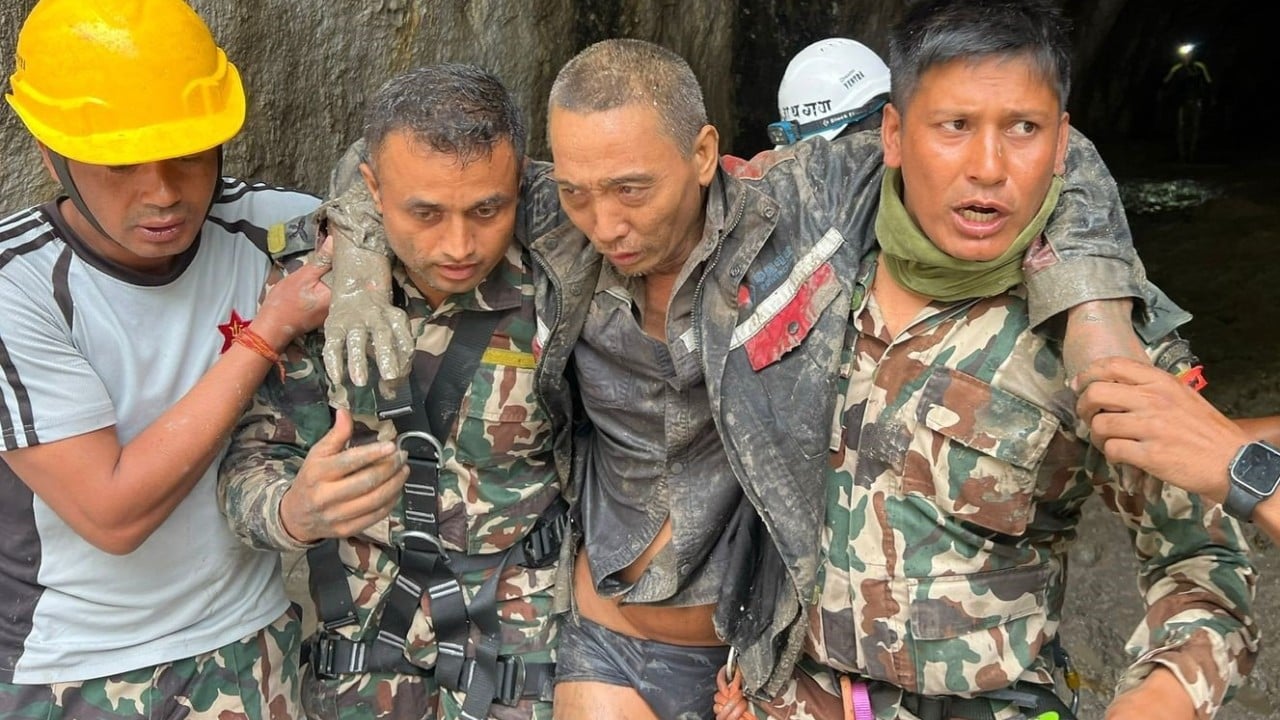
Ten days underground feels like a lifetime. When catastrophic flash floods and mudslides tore through Nepal on August 26, slamming into communities and hydro infrastructure along the border, hope faded fast. Over 1,300 people died. Thousands vanished. Yet, miracles still happen in the darkest places.
Rescuers pulled a Chinese national named Lu Haitao and a 64-year-old Nepali woman named Chandra Shrestha alive ten days after the disaster. Their survival defies conventional wisdom about how long a human body can last without food and fresh water in pitch-black, debris-choked conditions.
Inside the Hydropower Tunnels
The destruction of multiple infrastructure sites left hundreds of workers stranded. Lu Haitao became trapped inside a 225-meter tunnel at the Upper Trishuli-1 Hydropower Project in the Rasuwa district.
When a joint rescue operation involving Nepal military personnel and South Korean disaster experts finally broke through, they found Lu alive. He had spent more than a week in complete darkness. The environment inside was hostile. Equipment had washed away, walls were unstable, and the floor was littered with deep holes and rubble.
Survivors of similar tunnel entrapments often describe keeping their eyes closed constantly to cope with the absolute blackness and fear of injury. Lu showed mild signs of hypothermia, but his vitals were remarkably stable, and he had no visible injuries. Footage from the scene showed him receiving emergency medical attention inside a military helicopter before being airlifted to an army hospital.
The Fight for Survival in Ruined Homes
While workers fought for air inside industrial tunnels, villagers battled the elements in buried settlements. Sixty-four-year-old Chandra Shrestha endured the same ten-day nightmare trapped inside her partially buried home in Nuwakot.
Thick mud and heavy debris had sealed her inside. When rescue teams finally located her, she was covered in mud but conscious. Rescuers offered her bottled water right away before wrapping her in a gray blanket and pulling her to safety. She was immediately airlifted to Kathmandu for urgent medical evaluation.
Why Ten Days Changes Everything
Search and rescue timelines usually narrow down drastically after the first 72 hours. Finding survivors on day ten is extraordinarily rare. It points to pockets of air, minimal injuries preventing rapid blood loss, and incredible mental resilience against panic and dehydration.
The tragedy left deep scars across the region, with roughly 900 workers still missing from various hydropower projects and thousands displaced. But these rare rescue stories remind us of human endurance when faced with catastrophic environmental disasters.
Check out this video report on the Nepal flood rescues for footage of the operations.
http://googleusercontent.com/youtube_content/1