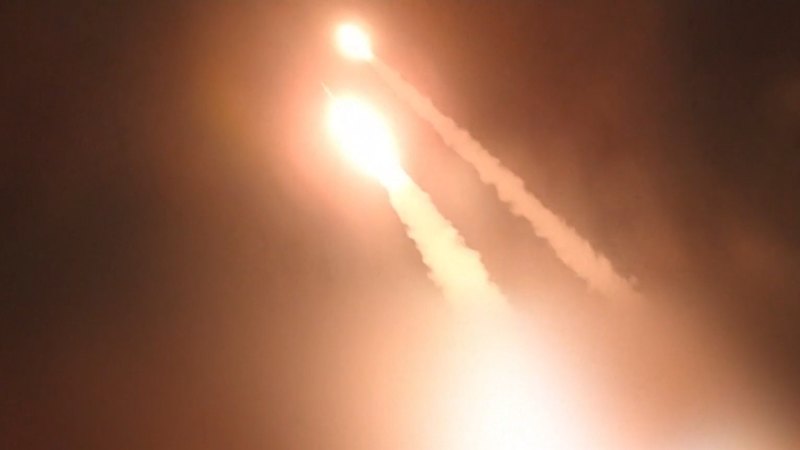
The fragile April ceasefire in the Middle East just went up in smoke. If you woke up thinking the shadow war between Washington, Israel, and Tehran was staying in the shadows, think again. Early Wednesday morning, the region erupted into a chaotic back-and-forth of heavy missile barrages and drone strikes that smashed directly through diplomatic efforts.
The immediate catalyst? A downed U.S. Army Apache helicopter gunship off the coast of Oman near the strategic Strait of Hormuz on Monday. U.S. President Donald Trump wasted no time laying the blame squarely at Tehran's doorstep, claiming the aircraft was shot down. By Tuesday night, U.S. Central Command (CENTCOM) unleashed what it called "self-defense strikes" against nearly 20 targets inside Iran.
Tehran didn't back down. Within hours, Iran's Revolutionary Guards launched a multi-pronged ballistic missile and drone assault targeting military installations in Jordan, Bahrain, and Kuwait. We aren't looking at a minor border skirmish anymore. This is a direct, overt confrontation involving multiple sovereign nations, and it signals a dangerous new phase in a war that has already crippled global energy supplies.
The Triggering Event at the Strait of Hormuz
The current escalation stems from an incident that occurred at roughly 3:30 a.m. local time on Monday. An AH-64 Apache helicopter went down during a routine patrol over the Gulf of Oman. While a U.S. official speaking anonymously mentioned the helicopter collided with an Iranian drone—leaving it murky whether the hit was intentional—the political response from Washington was instant and absolute. Trump declared the helicopter had been shot down.
In a striking twist of modern warfare, the two American pilots spent two hours in the water before being pulled out by an unmanned drone boat. The 7.3-meter vessel, known as the Corsair, marked the first recorded sea rescue of its kind by the U.S. military. The aviators survived uninjured, but the political survival of the region's shaky ceasefire was already dead.
Trump's response to the incident was fierce. Speaking to reporters, he emphasized that the American retaliation would be "very strong, very powerful." Hours later, precision bombs were dropping on Iranian soil.
Inside the American and Israeli Strikes
The joint pressure on Iran has been building rapidly all week. On Monday, Israel and Iran exchanged intense fire, killing at least two members of Iran's air defense units. The U.S. air campaign followed on Tuesday night, commencing at 10 p.m. UK time under direct orders from the White House.
According to CENTCOM, the operation focused on systematically dismantling Iran's ability to track and hit regional aircraft. The U.S. military hammered roughly 20 distinct targets, specifically striking:
- Early-warning radar installations
- Ground control stations for unmanned aerial vehicles (UAVs)
- Active air defense missile batteries
U.S. officials publicly characterized the mission as a proportional response intended to deter further aggression, signaling they aren't actively looking for a full-scale ground war. Yet, the sheer scale of hitting 20 separate military nodes across Iranian territory says otherwise to Tehran. House Speaker Mike Johnson confirmed he received an advance briefing before the bombers took flight, showing the high-level coordination behind the assault.
Tehran Strikes Back at Regional U.S. Hubs
Iran's response was swift, loud, and explicitly designed to pressure America's regional allies. The Islamic Revolutionary Guard Corps launched coordinated strikes across the Persian Gulf and the Levant, aiming directly at bases hosting American assets.
In Jordan, the target was the Muwaffaq Salti Air Base, a critical hub that has historically hosted American F-35 fighter jets. Jordan's armed forces immediately went into high alert, confirming their air defenses intercepted and destroyed five incoming Iranian missiles before they could hit their targets. Debris rained down, but Jordan reported no casualties.
Simultaneously, drone alerts blared across Bahrain and Kuwait. Iran claimed it targeted the Ali Al Salem base in Kuwait, aiming specifically for F-35 hangars and command centers. While Kuwaiti and Bahraini air defenses opened fire to neutralize the incoming drones, the political shockwave had already done its damage.
Iran's Foreign Ministry followed the military strikes with a blunt warning to its neighbors. Tehran stated that Gulf nations have a "legal and moral responsibility" to block the U.S. and Israel from using their territory or airspace to launch attacks against Iran. It's a clear attempt to bully local governments into denying logistics and airspace access to Western forces.
The Economic Cost You're Already Paying
This conflict isn't just a localized tragedy; it's a massive hit to your wallet. Since the wider U.S.-Israeli war with Iran intensified on February 28, the global economic fallout has been severe.
The Strait of Hormuz is the world's most critical oil chokepoint. With Apache helicopters enforcing strict blockades on Iranian crude shipments and tankers trading missile strikes, energy markets are in chaos. Insurance premiums for maritime shipping have skyrocketed. If you've noticed your grocery bills climbing or gas prices hitting painful new highs over the last few months, this theater of war is the primary driver.
Just hours after the strikes, a Palau-flagged tanker named the Settebello sent out an emergency distress call roughly 20 nautical miles off the coast of Oman. The vessel's engine room was reportedly struck by a missile, resulting in a fire, one confirmed casualty, and two missing crew members. It's a stark reminder that the commercial shipping lanes are actively under fire.
What Happens to the Peace Talks Now
The timing of this flare-up couldn't be worse. Before the Apache helicopter went down, Trump had publicly voiced immense optimism about ongoing backchannel diplomatic negotiations in Oman. He even claimed a comprehensive peace deal was in its "final throes" and could be signed within two or three days.
Now, those negotiations look completely hollow. Trump reversed his optimistic tone on Wednesday, posting on social media that Iran took too long to negotiate a deal and "will have to pay the price." He went further, mocking Iran's conventional military capability as a "complete and total mess" and claiming much of their Navy and Air Force has been effectively neutralized.
Vice President JD Vance echoed this grim outlook, noting in an interview just before the U.S. strikes that the war could wrap up quickly or drag out for months. Iranian Foreign Minister Abbas Araghchi offered an equally unyielding response on social media, warning that Iran will leave no threat unanswered and telling Western forces to "leave our region if you want to be safe."
Next Steps for Following This Crisis
The situation on the ground is fluid, and the threat of an miscalculation leading to a broader regional conflict is higher than it has been in decades. To stay informed and prepared for the economic realities of this escalation, keep these practical steps in mind:
- Monitor the Strait of Hormuz Shipping Lanes: Watch updates from the United Kingdom Maritime Trade Operations (UKMTO). They provide the fastest, most accurate alerts on commercial shipping attacks, which directly correlate with sudden spikes in global oil prices.
- Watch Airspace Closures: Iran and surrounding nations have repeatedly shut down civilian airspace during these missile exchanges. If you have international travel plans crossing through the Middle East or parts of South Asia, check carrier rerouting updates daily.
- Track the Diplomatic Channel in Oman: Watch for any signs that Swiss or Omani intermediaries are getting U.S. and Iranian officials back to the table. A sudden return to talks is the only mechanism that will cool down the military actions on the ground.