You can't write a script this heavy with irony.
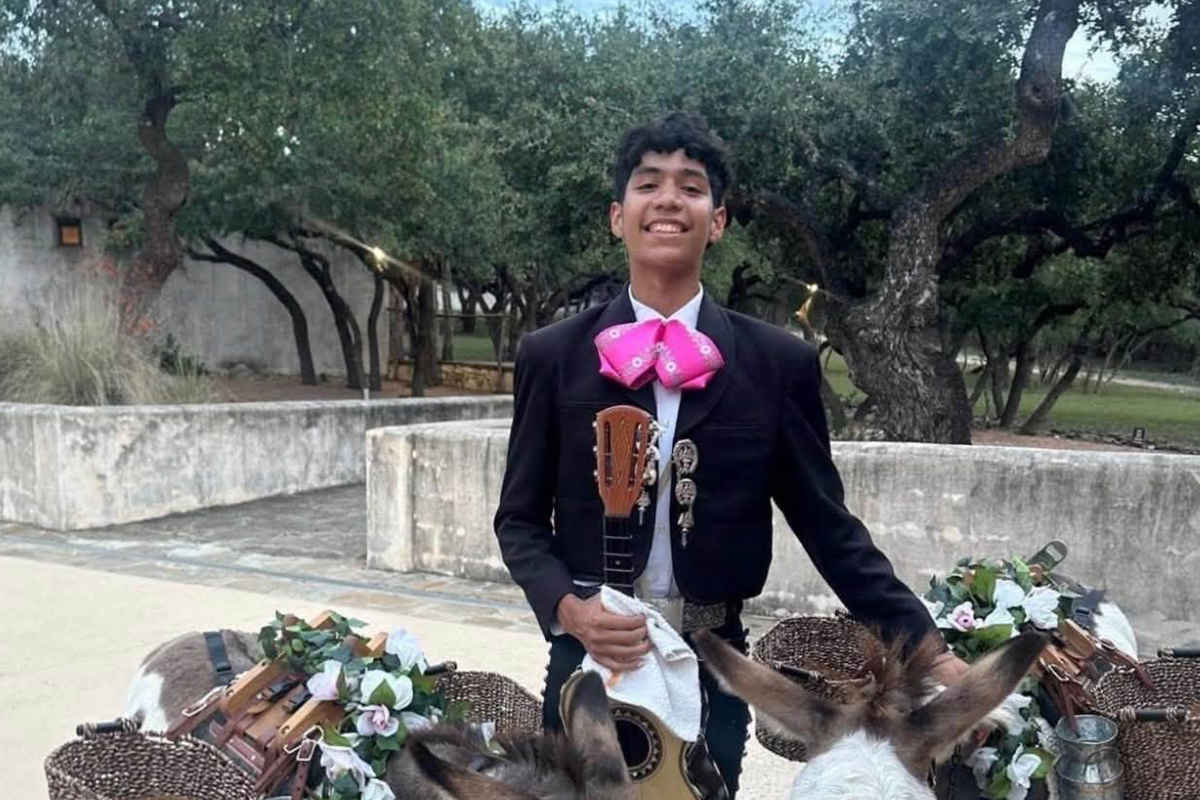
Imagine spending your evening bringing joy to a family birthday party, dressed in your full mariachi uniform, holding a vihuela. You're 20 years old. You've lived in the United States since you were four, fleeing the kind of brutal violence in Mexico that makes parents pack a single bag and run for their lives. This country is the only home you really know. Then, on your drive home through a small Texas town called China Grove, blue lights flash behind you.
A routine traffic stop quickly spirals. Within hours, you aren't a musician anymore. You're an undocumented detainee wearing traditional Mexican performance attire inside a federal holding facility.
This is exactly what happened to Hebert Kaleth Ibarra Castro on June 25. But the story takes a sharp, surreal turn on Independence Day. Locked inside a South Texas Immigration and Customs Enforcement (ICE) facility, Hebert stood up and belted out a powerful rendition of "The Star-Spangled Banner" to mark the Fourth of July. Surrounding him was a display of red, white, and blue handkerchiefs crafted by his fellow detainees. The facility's warden recorded it, planning to broadcast the audio to the entire housing unit.
It’s an image that forces us to look directly at the deeply fractured, contradictory nature of the American immigration system.
The Cruel Irony of Singing for a Country That Locks You Up
When you look past the initial headline, the layers of this event get deeply uncomfortable. According to Texas Democratic Representative Joaquin Castro—who has taken up Hebert's case—the young musician faced targeted mockery from a detention worker because of his clothes. The worker reportedly taunted him, saying that if he sang for them, he might get released.
Think about that power dynamic for a second.
"They can treat us this way and lock us up and chain us up like animals, but still request for us to sing a song that speaks about a land that is free," Hebert told The San Antonio Express.
His performance wasn't a submissive act to please his captors. It was a statement. When an ICE agent allegedly expressed disbelief that an undocumented mariachi player would even know the American national anthem, the community fired back. Anthony Medrano, a fellow San Antonio musician, launched the "Play a Song for Hebert" campaign on social media. Mariachi bands across the country started recording themselves playing the national anthem in solidarity.
The message from the community was simple: when you grow up here, you love this country. You share its pride, and you celebrate its milestones, regardless of what a piece of paper says.
A Family Caught in the Crosshairs of Net-Wide Deportations
Hebert isn't just a symbol or a talking point for political pundits. He's a real person with deep roots in Texas. Known as "El Niño" (the kid) by his bandmates in Mariachi Los Galleros de San Antonio, he's a fiercely dedicated musician who plays the vihuela, a traditional five-string guitar.
Beyond the stage, he's a husband and a young father. His wife is a United States citizen, and they have young children who depend entirely on him.
ICE released a statement confirming that he remains in custody pending the outcome of his immigration case, stating simply that he entered the country illegally at an unknown date and time. Hebert is currently caught in a massive, sweeping anti-immigration push by the federal government targeting tens of thousands of people who have lived in the U.S. for years without any criminal record.
What the System Gets Wrong About Deeply Rooted Immigrants
The biggest mistake immigration hardliners make is treating long-term residents like recent border crossers. They aren't the same. People like Hebert have spent nearly their entire lives building communities, paying taxes, raising American children, and contributing directly to local culture.
Pulling a young father and musician out of his community over a traffic stop doesn't make communities safer. It shatters families and traumatizes children.
If you want to support Hebert and families like his, keeping the spotlight on these cases is the only way to force bureaucratic systems to move. You can contact local representatives to voice your stance on selective enforcement, share the "Play a Song for Hebert" campaign videos to keep his story alive, and support legal defense funds that provide representation to detainees facing sudden deportation.
This country has always been defined by the people who want to be here, who build lives here, and who sing its anthem even from inside its cells. Locking them up doesn't change that reality. It just makes the song a lot harder to hear.