Film archivists are tilting at windmills again.
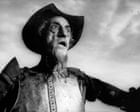
A new consortium of European film institutions—spanning Spain, France, Italy, and Germany—just launched a massive project to piece together the holy grail of lost cinema: Orson Welles’ unfinished Don Quixote. They’re staring down roughly 30 hours of scattered, chaotic footage. Over 100,000 meters of raw film negative, 16mm prints, and 35mm workprints are spread across different vaults. Led by Welles scholar Esteve Riambau, the team plans to spend the next two years digitizing, analyzing, and structuring a "reconstruction" of the legendary filmmaker’s three-decade-long obsession.
They expect a presentation ready by 2028. They also insist they won't use artificial intelligence to patch the holes.
It sounds noble. It sounds romantic. It’s also completely missing the point of why Welles never finished it in the first place.
The mainstream narrative, repeated for decades, is that Welles was a tragic victim of the Hollywood studio system—a broke genius who couldn't secure the cash to realize his vision. But a closer look at the actual history of the production reveals a much stranger, more deliberate reality. Welles didn't just run out of money. He ran away from completion.
The 30-Year Chase
Welles started shooting Don Quixote in 1957. It began as a modest, 30-minute television special backed by Frank Sinatra. When that deal fell through, Welles became possessed. He spent his own money, throwing every dime he made from acting gigs, television appearances, and commercial voiceovers into a completely off-the-cuff, independent feature.
He didn't use a traditional script. Instead, he carried around a shifting, 2,000-page mass of alternative ideas, notes, and fragments. He shot silently on lightweight 16mm cameras in Mexico, Italy, and Spain, intending to dub all the voices himself later.
Look at what happened to the cast. Francisco Reiguera, the frail Spanish actor playing Quixote, died in 1969. Akim Tamiroff, playing Sancho Panza, died in 1972. Welles kept tinkering anyway. He shot second-unit footage well into the 1970s. He deliberately mislabeled film reels to keep external editors out of his hair. By the time he died in 1985, the project was less a movie and more a sprawling lifestyle.
Welles famously joked that he should change the title to When Are You Going to Finish Don Quixote? because he was so exhausted by the question. But his close friends knew the truth. Director Jesús Franco, who worked as an assistant on the project, openly admitted that Welles didn't actually want to finish it. The film was his personal sandbox. Every time he returned to Spain, he found a new perspective, a new angle, or a new technological absurdity to mock, so he tore up his old plans and started over.
Pumping Modern Satire Into a Golden Age Classic
What these reconstruction efforts usually fail to capture is how radically weird Welles’ vision actually was. This wasn't a standard, period-accurate adaptation of Miguel de Cervantes’ 1605 novel. Welles transplanted Quixote and Sancho Panza directly into the mid-20th century.
Imagine the Knight of the Woeful Countenance navigating the roaring traffic of modern Madrid, staring in utter bafflement at motor scooters, or watching a nuclear missile test. In one of the most brilliant conceptual shifts, Welles re-imagined the famous puppet theater scene from the novel. In the original book, Quixote watches a puppet show, mistakes the drama for reality, draws his sword, and hacks the wooden puppets to pieces to save the heroine.
In Welles’ film, Quixote sits inside a crowded, modern movie theater. As the film plays on the big screen, he gets so swept up in the narrative that he stands up, draws his blade, and literally slashes the silver screen to shreds to rescue the woman in the projection.
It was a meta-commentary on the magic and delusion of cinema itself. Welles was making a essay film disguised as an adventure story, using Quixote’s outdated chivalric virtues to mock the shallow, media-saturated landscape of the Cold War era.
The Ghost of 1992
We’ve actually been down this road before, and it was a disaster.
In 1992, for the Seville Universal Exposition, Jesús Franco attempted to stitch the available footage together into a coherent, 116-minute commercial feature. It was universally panned.
To create a standard narrative arc, Franco took horrific liberties. He forced a linear structure onto an inherently non-linear, experimental film. The Spanish dubbing was a complete mess, with voice actors reciting literal passages from Cervantes while the actors' lips on screen were clearly saying something entirely different. It felt clunky, dead, and deeply un-Wellesian.
The current 2026 archival project promises to be different. Riambau has made it clear that this will not be a commercial movie or a traditional documentary. They aren't trying to guess what Welles wanted or invent missing scenes out of thin air. They describe it as a "cultural presentation"—a mosaic showing the raw, unadulterated pieces exactly as Welles left them.
That’s a massive step up from the 1992 hack job, but it still runs into a fundamental wall: the missing audio. Because Welles shot almost everything silently, large chunks of the surviving 30 hours have no guide tracks. The soundtrack is a ghost town. Where audio does exist, Welles is performing multiple voices himself, layering his own booming baritone over both the knight and the squire.
Why We Need Unfinished Masterpieces
The impulse to clean up history is a classic archival trap. We want closure. We want a neat runtime, a clean digital file, and a definitive version we can log on Letterboxd.
But some art is defined entirely by its incompletion. Welles’ Don Quixote is a mirror of the character itself. Don Quixote’s entire life was an unfinished, delusional quest based on an idealized past that never really existed. Welles lived the exact same way, chasing an autonomous, pure form of cinema free from studio interference, financing it dollar by dollar from his own pocket.
By trying to solve the puzzle, archivists risk killing the mystery. The joy of Welles' late-career work isn't the final destination; it's the chaotic, brilliant process of a genius playing with the medium without a boss looking over his shoulder.
If you want to understand the true spirit of the project, don't wait for a clean, sterilized 2028 reconstruction. Do this instead:
Go watch F for Fake, Welles' magnificent 1973 film essay on trickery, art, and forgery. It is the closest stylistic cousin to what Don Quixote was turning into. Observe how he cuts images, how he plays with truth, and how he weaponizes the unfinished nature of art.
Then, read Jonathan Rosenbaum’s extensive essays in Discovering Orson Welles. He is one of the few film critics who got to see Welles' raw workprints while the filmmaker was still alive, and his breakdowns explain exactly how the movie functioned as a living, breathing diary.
Leave the fragments in the vault. Let the knight keep riding. Some stories are better left incomplete.