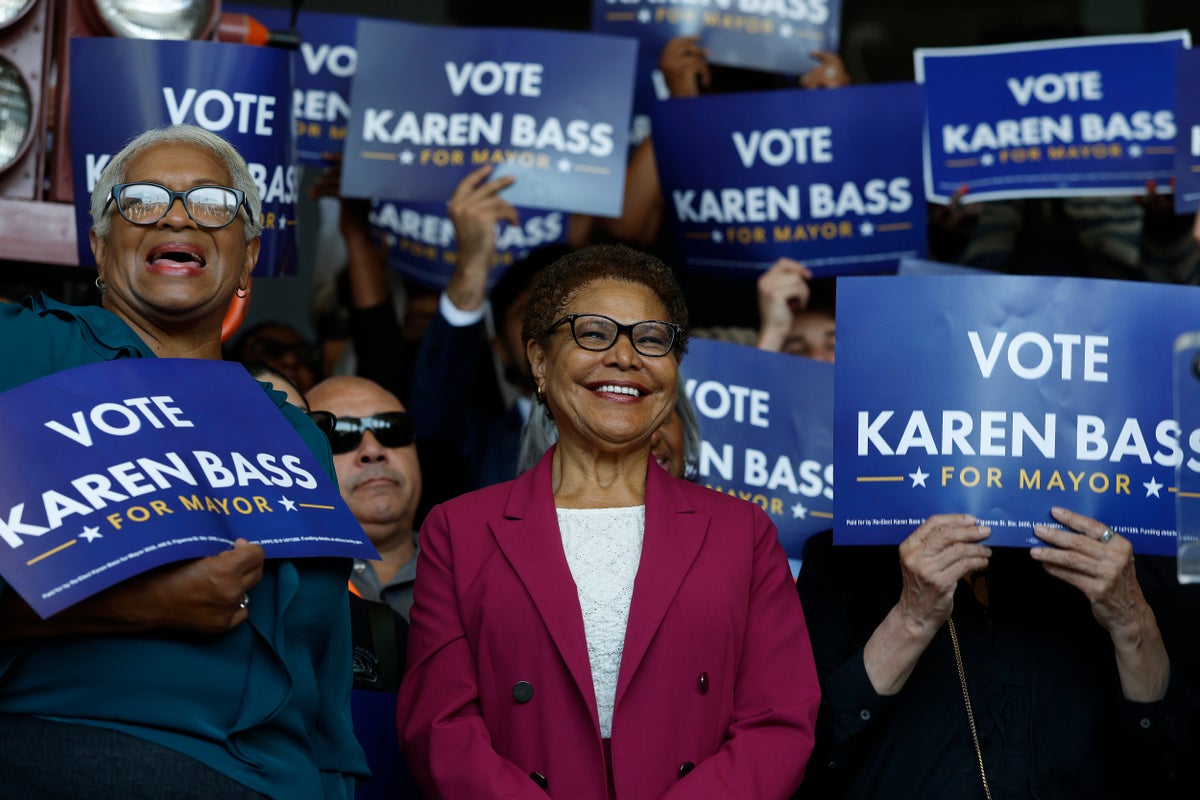
The digital information space is a mess. Last week, a polling firm called Median Strategies managed to dupe people, news outlets, and even a mayoral campaign with nothing more than a spreadsheet and a fake website. They released a poll claiming Los Angeles Mayor Karen Bass held a massive double-digit lead over her rival, Nithya Raman.
It was all a lie.
Within days, the firm shut down. They claimed it was a social experiment to see how easily fake data enters the political bloodstream. Basically, they proved that if you make something look professional enough, people will believe it without asking any questions. This is a massive wake-up call for voters who treat every polling chart they see on social media like gospel.
The Danger of Low-Barrier Polling
Creating a polling firm used to require significant resources. You needed legitimate phone banks, sophisticated modeling software, and teams of people to reach actual residents. Now, anyone with a domain name and a knack for creating graphs can pretend to be a professional outfit.
Median Strategies had fewer than two dozen social media followers when they dropped their fake survey. Despite that red flag, the poll circulated. It got picked up. It even reached the Mayor’s own campaign team, who shared it online before eventually deleting the post once the truth came out.
This is exactly how misinformation spreads. You don't need a massive budget to influence public perception. You just need a plausible-looking number that confirms what people already want to believe. When a campaign team shares a poll, they aren't necessarily checking the methodology. They’re looking for momentum. They want to show they’re winning.
Why We Keep Falling for It
We have a massive confirmation bias problem. If you support a specific candidate, you’re much more likely to accept a poll showing them in the lead without digging into the source.
Look at the methodology of the fake survey. They claimed to reach 560 voters with a margin of error of 4.2 percent. To a casual observer, these numbers sound technical. They sound precise. They mimic the format of reputable outlets like Gallup or Pew Research. That’s the trick. They aren't trying to be accurate; they are trying to sound authoritative.
The most ridiculous detail? The fake poll included a claim that 85 percent of voters who supported a Republican candidate in the primary planned to switch to the Democratic mayor in the runoff. It was a statistical outlier that should have raised alarms immediately. Instead, it was treated as a legitimate data point.
How to Protect Your Own Mind
You can’t stop bad actors from creating fake data, but you can stop yourself from being a carrier for their misinformation.
First, look for the source. If you’ve never heard of the polling firm, don’t trust it. Reputable pollsters have decades of track records, established leadership, and transparent methodology. If a firm appeared out of nowhere a few weeks before an election, treat it as noise, not news.
Second, check the methodology. A real poll will tell you exactly who they called, how they called them, and how they accounted for things like demographics. If the website doesn't offer a deep dive into their weighting process, they’re hiding something.
Finally, stop sharing individual polls as proof of victory. One poll is just one data point. It’s a snapshot in time. Always look for averages of multiple polls from various sources. If one survey says a candidate is winning by 12 points while others show a dead heat, the outlier is almost certainly wrong.
Stop Taking Surveys at Face Value
The fact that a fake firm could influence the conversation around a major city's mayoral race is an indictment of our current media cycle. We are so hungry for updates that we’ve lost the ability to wait for verification.
Don't be the person who forwards a suspicious graphic because it makes your side look good. Verify the source. Ask why a poll exists. Check if the numbers actually make sense in the context of the district.
If you see something that seems too good to be true, it’s probably a lie. Be skeptical of everything until proven otherwise. Your vote is worth more than a fabricated social experiment. Treat data with the same suspicion you treat a random email from a stranger. It might save you from believing a lie.