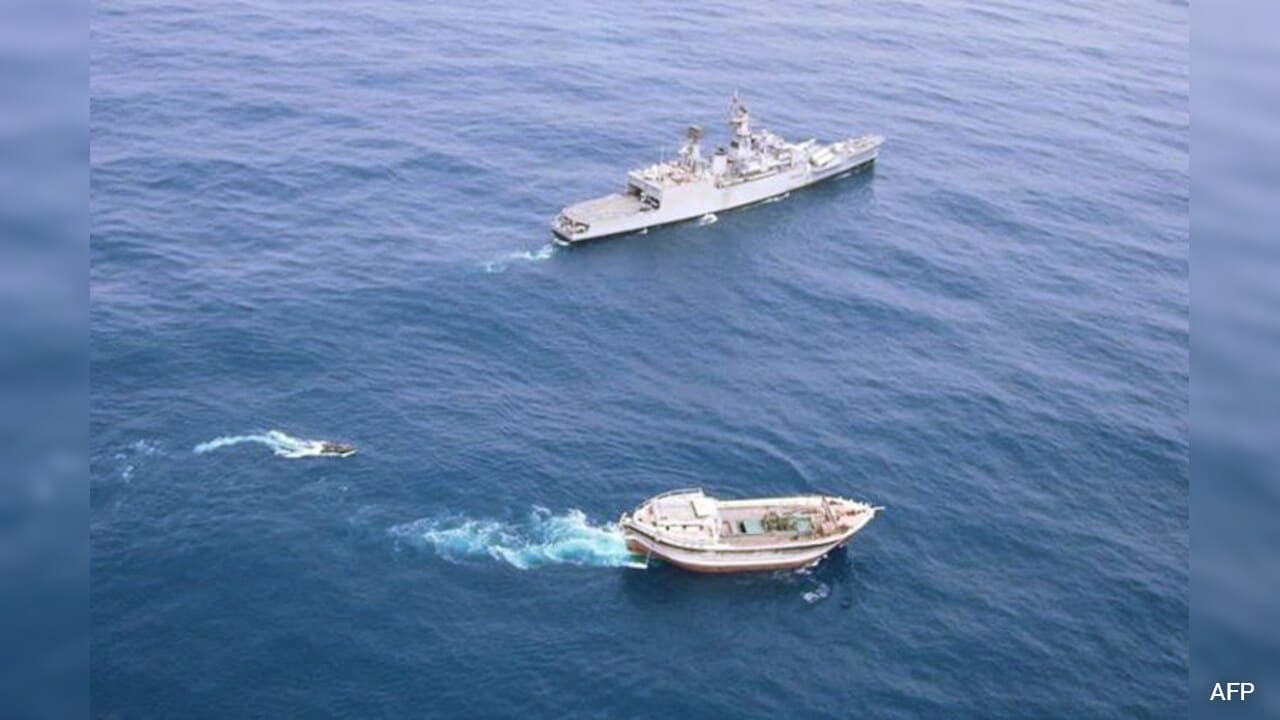
The hijacking of a Cameroon-flagged cargo ship off the Puntland coast isn't just another maritime security incident. It’s a loud wake-up call. When six Indian nationals find themselves caught in the crosshairs of Somali pirates, the conversation shifts from abstract geopolitical security to the immediate, visceral reality of human lives held for ransom.
Most people assume Somali piracy was effectively buried years ago by international naval patrols. They are wrong. The recent seizure of the vessel LUTUF, reportedly carrying military equipment destined for a Turkish training facility in Mogadishu, shows that the threat hasn't vanished. It simply evolved. For an alternative perspective, see: this related article.
The anatomy of the hijack
The incident off the coast of Eyl is a textbook example of how quickly the situation on the high seas can deteriorate. The ship, owned by Polar Movement Shipping, was carrying sensitive cargo: weapons, satellite gear, and communication hardware. This isn't your average cargo vessel. Cargo of this nature turns a standard commercial ship into a high-value target for opportunistic militant groups.
Reports suggest eight armed men seized the vessel. They knew exactly what they were doing. They didn't just take the ship; they moved it toward the Garmaal coast, a strategic maneuver to evade immediate detection or retaliation. We’re looking at a crew of ten: six Indians, a Turkish national, a Georgian, and two Serbian security guards. The diversity of the crew highlights the international nature of the merchant navy, but it also complicates the rescue effort. Different nationalities mean different diplomatic pressures, conflicting interests, and a slower, more fragmented response. Related coverage regarding this has been shared by USA Today.
Why this time is different
You might be wondering why piracy is surging again. Simple. The geopolitical instability in the Middle East has caused massive rerouting of merchant vessels. When shipping lanes change, patrols get thinner. Pirates don't need a massive armada; they just need a small, fast skiff and the right information.
The involvement of Turkish military assets in the monitoring phase—including drone and helicopter surveillance—adds a layer of complexity. We saw reports of an airstrike following the delivery of khat, a common regional stimulant, to the hijacked vessel. That strike reportedly killed four people. Whether those killed were the pirates themselves or just collateral damage is the kind of murky detail that defines modern, asymmetric maritime conflict. When military training equipment is involved, governments aren't just negotiating for a ship; they're protecting their regional influence.
The Indian perspective
For the families of the six Indian sailors, the international posturing is irrelevant. They want their loved ones home. The Indian government faces a difficult balancing act here. They have a long history of successfully navigating maritime hostage situations, but the presence of Turkish weapons on board complicates the standard diplomatic playbook.
We shouldn't expect a quick fix. Merchant shipping operates on razor-thin margins and often cuts corners on security to save costs. Relying on armed guards is a standard deterrent, yet as we’ve seen, even armed security isn't foolproof when pirates choose to act with overwhelming force.
Lessons for the maritime industry
If you work in this sector, you know the gaps. Many shipowners prioritize the cheapest route and the lightest crew overhead. It’s an expensive mistake.
- Information security is real security. When you’re hauling cargo that interests state actors or militants, your flight path is essentially public knowledge. Better encryption and tighter protocols regarding cargo manifests are essential.
- Standardize the emergency response. Every country has a different process for dealing with hijacked crews. There is no unified global command for this. That confusion gives pirates the time they need to reposition their hostages.
- Training isn't just a checkbox. Most crews are not trained for active combat scenarios. While you can't arm every sailor, you can certainly drill them on evasive maneuvering and communication blackouts to stay off the radar.
The reality is that as long as there is instability on the Horn of Africa, the seas off the coast of Somalia will remain dangerous. The LUTUF incident is a reminder that the ocean isn't a safe highway. It’s an uncontrolled frontier where a few desperate men can hold the interests of entire nations hostage.
Keep a close eye on the official statements coming out of New Delhi and Ankara. If there is a shift in rhetoric regarding maritime security cooperation in the Indian Ocean, you’ll know why. For now, the sailors remain in a perilous position, waiting for a resolution that can't come soon enough. Stay updated through reliable maritime intelligence channels rather than waiting for general news outlets to catch up. Vigilance is the only real protection for those out on the water.