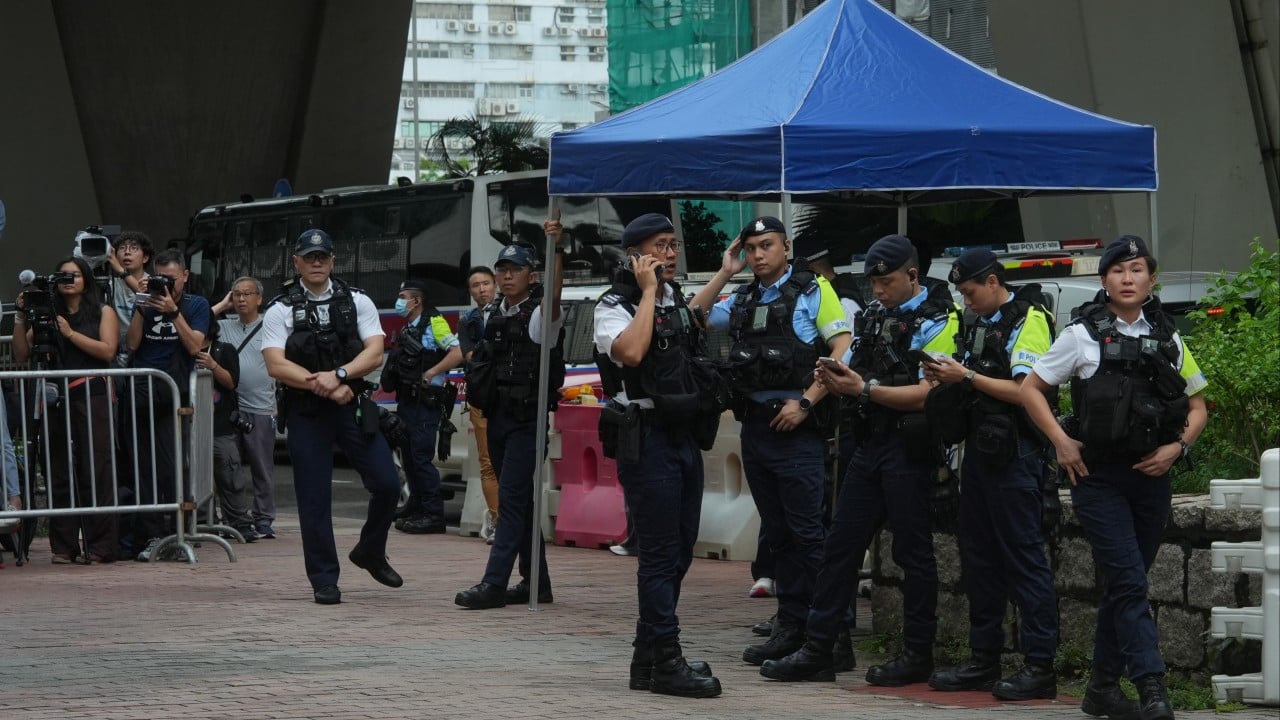
Walking past a courtroom in the city used to mean watching legal arguments unfold inside the chamber. Now, the clothing on your back outside the building can land you in police custody. Hong Kong authorities recently detained a woman right outside a local court, claiming her choice of apparel crossed legal boundaries.
The core issue centers on how security laws are applied to everyday items. Police picked up the individual on multiple allegations, including acting with a seditious intention, causing a public disturbance, and obstructing law enforcement. This incident highlights a growing reality in the financial hub. The legal threshold for what authorities consider unlawful expression has narrowed dramatically.
The Expanding Scope of Public Expression
You cannot ignore how sensitive public spaces have become. Courts, government offices, and transit stations are heavily monitored zones where stylistic choices face intense scrutiny. Under local security statutes, including provisions tied to Article 23 legislation, enforcement bodies hold sweeping powers to target anything perceived as political messaging or dissent.
When someone wears a slogan, a specific color combination, or graphic imagery associated with past social unrest, officers rarely hesitate to intervene. The strategy isn't just about punishing the wearer. It is designed to signal a zero-tolerance policy for any lingering symbol of protest.
Why Everyday Wardrobe Choices Carry High Stakes
People visiting public trials or gathering near judicial buildings often want to make a silent statement. But the legal risks far outweigh any symbolic value. Prosecutors do not need to prove that a piece of clothing caused immediate physical harm. Under updated laws, the mere potential to incite discontent or bring disrepute to the administration is enough to justify an arrest.
Consider what happens during high-profile hearings. Security cordons swell, undercover agents monitor the crowds, and uniformed officers conduct random stops. Wearing graphic tees, distinct slogans, or even accessories carrying ambiguous political meanings transforms a civilian into an immediate target.
Navigating the New Legal Reality
If you are living in or visiting the city, understanding these invisible boundaries is essential. The legal code leaves plenty of room for interpretation by officers on the ground. What feels like a neutral or mildly expressive garment to you might be classified as a direct security violation by authorities.
Keep your wardrobe entirely neutral if you plan near sensitive civic zones. Avoid symbols, numbers, or phrases that carry historical baggage from past political movements.
The rules governing public behavior aren't loosening up anytime soon. Dressing defensively is the only practical option left.