The traditional political playbook in New York usually revolves around real estate money, labor unions, and neighborhood machine politics. Not anymore. Tuesday's primary elections reveal a massive shift in who holds the keys to political power. Silicon Valley megadonors are dumping millions into localized congressional races, while a freshly empowered progressive establishment tries to clean house from within.
If you want to understand where American politics is heading, stop looking at national polls. Look at Manhattan and Brooklyn.
The Million Dollar Proxy War Over AI Regulation
The most expensive sandbox in this election cycle sits squarely in Manhattan. The seat left open by retiring Democratic Representative Jerry Nadler has turned into a brutal proxy war between two different factions of the artificial intelligence sector.
The lightning rod for this conflict is state Assemblyman Alex Bores.
Bores isn't your typical career politician. He used to work at Palantir, the data analytics giant, before leaving the company over ethical disagreements. During his time in the state legislature, he pioneered some of the strictest state-level AI regulations in the United States. He wants to take that exact policy blueprint to Washington.
Tech billionaires noticed. A political group heavily backed by investors in OpenAI dropped more than $7 million on a scorched-earth ad campaign designed to tank Bores' campaign. They want a friendly face in Congress when federal guardrails are eventually written.
But OpenAI's rivals didn't stay on the sidelines.
A competing wing of the tech industry, largely funded by backers of Anthropic, countered with a massive defensive play. They poured over $10 million into the race to save Bores. Anthropic, known for its Claude chatbot, was built by former OpenAI insiders who walked out due to safety concerns.
This means a single primary race in New York has become a multi-million-dollar referendum on how the future of artificial intelligence will be governed.
The Mayor Proves His Clout
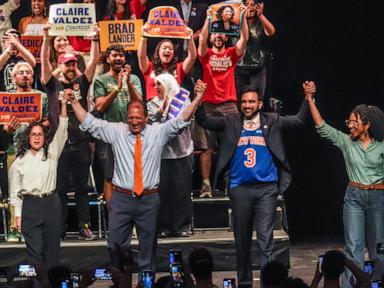
While tech founders throw cash around Manhattan, New York City Mayor Zohran Mamdani is playing a completely different game. He is using his executive platform to challenge established, party-backed Democrats by putting his weight behind a slate of progressive insurgents.
Mamdani wants to see how far democratic socialist platforms can scale.
Look at the matchup in Lower Manhattan and Brooklyn. Representative Dan Goldman is facing a primary challenge from Brad Lander, the city's former comptroller who has Mamdani's explicit blessing. The fight between these two candidates has largely centered on foreign policy and the war in Gaza. Lander has repeatedly slammed Goldman for failing to be critical enough of the Israeli government.
Further uptown, Representative Adriano Espaillat is trying to hold off Darializa Avila Chevalier. She is a 32-year-old democratic socialist with zero previous legislative experience. Her background is in a public defender's office helping victims of police misconduct.
Then there is the open seat created by Representative Nydia Velázquez's retirement. Mamdani endorsed Assemblymember Claire Valdez, another self-described democratic socialist. Velázquez, however, threw her support behind Brooklyn Borough President Antonio Reynoso.
These races will prove whether Mamdani's progressive alliance can actually unseat entrenched incumbents, or if the socialist wave in the city has hit its high-water mark.
What is Happening Outside New York
New York isn't the only state with weird primary dynamics playing out on Tuesday. The political maneuvers stretching from South Carolina to Utah show how desperate politicians are to control their own narratives.
Donald Trump Double Endorsement Strategy
In South Carolina, Donald Trump found a bizarre way to protect his win-loss record. After his handpicked candidates for governor suffered losses in Iowa and Georgia earlier this month, Trump decided he couldn't risk another public defeat.
His solution for the South Carolina Republican gubernatorial runoff was simple. He endorsed both people running.
Trump originally backed Lieutenant Governor Pamela Evette back in May. But just days before the vote, he issued a second endorsement for her opponent, state Attorney General Alan Wilson. He claimed on social media that it was a "Wealth of Riches" and that he couldn't bear to hurt either candidate. The reality is much more transactional. No matter who wins the runoff, Trump gets to claim a victory for his endorsement record on Wednesday morning.
Utah Creates a Leftist Island
Utah is famous for being a deep-red Republican stronghold, but recent redistricting changed the math completely around Salt Lake City. The new district boundaries created a reliably blue island where Democratic candidates are now aggressively trying to out-left each other.
The main target is former Representative Ben McAdams.
When McAdams won his seat in 2018 by beating a Republican, he branded himself as a proud moderate who held anti-abortion views. Now that he is running in a hyper-progressive district, his tone has shifted completely. He publicly flipped his position to support abortion rights, claiming he is only "moderate in tone."
He is facing serious pressure from state Senator Nate Blouin, a progressive challenger who secured the endorsement of Senator Bernie Sanders. Blouin has openly criticized older Democrats for trying to "play nice" with conservative lawmakers.
Actionable Steps for Tracking Tuesday Election Results
Do not just stare at cable news graphics on election night. If you want to see who actually wins these power struggles, you need to watch specific data points.
- Monitor the Manhattan precinct breakdowns: Watch the Upper West Side and Chelsea results closely. If Bores wins those high-turnout areas despite the $7 million anti-regulatory ad blitz, it means tech money has a serious limit when it comes to buying local congressional seats.
- Track the progressive margins in Brooklyn: Compare Brad Lander's performance against Dan Goldman's historical margins. Even if Goldman wins, a narrow victory means Mamdani's coalition holds immense leverage over city policies moving forward.
- Watch the South Carolina turnout numbers: See if Trump's dual endorsement suppressed voter enthusiasm or drove people to the polls. It will reveal how much weight his word still carries when he refuses to actually make a choice.