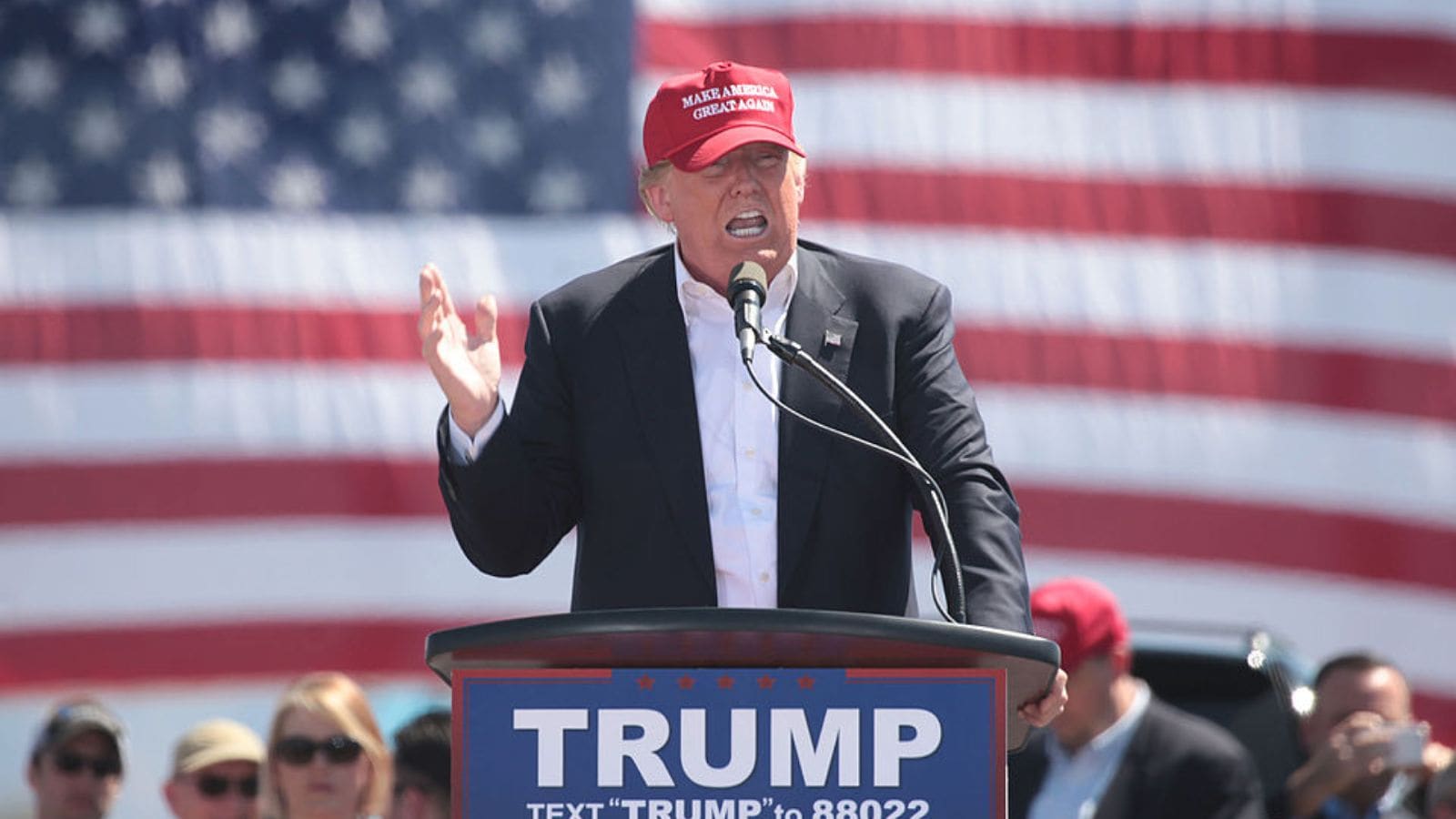
Imagine paying a premium to find out what the President of the United States is going to say before the rest of the world. It sounds like the plot of a political thriller, but it's now a formal business model. On July 16, 2026, Trump Media & Technology Group, the parent company of Truth Social, announced a licensed real-time data feed called Truth API. This service is designed to sell high-speed, millisecond-level access to the platform's most influential accounts—most notably, President Donald Trump himself.
If you're a Wall Street trader, a fraction of a second is the difference between a massive payday and a devastating loss. By offering a direct pipeline of presidential announcements to institutional desks, Trump Media is turning political speech into a premium subscription service. It is a brilliant cash-grab for a struggling media company, but it is also an absolute ethical trainwreck that fundamentally disadvantages everyday retail investors. Discover more on a similar issue: this related article.
Let's look at how this data feed actually works, why the ethical conflicts of interest are so unprecedented, and what this development means for the future of the financial markets.
What is Truth API and how does it work
At its core, an API, or Application Programming Interface, is just a way for two different computer programs to talk to each other. Instead of a human being sitting at a desk and constantly hitting the refresh button on a web browser, an API allows an algorithmic trading system to pull data directly from Truth Social's servers. Further reporting by Forbes delves into similar perspectives on the subject.
The new service, set to launch on August 1, 2026, offers continuous 24/7 coverage and includes a complete archive of posts dating back to 2022. Trump Media's interim CEO, Kevin McGurn, stated that the feed is specifically designed for high-frequency and algorithmic trading firms. These are the firms that are highly sensitive to information delays.
How fast is "fast" in this context? We're talking about milliseconds.
Standard users rely on push notifications or manual scrolling, which can take several seconds—or even minutes—to load. In those seconds, an algorithm using the Truth API can read a post, analyze the sentiment, translate the policy impact, and execute thousands of stock or commodity trades before the average person even unlocks their phone.
According to company statements, the feed won't just cover Trump. It will focus on the top 10 most influential accounts on the platform. This list includes:
- President Donald Trump (
@realDonaldTrump) - The official White House account
- FBI Director Kash Patel
- White House Deputy Chief of Staff Dan Scavino
- Health and Human Services Secretary Robert F. Kennedy Jr.
By bundling these administration figures into a single paid feed, Trump Media has essentially built a toll road to the inner workings of the executive branch.
The massive market moving power of a presidential post
If you think a social media post can't seriously impact your wallet, you haven't been paying attention. President Trump's posts have repeatedly triggered massive swings in the global financial markets.
We aren't talking about minor fluctuations either. In early 2026, oil markets experienced severe volatility. Right before the President posted about "productive" talks with Iran, oil prices tumbled, causing chaos in energy-related assets. In another instance, Wall Street indices jumped instantly after a post declared a 90-day pause on major tariffs.
Timeline of a Social Media Market Swing:
[0.00s] - Post is published on Truth Social
[0.05s] - Algorithmic trading systems receive the post via Truth API
[0.10s] - Algorithms parse key terms (e.g., "Tariff," "Iran," "Ceasefire")
[0.15s] - Automated orders buy/sell millions in targeted assets
[3.00s] - Push notifications arrive on retail investor phones
[5.00s] - Human traders read the post; market prices have already fully adjusted
This delay is what high-frequency traders pay to eliminate. If a firm can get a policy update even three seconds before everyone else, they can front-run the rest of the market. They buy the asset cheap, and then sell it to you at a premium the moment you find out why the price is rising. It is a highly profitable, legal form of speed-arbitrage.
The deep ethical conflict of interest
Let's address the elephant in the room. This is a sitting President selling premium access to his own public policy announcements.
Typically, presidential communications are treated as public goods. Major policy announcements are distributed via official channels, press pools, or public broadcasts so that everyone gets the information at the exact same time. By routing these updates through a proprietary platform and charging financial institutions for early access, the administration is effectively privatizing public information.
The financial links make this even more troubling. Trump is not just a user of Truth Social; he is the dominant shareholder of its publicly traded parent company, TMTG. The Donald J. Trump Revocable Trust holds roughly 114.75 million shares, which is about 41% of the entire company. This trust is managed by his eldest children, meaning his family directly benefits from every single subscription dollar the company pulls in.
Legal experts and political watchdogs are sounding the alarm. Kathleen Clark, a government ethics professor at Washington University School of Law, pulled no punches, calling the move "brazen corruption" and an exploitation of government power for personal enrichment. Senator Ron Wyden, the top Democrat on the Senate Finance Committee, also attacked the service, arguing that it is specifically designed to enrich the Trump family while giving Wall Street traders an unfair advantage over the public.
The White House has stayed quiet on whether the President will change his posting habits to avoid market manipulation. But given his track record, he is highly unlikely to stop using his favorite platform to break news.
Why manual scraping won't work anymore
For the last couple of years, sophisticated trading firms didn't buy a license from Trump Media. Instead, they relied on web scrapers—custom software scripts that constantly read the public Truth Social website and extracted new posts.
While scraping got the job done, it was clunky, prone to breaking when the website layout changed, and suffered from artificial delays. More importantly, Trump Media is actively shutting it down.
Interim CEO Kevin McGurn openly admitted that the company plans to "create a lot of friction" for any firm that continues to scrape their data. They want to force everyone onto the official, paid API. By blocking unauthorized scrapers and offering an incredibly fast, millisecond-level official feed, Trump Media is turning its data into an exclusive monopoly.
If you want the data in time to trade on it, you have to pay the toll. There is simply no other way.
The financial desperation behind the data feed
Why is Trump Media launching this product right now? The answer is simple: they need the money.
Despite the massive cultural footprint of its founder, Trump Media & Technology Group has struggled to build a viable, high-margin business. In the first three months of 2026 alone, the company posted a staggering net loss of $405 million. That is a massive jump from the $31 million loss they recorded during the same quarter in the previous year.
While they have tried to diversify into television streaming with Truth+ and fintech with Truth.Fi, advertising revenue on the core social network has remained weak. Data licensing, on the other hand, is a highly lucrative business. Other social media platforms like X (formerly Twitter) and Reddit make hundreds of millions of dollars a year by charging financial firms and AI developers for API access.
Trump Media wants a piece of that high-margin, recurring revenue stream. Because financial firms are essentially forced to monitor the President's posts to manage their risk, Trump Media has a captive audience of buyers who cannot afford to opt out.
What this means for retail investors
If you are an individual investor managing your own portfolio, this development is a clear reminder that the playing field is not level. You cannot compete with millisecond-level data feeds and algorithmic execution.
If you try to day-trade the news based on what you see on social media, you are walking into a trap. By the time a post appears on your screen and you click "buy" or "sell," the professional algorithms have already priced in the news and taken the lion's share of the profit.
How to navigate this market environment:
- Stop chasing short-term policy spikes. If the President posts about a specific sector or tariff, do not panic-buy or panic-sell. The initial market reaction is heavily driven by algorithms and is often exaggerated. Let the dust settle before making any portfolio adjustments.
- Focus on long-term fundamentals. Algorithmic speed advantages only matter in the short term. Over months and years, a company's earnings, debt, and market position matter infinitely more than a millisecond-level head start on a social media post.
- Inquire about institutional data impacts. If you use a financial advisor or invest through managed funds, ask how they monitor geopolitical risk and social media-driven market events. Ensure they have systems in place to handle sudden, algorithmic-driven volatility.
To explore licensing details or learn more about the institutional onboarding process, organizations are being directed to contact Trump Media's data licensing team directly. For the rest of us, the message is clear: the information game has a new cover charge, and the public isn't invited to the table.