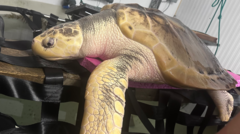
Imagine walking your dog along a chilly Welsh beach and stumbling upon a creature that belongs thousands of miles away in the warm Gulf of Mexico. That is exactly what happened on December 13, 2023, when a sharp-eyed dog walker spotted a tiny, motionless reptile on Traeth Llydan Beach in Rhosneigr, Anglesey.
That tiny reptile was Rhossi, a juvenile Kemp's ridley sea turtle measuring a mere nine inches. He was suffering from severe cold-stunning—a dangerous form of hypothermia that shuts down a turtle's vital signs and movement. Fast forward over two and a half years, and Rhossi is finally preparing for a heavily coordinated, 5,000-mile flight back to his natural habitat.
The Reality of Rehabilitating a Critically Endangered Species
Kemp's ridley sea turtles are widely recognized as the world's rarest and most endangered sea turtle species. With a global population of mature individuals estimated at roughly 22,000, every single life matters immensely to the survival of the species. When Rhossi arrived at the Anglesey Sea Zoo, expert veterinarians had to work around the clock just to get his core body temperature stable.
Cold-stunning tricks the body into shutting down. If the dog walker had walked past him or tossed him back into the frigid UK waters without proper medical intervention, he would have died within hours. Zoo owner Frankie Hobro and her team managed to nurse him back to complete health, but healing the turtle was only half the battle.
Why Repatriation Takes Years
Most people assume that once an animal recovers, you simply put it on a plane and send it home. Reality is much more complicated.
Marine conservationists frequently hit massive bureaucratic walls when trying to cross international borders with endangered wildlife. When Anglesey Sea Zoo rescued another Kemp's ridley named Tally a few years prior, the paperwork and logistics took a staggering 20 months. For Rhossi, the obstacles multiplied. Changing political landscapes, international wildlife permits, and strict cargo regulations mean that moving a single protected reptile requires an army of specialists.
Regulatory hurdles have grown even steeper over the years. According to marine organizations, post-Brexit trade and travel regulations made moving stranded wildlife out of the UK significantly more expensive and logistically demanding compared to previous decades. Bureaucracy often stalls conservation efforts longer than actual medical recovery times.
The Complex Logistics of a Five Thousand Mile Flight
Transporting a fragile, recovering sea turtle across the Atlantic Ocean isn't as simple as buying an airline ticket. Every minute counts because stress and temperature fluctuations can harm the animal.
The multi-step travel itinerary involves precision timing:
- Darren Briggs, a local volunteer helicopter pilot, will fly Rhossi from Anglesey to Denham Aerodrome near Heathrow International Airport.
- A specially designed, temperature-controlled transport crate ensures his safety during the journey.
- Frankie Hobro will accompany Rhossi directly on a British Airways cargo flight to Houston, Texas.
- Dr. Joe Flanagan, a specialized sea turtle veterinarian, will perform final health checks at the Houston Zoo.
- Mary Kay Skoruppa, a former U.S. Fish and Wildlife Service coordinator, handles the complex web of import permits.
Once he touches down in Texas, he will spend a week under the watchful eyes of international wildlife specialists before his grand release. Conservation partners plan to gather on August 18 at Padre Island National Seashore to watch him swim back into the Gulf of Mexico.
What You Should Do If You Find a Stranded Turtle
UK waters see more sea turtle visitors than many realize. Six of the world's seven marine turtle species have been recorded around the UK and Ireland. Loggerheads often wash ashore cold-stunned, while leatherback turtles frequently visit to feed on jellyfish during the warmer months.
If you ever spot a marine turtle on a cold European beach, do not try to throw it back into the sea yourself. Their bodies are completely shut down from hypothermia, and dropping them back into cold water will drown them. Instead, keep them dry, cover them lightly with a damp towel, and immediately contact local marine rescue experts or organizations like the British Divers Marine Life Rescue.
Rhossi's journey proves that saving wildlife requires patience, specialized medical care, and immense international cooperation.
Rescue turtle to be flown 5,000 miles from Wales to home
This news report offers additional insight into the logistical hurdles and local rescue efforts behind Rhossi's remarkable transatlantic repatriation.