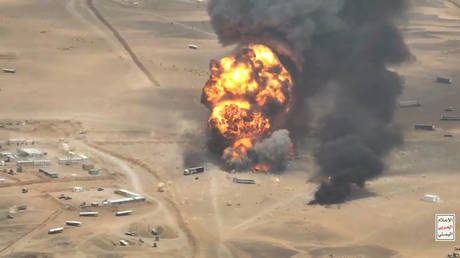
Ink was barely dry on the Mecca Joint Defense Agreement when actual fire tested its worth. Back in August 2026, Saudi Arabia, Türkiye, and Pakistan signed a high-stakes security pact designed to act as an Islamic counterweight to traditional western military alliances, with Turkish officials grandly comparing it to NATO's Article 5. Then the Houthis launched a massive coordinated drone and missile blitz across four southern Saudi cities, injuring dozens and targeting critical energy installations like the Jizan refinery.
So much for a paper shield.
Instead of a unified military retaliation or a swift coalition response, we got predictable diplomatic hand-wringing. Pakistan issued standard expressions of solidarity. Türkiye condemned the strikes. Neither Islamabad nor Ankara rushed to deploy troops or activate joint command structures. It turns out that signing a mutual defense pact in a holy city doesn't magically erase conflicting national interests, regional realpolitik, and deep-seated reluctance to tangle directly with Iran's proxies.
The Real Problem With the Mecca Agreement
The core flaw of the Mecca Joint Defense Agreement isn't just that its full text remains hidden from the public. The real issue is that grand security declarations rarely survive first contact with a real war. When Riyadh faced strikes hitting Khamis Mushait, Najran, Abha, and Jizan, the lack of a clear, pre-agreed automatic response mechanism became glaringly obvious.
Think about how traditional alliances work. NATO's collective defense principle requires immense political alignment, and even then, member states debate endlessly over what constitutes an armed attack requiring military intervention. For a brand-new trilateral axis linking Riyadh's financial weight, Ankara's drone tech, and Islamabad's military heft, the ambiguity is a feature, not a bug. Neither Pakistan nor Türkiye actually wants to get dragged into a messy, protracted quagmire in Yemen or risk torpedoing their delicate diplomatic balancing acts with Tehran.
Why Pakistan and Türkiye Are Hesitating
If you look past the glossy press releases, the hesitation makes complete sense. Pakistan has walked this tightrope before. Back in 2015, the Pakistani parliament explicitly voted against sending troops to participate in the Saudi-led coalition in Yemen. Lawmakers in Islamabad know that getting sucked into an active conflict on the Arabian Peninsula risks importing sectarian friction straight back home.
Türkiye plays a similarly cautious game. While President Recep Tayyip Erdogan's administration is eager to expand defense manufacturing exports and project geopolitical influence across the Middle East, Ankara has zero appetite to formalize an explicit anti-Iran bloc. Getting bogged down in southern Saudi air defense logistics doesn't serve Turkish economic or strategic priorities right now, especially when inflation and domestic pressures dominate Ankara's agenda.
Riyadh knows this. That's why Saudi leadership hasn't formally triggered a loud collective military mobilization. Instead, the kingdom is likely looking for quiet, behind-the-scenes support—intelligence sharing, counter-drone hardware, and missile tracking assistance—rather than loud allied jets screaming across Yemeni skies.
The Market and Regional Fallout
Markets notice when security architecture wobbles. Following the barrage, Brent crude spiked toward $99 per barrel. Traders aren't just reacting to burnt utility infrastructure in Jizan; they are watching multiple chokepoints light up at once. Between ongoing maritime friction in the Strait of Hormuz and intensifying Houthi threats near the Bab el-Mandeb Strait, global energy transit looks fragile.
If the Mecca Agreement is going to survive its infancy, it needs to move past empty rhetoric. Vague condemnations of "cowardly attacks" won't stop drones from hitting oil refineries. If subsequent strikes hit Saudi targets and the alliance responds with nothing more than polite tweets, regional adversaries will realize the pact is completely toothless.
Deterrence only holds weight if the aggressor believes the treaty partner will actually pull the trigger. Right now, the Houthis have no reason to believe otherwise.
Assess your risk exposure if you track Middle Eastern energy markets or regional security. Expect low-level intelligence sharing and hardware shipments to ramp up quietly, but don't hold your breath for a joint Turkish-Pakistani expeditionary force marching into Yemen anytime soon.