A family gathers on a boat to say a final goodbye to a loved one. It is a familiar, comforting ritual. You board a vessel, head out into the open water, and prepare to scatter ashes. You expect tears, shared memories, and a quiet sense of closure. You do not expect the floor to tilt violently beneath your feet as a massive wall of water rolls the entire vessel into the freezing sea.
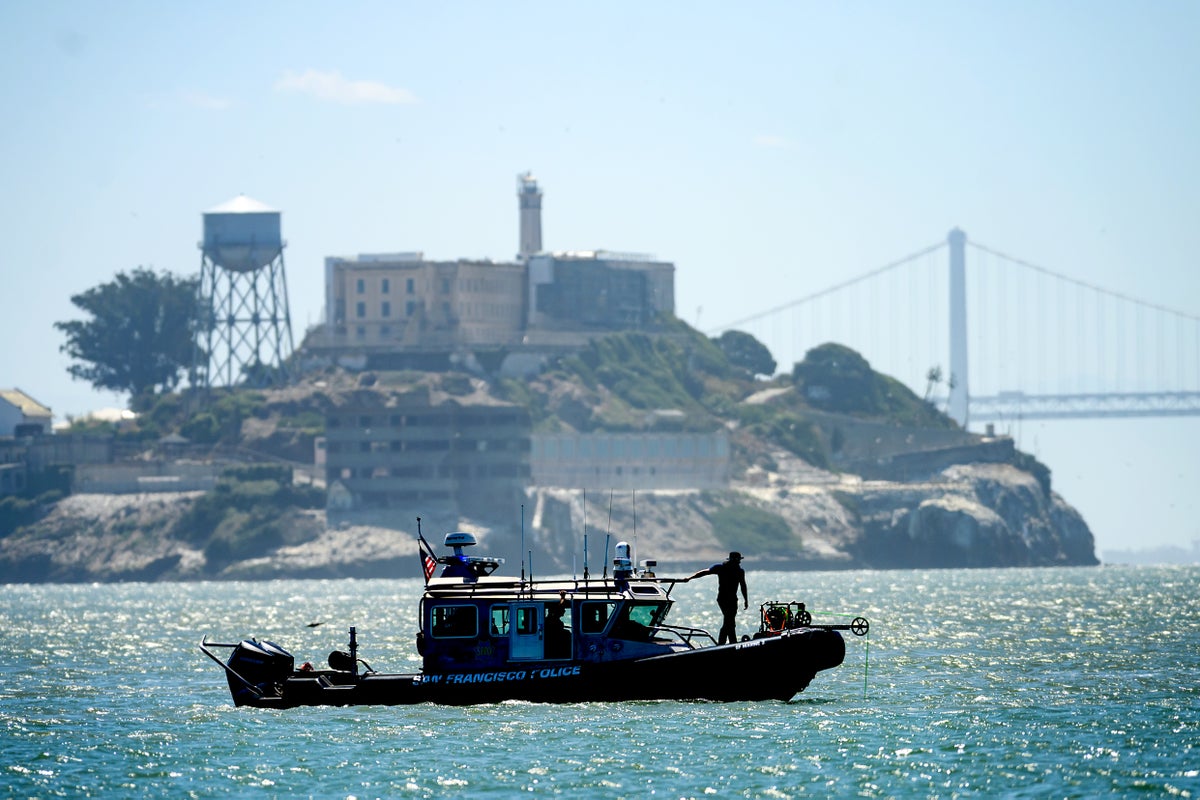
That is the horrifying reality that unfolded in the waters near Alcatraz Island. What was supposed to be a solemn memorial service aboard the Volare, a 49-foot cabin cruiser, turned into an absolute nightmare within seconds. With 20 people on board, the ship took on water, capsized, and threw everyone into the treacherous currents of the San Francisco Bay.
The disaster has already claimed lives, and the emotional toll on the surviving family members is unimaginable. Days after the incident, search teams made a somber discovery near Treasure Island. They recovered the body of 58-year-old Tondra Madruga, a Sacramento resident and beloved family friend who had joined the excursion to support her grieving loved ones.
While first responders and local boaters managed to pull 16 survivors from the water, the tragedy is far from over. Two people remain missing in the dark, churning depths, and the search has shifted from a frantic rescue mission to a complex recovery operation.
The Flight of the Volare and the Wave That Changed Everything
The extended Boisa family planned the gathering for a Tuesday afternoon. They wanted to celebrate the life of Ralph Boisa's daughter, who passed away more than a decade ago. It was a deeply personal milestone, a moment to honor her memory surrounded by the people who loved her most.
The Volare seemed up to the task. At 49 feet long, a cabin cruiser of that size generally handles the inland waters of the bay with relative ease. The weather was typical for July in Northern California, but the bay is a notoriously deceptive environment.
Around 3:37 p.m., disaster struck. Investigators believe a sudden, heavy wave slammed into the vessel. The impact caused the boat to take on a massive volume of water rapidly, destabilizing the craft and forcing it to roll completely over.
Panic erupted instantly. Passengers were cast directly into the unforgiving, chilly currents. Clifford Boisa was pulled from the water by early responders but died shortly after.
The U.S. Coast Guard, local fire departments, and nearby civilian boaters rushed to the scene. Good Samaritans played a massive role in saving lives that afternoon, pulling shivering survivors onto their own decks before emergency crews could even arrive.
The Search for Tondra Madruga and the Missing
For 48 hours, families waited in agonizing suspense. The Coast Guard launched a massive search effort that eventually covered more than 800 square miles. That is an area roughly half the size of Rhode Island, extending well past the iconic Golden Gate Bridge and out into the open Pacific Ocean.
The ocean search was suspended at sundown on Wednesday evening, passing the baton to local police marine units to handle the bay itself. On Thursday afternoon, a passing civilian boater spotted something in the water west of Treasure Island, a former naval station.
San Francisco police officers, who were already in the middle of conducting a sonar scan nearby, moved quickly to investigate the report. They recovered the body and transported it to Fire Station 35 along the busy Embarcadero. The San Francisco Medical Examiner later confirmed the identity as Tondra Madruga, also known to loved ones as Tondra Miller.
Her family expressed their immense grief and deep gratitude online. Quin Madruga shared a heartfelt message thanking the Coast Guard, first responders, and the civilian boating community who risked their own safety to assist during the initial chaos.
The nightmare continues for the Boisa family. Two women are still missing in the bay. They are Carol, Ralph Boisa’s sister, and Jackie, the wife of Clifford Boisa, the man who died on Tuesday.
Why the San Francisco Bay is More Dangerous Than It Looks
Many tourists and casual boaters look at the San Francisco Bay and see a picturesque, enclosed playground. They see sailboats gliding past Alcatraz and ferries moving smoothly between Oakland and the city. They assume it is safe.
They are wrong.
The bay is a volatile, high-stakes maritime environment. It features a unique combination of geographic and meteorological traits that can catch even experienced captains off guard.
Brutal Currents and Tides
The bay acts as a massive funnel. Huge volumes of water from the Sacramento and San Joaquin river systems rush down toward the Pacific Ocean. At the same time, the ocean tides force millions of gallons of water through the narrow gap under the Golden Gate Bridge.
When these opposing forces collide, the currents become incredibly violent. Tidal rips can easily destabilize a vessel, spinning it around or forcing it into unexpected troughs between waves. If a boat capsizes, these currents can carry a person miles away from the initial site within minutes. That explains why search crews had to expand their perimeter all the way into the open ocean so quickly.
The Temperature Factor
The water in the bay is shockingly cold, usually hovering between 50 and 55 degrees Fahrenheit. Falling into water this cold triggers an immediate physiological reaction known as cold water shock.
You gasp involuntarily. If your head is underwater, you breathe in fluid. Your muscles stiffen within minutes, making it nearly impossible to swim or hold onto floating debris, even if you are an excellent swimmer. Hypothermia sets in rapidly, stealing your coordination and strength long before help can arrive.
Sudden Wake and Rogue Waves
The bay is crowded. Huge container ships, fast-moving ferries, and commercial tugboats share the lanes with small pleasure crafts. The wake generated by these massive commercial vessels can travel long distances, combining with natural swells to create sudden, unusually large waves. A 49-foot cabin cruiser can feel incredibly small when a rogue wall of water approaches from an awkward angle.
The Extreme Challenges of Underwater Recovery
The focus of the operation has now shifted downward. Police have used advanced, boat-mounted sonar equipment to locate the submerged wreckage of the Volare. The vessel sits on a rocky, uneven seabed roughly 120 to 130 feet below the surface.
Recovering a boat from that depth is an extraordinary engineering challenge. Authorities are currently using a remotely operated vehicle to inspect the wreckage and see if it can be brought to the surface safely.
Operating at 130 feet is not a standard dive. Local rescue divers have pointed out the extreme difficulties of working at these depths in the San Francisco Bay.
- Total Darkness: Light cannot penetrate the thick, sediment-heavy water effectively. Divers must work completely by touch and artificial light, seeing only a few inches in front of their faces.
- Crushing Currents: The tides do not stop moving just because you are underwater. Divers face strong underwater currents that can drag them away from the wreck or pin them against dangerous, twisted metal.
- Decompression Risk: At 130 feet, the human body absorbs nitrogen rapidly. Divers have very limited time to work before they must begin a slow, careful ascent to avoid decompression sickness, commonly known as the bends.
Because of these extreme risks, the Alameda County Volunteer Dive Team and local police are moving meticulously. They will not risk more lives to pull up a piece of metal until they know the exact conditions of the wreckage.
Crucial Safety Lessons for Group Boating Excursions
Tragedies like this leave us looking for answers. You want to know how to protect yourself and your family when you step onto a boat. While investigators are still figuring out the exact mechanical and environmental details behind the sinking of the Volare, there are fundamental safety rules every passenger and captain must follow.
Never Ignore the Vessel Capacity
The Volare had 20 people on board. While a 49-foot vessel can technically hold a large group, capacity is not just about physical space. It is about weight distribution.
When a large group gathers on one side of a boat to talk, look at a landmark, or scatter ashes, the center of gravity shifts. This makes the vessel incredibly vulnerable to rolling over if it gets hit by a sudden wave from the opposite side. Always distribute weight evenly across the deck.
Life Jackets Must Be Worn, Not Stored
Most people do not wear life jackets during a calm, casual memorial service or family party. They leave them stored away in under-seat compartments or cabins.
When a boat capsizes, it happens in seconds. You will not have time to run into a sinking cabin, find a life jacket, and put it on. If you are on the water, put the vest on. Modern, inflatable life jackets are slim and comfortable. They do not ruin your photos, and they will save your life if you get thrown into a freezing current.
Keep a Lookout for Changing Water Patterns
Captains must remain hyper-vigilant, especially when navigating high-traffic areas near Alcatraz or the Golden Gate Bridge. Watch the horizon for incoming ferry wakes, changing tide lines, and shifting winds. A sudden change in the texture of the water surface often signals a dangerous current shift just ahead.
What Happens Next
The San Francisco Police Department Marine Unit will continue scanning the area using sonar and underwater drones. Their primary goal is finding the two family members who are still missing, bringing some shred of closure to a family that has been completely devastated by this outing.
If you plan to take a private vessel out into the bay anytime soon, check the tidal schedules with extreme care. Avoid the high-current zones around Alcatraz and the Golden Gate during peak ebb tides. Make sure your safety gear is fully accessible, and never underestimate the power of a single wave.