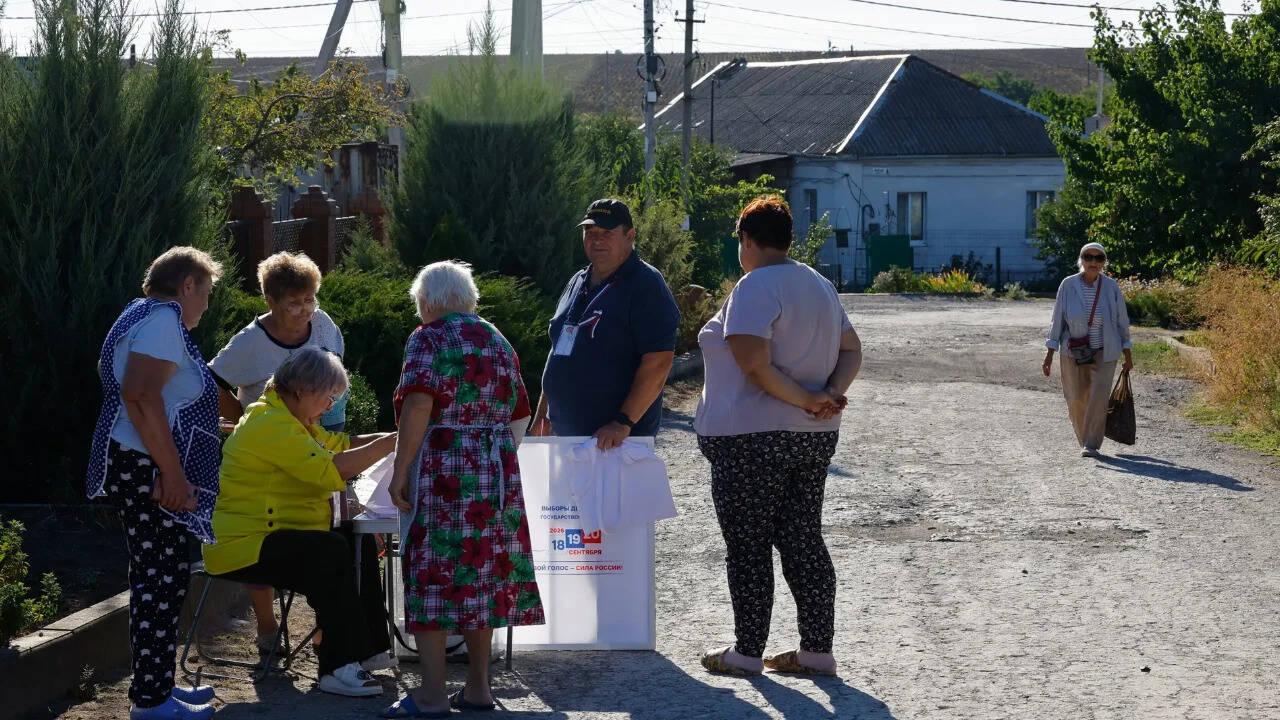
Polling stations opened across Russia's vast eastern time zones on Friday, kicking off a high-stakes, three-day State Duma election. This marks the country's first parliamentary vote since the full-scale invasion of Ukraine began in February 2022. If you expect a dramatic upset or a sudden shift in domestic policy, you'll be disappointed. The outcome is basically baked into the system long before the first ballot paper hits a box.
President Vladimir Putin's ruling party, United Russia, stands completely unopposed in terms of real political leverage. Sure, voters face a slate of options on paper, but the actual mechanics of political survival in Moscow leave little room for true opposition.
The Reality of Russia's State Duma Race
The State Duma controls all 450 seats in Russia's lower house of the Federal Assembly. Right now, every corner of state media and regional administration is working overtime to project an image of absolute national unity. Putin framed the vote in a televised address as a direct referendum on the war effort, arguing that participation proves millions stand firmly behind Russian soldiers.
You won't find genuine anti-war candidates on the ballot. The Supreme Court made sure of that by clearing out dissenting voices like the Yabloko party before the campaign ever got off the ground. What remains are systemic opposition parties—groups like the Communist Party, the Liberal Democratic Party, A Just Russia, and New People. These factions occasionally bark at minor domestic issues, but they march in lockstep with the Kremlin on foreign policy and the ongoing conflict in Ukraine.
Voting in Occupied Territories
Adding another layer of complexity, voting is actively taking place in Russian-controlled regions of Ukraine. Kiev has flatly rejected these polls as illegal, declaring that any results carry zero legal validity under international law.
Yet, for Moscow, holding these votes serves a dual purpose. It attempts to normalize territorial claims while doubling down on domestic messaging. The Kremlin wants to show the home front that life goes on as normal, even as Western sanctions bite, inflation creeps upward, and Ukrainian drone strikes occasionally rattle Russian cities.
What the Numbers and Public Sentiment Actually Tell Us
Independent political analysts watching from outside Russia point out that voter turnout matters more than the seat distribution. When public apathy runs high, state employers and regional governors often use administrative pressure to drive workers toward mobile polling stations.
Economic strain is real. Families across Russia feel the pinch of a wartime budget, soaring interest rates, and labor shortages caused by military mobilization and worker flight. This election acts as an official temperature check. The Kremlin needs high participation numbers to validate its narrative, regardless of what voters think behind the curtain.
Don't look for systemic change in these election results. The structure of modern Russian politics ensures continuity over choice. As the three-day weekend wraps up on Sunday, United Russia will secure its commanding majority, and the political machinery in Moscow will keep turning.
Check your local updates for the final certified counts as regional election commissions release them early next week.