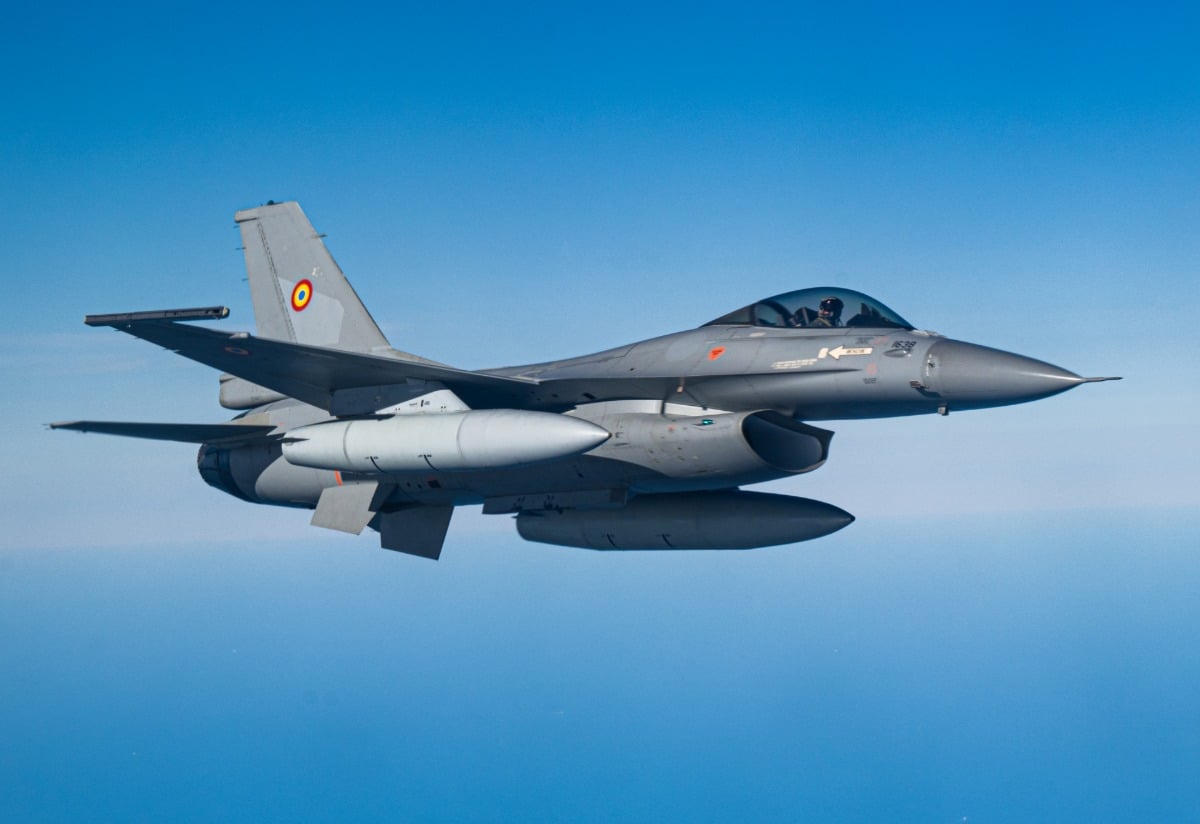
For years, NATO's eastern flank watched wandering drones drift across borders with a frustrating mixture of diplomatic protests and passive tracking. That era just ended. When a Romanian Air Force F-16 tracked and obliterated a rogue drone over the Danube Delta at 8:30 in the morning, it marked the second time in 24 hours that Bucharest pulled the trigger on an airspace intruder.
Things are escalating fast. If you think these border violations are just accidental navigational blunders, you're missing the broader security shift happening right now along the Black Sea.
The 24-Hour Turning Point Over Romanian Skies
Let's look at the sequence. On Friday, a Romanian F-16 brought down an intruding drone near Padina in Buzău County, marking the very first time the country physically destroyed an unauthorized target in its national airspace. Before this weekend, standard procedure usually meant scrambling jets, monitoring the flight path, and hoping the machine would eventually run out of fuel and crash harmlessly in a field.
Then Saturday morning happened. At 8:22 AM, Ministry of National Defence radar picked up another unauthorized target breaching the border near Ukraine. By 8:30 AM, the same Romanian F-16 pilot who executed Friday's historic strike intercepted the aircraft roughly ten kilometers west of Sfântu Gheorghe, reducing it to wreckage over an uninhabited marshland.
Two shootdowns in two days. That is a policy shift, not a coincidence.
Why the Danube Delta is a Flashpoint
Geography dictates destiny in modern air defense. Romania shares a grueling 650-kilometer border with Ukraine, much of it tracing the winding course of the Danube River. Across that water lie Ukrainian ports like Odesa, which face near-constant bombardment from long-range munitions.
When Moscow ramps up strikes on southern Ukrainian grain silos and port infrastructure, stray projectiles inevitably cross the river. Romanian authorities have logged roughly 30 separate airspace incursions since the full-scale conflict erupted in 2022.
Until now, the response was reactive. Acting Defense Minister Radu Miruță pointed out the obvious operational headaches behind intercepting these small, low-flying targets. During Friday's operation, Italian Eurofighter Typhoons—operating under NATO's active air policing mission—had to scramble alongside Romanian F-16s. When a NATO alliance member has to deploy four high-end fighters to hunt a single cheap loitering munition, the math simply doesn't work long-term.
The Broader NATO Dilemma
Air defense isn't just about having advanced jets; it's about cost efficiency and reaction time. F-16 Fighting Falcons are phenomenal multi-role aircraft, but burning thousands of dollars per flight hour to chase small drones with expensive air-to-air missiles is a heavy price to pay.
Yet doing nothing carries a much higher cost. Every unchalleged breach invites testing. It probes response times. It tells command centers that borders are porous. By taking direct action twice in 24 hours, Bucharest sent an unambiguous message: Romanian airspace is officially closed to unauthorized traffic, regardless of whose markings are on the fuselage.
Expect military planners across the alliance to study these weekend engagements closely. As low-cost aerial threats evolve, frontline states are finding that kinetic interception is sometimes the only language that registers. Ground teams are already combing the Danube Delta wreckage fields, but the political shockwaves will echo through NATO headquarters long after the debris is cleared.



(mh=45C1wGtD-LV41OF8)12.jpg)