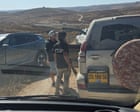
An American congressman, surrounded by masked, armed men in the West Bank, watches as foreign military forces roll up. Instead of de-escalating the crisis, the soldiers side with the armed group. That isn't a scene from a political thriller. It just happened to California Representative Ro Khanna.
When Khanna went public about being trapped for over an hour by right-wing Israeli settlers and the Israel Defense Forces (IDF), the response from official channels was fast, defensive, and completely contradictory. The Israeli military claimed they swept in to save the day, quickly dispersing the crowd. Khanna fired back directly on NBC's Meet the Press with a blunt reality check: "The IDF is lying."
This clash isn't just a brief PR nightmare for international diplomats. It's a flashing red light showing how broken the accountability structure has become between the United States and its closest Middle Eastern ally. When a sitting US politician can be held at gunpoint using American-manufactured weapons while funded foreign soldiers stand by and laugh, the diplomatic playbook needs to be thrown out.
What Happened on the Road to Khirbet Zanuta
Khanna was visiting the remnants of Khirbet Zanuta, a Bedouin village in the southern West Bank. The town sits mostly in ruins, abandoned by its residents after repeated, violent campaigns by extremist settlers. A team from the Israeli human rights group Breaking the Silence accompanied the congressional delegation, along with a photographer from the New York Times.
Suddenly, a group of young, aggressive settlers blocked their van. They were armed with US-made M4 rifles, kicking the tires, filming the passengers, and mocking them.
The real breakdown happened twenty minutes later when four IDF soldiers arrived. Instead of clearing the path for an official American government convoy, the soldiers explicitly told the group's translator that they stood with the settlers. The detention stretched on for more than an hour. The standoff only broke after frantic calls to the US Embassy in Jerusalem and local Israeli police finally forced a retreat.
Nadav Weiman, the director of Breaking the Silence, witnessed the whole dynamic play out. He tried to get the soldiers to act, but observed that the settlers were clearly the ones giving the orders, not the military.
The Escalating War of Words
The fallout from the dirt roads of the West Bank quickly moved to the Sunday morning political talk shows, exposing deep systemic fractures.
The official IDF narrative claimed that their troops arrived on the scene, quickly dispersed the Israeli civilians, and opened the road. They explicitly denied taking any part in blocking the delegation.
Khanna dismantled that claim point by point. He described 21- and 22-year-old settlers acting with total impunity because they knew nobody would stop them. He demanded that the Israeli prime minister open an immediate investigation into the specific extremist network involved, pointing to connections with Yinon Levi, a notorious settler previously sanctioned by the US for violence against Palestinians.
The pushback from the Israeli establishment took an even stranger turn on CBS's Face the Nation. Michael Leiter, Israel’s US-born ambassador to the United States, dismissed the entire event as a coordinated political stunt. Leiter claimed Khanna skipped official government channels for his trip, opting to work with dissident groups to boost his profile ahead of a potential 2028 presidential run.
Host Margaret Brennan pointed out that Khanna had deliberately kept the news quiet until he safely exited Israeli-controlled territory. That didn't stop the diplomat from doubling down on the political theater narrative.
Why This Standoff Changes the Status Quo
American politicians visit the region frequently, but this specific event shatters a long-held assumption in Washington: that US citizenship and official status provide an ironclad shield against harassment by foreign forces.
Khanna openly admitted to feeling completely powerless during those ninety minutes, despite all his structural privilege. If an American lawmaker with a direct line to the US Embassy can be trapped on a road by laughing, armed twenty-somethings, the message to ordinary people is unmistakable. The rule of law in these territories has been entirely replaced by a dual-power dynamic where radical ideological groups dictate terms to the military.
The timing of this crisis could not be worse for the establishment wings of both major American political parties. Recent data shows that 58% of Democrats believe the US is too supportive of Israel. By bringing his first-hand experience back to voters in swing states like Michigan and Wisconsin, Khanna is highlighting a massive policy vulnerability. The long-standing practice of providing unchecked military aid is facing unprecedented scrutiny from lawmakers who have felt the direct consequences of that funding on the ground.
Navigating the Future of Aid and Accountability
You cannot fix a systemic policy failure until you accurately diagnose how deep the rot goes. Dealing with the fallout of this incident requires concrete steps rather than boilerplate diplomatic statements.
First, the House Foreign Affairs Committee needs to launch an immediate, independent review into how American-manufactured M4 rifles are moving from official military aid channels into the hands of unauthorized civilian groups in the West Bank. End-use monitoring laws exist for a reason, and this situation shows they are being ignored.
Second, the State Department must expand its visa bans and financial sanctions against violent extremist entities. Targeting isolated individuals while ignoring the military units that protect and enable them does nothing to change the structural incentives on the ground.
The era of issuing blank checks without expecting basic professional conduct from foreign security forces is rapidly coming to an end. When a government says one thing and video evidence proves another, continuing with business as usual isn't diplomacy. It's an admission of total weakness.