Forget high-tech drones, expensive fire retardants, or massive chemical operations. Sometimes the most effective solution to a modern crisis is a creature that hasn't changed much in thousands of years. You have probably seen the headlines about the "firefighting donkeys" of Andalusia, Spain. It sounds like a charming story for a children’s book, but the science behind this is actually rock solid.
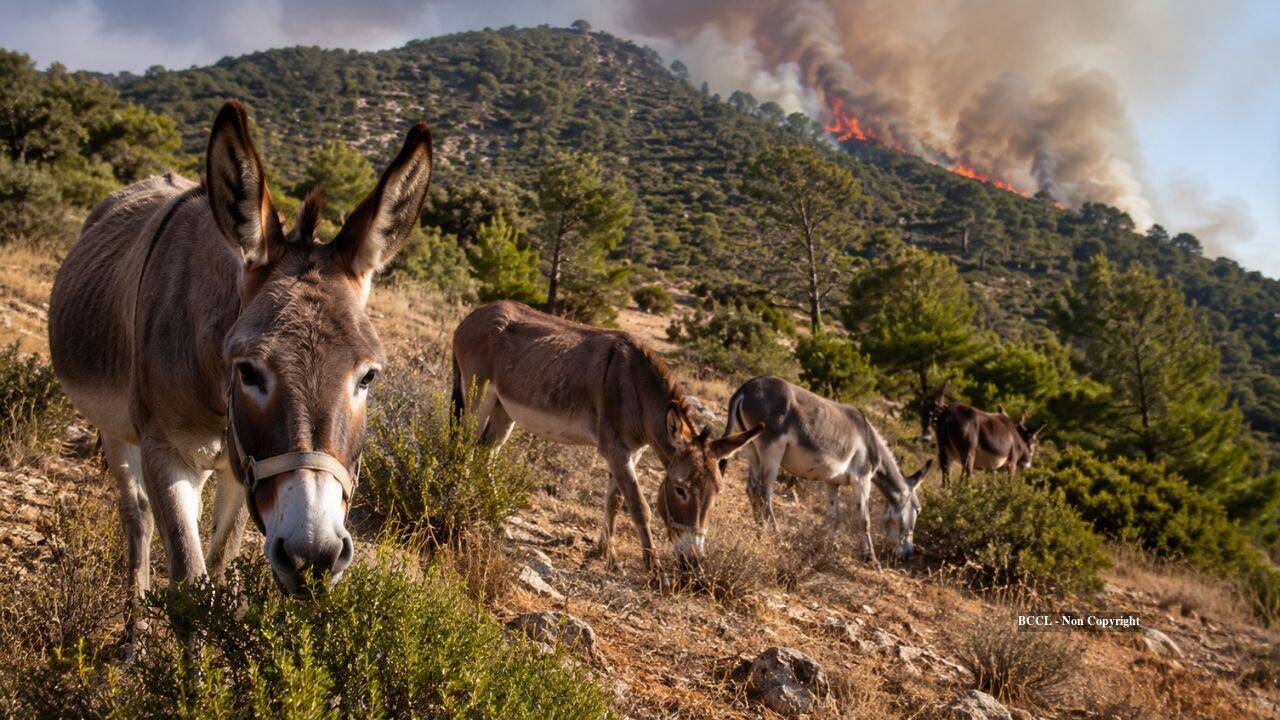
In the rugged, sun-baked terrain of Southern Spain, eighteen rescued donkeys are doing what heavy machinery costs thousands to replicate. They are grazing. For seven hours a day, these animals act as a living, breathing fuel-reduction system. They eat the dry brush, invasive weeds, and parched grasses that turn Mediterranean hillsides into tinderboxes during the summer. By simply doing what nature intended, they are creating natural firebreaks that stop infernos from spreading. Building on this theme, you can also read: Why Malaysian Preachers Need To Stop Misunderstanding Cultural Festivals.
The Real Problem With Modern Fire Prevention
We have been doing it wrong for decades. When land management focuses purely on mechanical clearing or chemical spraying, we ignore the biological reality of the land. Mechanized equipment is loud, expensive, and often struggles with steep, rocky terrain. It also requires fossil fuels to operate, which adds a layer of irony to the attempt to protect the environment.
The strategy adopted by projects like El Burrito Feliz—the association behind these animals—flips this on its head. By introducing controlled grazing, you aren't just clearing brush. You are managing a habitat. Analysts at Cosmopolitan have also weighed in on this trend.
Here is why it works better than the alternatives:
- Precision grazing: Donkeys are picky eaters compared to cows. They target specific types of woody, dry vegetation that represent the highest fire risk.
- Soil health: Unlike heavy tires that compact soil and damage root systems, donkey hooves have a minimal impact. They churn the earth in a way that can actually encourage better plant growth in the following season.
- Biodiversity: Removing invasive, highly flammable shrubs allows native flora to breathe. It opens up spaces for smaller creatures to move, effectively maintaining a healthier, more resilient ecosystem.
How It Works In Practice
You might wonder if you can just toss a donkey onto a hill and expect fire protection. That isn't how it works. This is a managed, scientific approach. The animals are guided into specific plots—roughly 40 meters by 15 meters—to ensure they clear the fuel loads in critical zones.
It is a systematic approach to fuel management. By focusing on these corridors, the team creates "buffer zones." If a fire starts in an adjacent area, it hits these grazed strips and loses momentum. Because the fuel density has been slashed by up to 40% in these strips, the fire often struggles to jump the gap. It is a simple, elegant barrier that doesn't require electricity or maintenance.
Beyond The Fire Line
The most overlooked part of this story is the animal welfare angle. These aren't just "tools." Many of these animals came from backgrounds of neglect, abandonment, or near-slaughter. Bringing them into a program like this gives them a job, yes, but it also gives them the care, veterinary attention, and stable environment they need to thrive.
When you scale this up—like in Catalonia, where similar projects now utilize dozens of donkeys—it creates local employment. It brings people back to the land. We spend so much time looking for "new" tech solutions that we forget to look at ancient, proven methods.
What This Means For The Future
If you want to implement something similar in your own region or research this for broader applications, start by looking at your local topography. This model works best in areas where mechanical access is difficult or too costly.
- Assess the fuel load: Identify the specific species of invasive or flammable brush in your area.
- Consult local conservationists: You cannot just introduce animals without understanding the local plant life. You need to ensure the donkeys aren't eating protected species.
- Pilot small: Don't try to clear a forest overnight. Start with a small, manageable plot and measure the rate of fuel reduction.
Honestly, we need to stop overcomplicating conservation. We don't always need a new sensor or an algorithm to save the forest. Sometimes, we just need a few hungry, rescued donkeys and a smart plan. The next time you hear about a wildfire prevention strategy, look past the expensive machinery. Nature has been handling this for millennia. We just need to give it a little nudge.