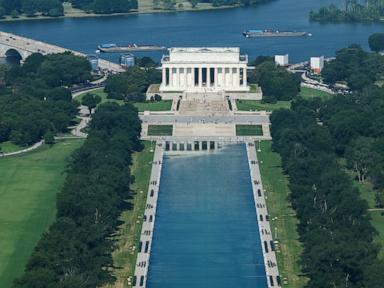
Taxpayers are footing a massive, ballooning bill for the Lincoln Memorial Reflecting Pool, and the official explanations just aren't holding water. What started as a highly publicized project to spruce up the National Mall for America's 250th birthday has devolved into a multi-million-dollar blame game involving no-bid contracts, peeling industrial liners, and bright green algae blooms.
Interior Secretary Doug Burgum took to the Sunday morning news shows to defend the administration's handling of the project. He claims the extra cost for fixes is going to be a small number. But looking at how the project grew from an initial $1.5 million estimate to over $14 million, it's easy to see why people are skeptical.
The real issue here isn't just a few thousand dollars in minor fixes. The project reveals how emergency contract exemptions can lead to spiraling public costs without solving the core technical problems.
The True Cost of Fixing the National Mall
When the administration first announced plans to revamp the six-acre pool before the July Fourth celebrations, the price tag sounded reasonable. The public was told it would take around $1.5 million to seal the basin and coat it in a striking shade dubbed American flag blue.
The budget numbers tells a very different story:
- The initial coating contract: Awarded without competitive bidding to Virginia-based Atlantic Industrial Coatings, this contract quickly climbed to $6.9 million.
- The total renovation tally: By the time the pool was filled, the price tag reached a staggering $14.7 million.
- The water system contract: An additional $1.7 million contract went to Ohio-based Green Water Solutions for a specialized purification system.
Democratic lawmakers are demanding answers about where this money came from. A group of senators recently sent a letter to Burgum pointing out that the National Park Service appears to be redirecting online recreation pass fee revenues away from local park upkeep to fund these high-profile D.C. projects. Instead of maintaining trails and visitor facilities across the country, millions are flowing into the National Mall.
A Mess Under the Surface
It didn't take long for things to go wrong. Just days after the mid-June completion, the pristine blue water turned a thick, swampy green. Strips of the newly installed bottom liner began peeling off.
The administration immediately pointed fingers at outside interference. President Trump claimed that vandals intentionally cut a 350-foot gash into the pool liner and introduced fertilizer to make the algae grow. Federal prosecutors even indicted a former Olympian, David Hearn, accusing him of tearing up the sealant with his bare hands. Hearn's legal team calls the charges completely outrageous, arguing the case is a manufactured narrative to cover up government incompetence.
Burgum backed the vandalism theory on CNN, confirming that multiple cuts added up to a massive tear. He noted that the repair bills would likely cost tens of thousands of dollars. Yet, he accidentally contradicted the administration's narrative regarding the slime. Burgum admitted the algae wasn't introduced by vandals at all. It was sitting inside the old, underlying pipes. As the pool refilled, the stagnant organisms poured right out into the open.
While Burgum insists new "nanobubbler" technology has finally cleared the water, the rapid breakdown of the liner points to a deeper issue. The hasty $14.7 million project focused heavily on cosmetic fixes rather than replacing thousands of feet of leaking, decades-old plumbing connecting the pool to the water treatment plant.
Why New Bids Aren't Happening
Despite the peeling liner, the high cost, and the fact that the pool had to be shut down during the peak Independence Day weekend, the Department of the Interior is doubling down on its chosen vendors. Burgum explicitly stated that the government will not seek new competitive bids to fix the damaged liner.
He maintains the current company did a fantastic job and will handle the upcoming repairs, which require partially draining the pool. The original contract for the project included a 20 percent profit margin. That's nearly double the typical 6 to 12 percent rate for standard federal procurement. By sticking with the same contractor under the guise of an ongoing emergency, the government avoids the competitive bidding process that usually protects public funds from being overspent.
If you want to track how your federal tax dollars and national park fees are actually being utilized, watch the upcoming congressional hearings. Keep an eye on the House Natural Resources Committee updates and the formal financial disclosures from the Department of the Interior. Public oversight is the only way to ensure that national landmarks are preserved through sound engineering rather than expensive, short-term cosmetic fixes.