You think your pet is safe sleeping on your porch, but in Vietnam, that cat is worth about 70,000 VND per kilogram to a professional thief. That's the reality behind the massive police raid in Ho Chi Minh City that blew the lid off a sophisticated, multi-year pet trafficking syndicate.
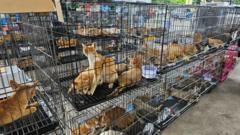
When local police stepped in, they uncovered a logistical nightmare. Officers seized more than 400 live cats crammed into transport cages, alongside 80 dead ones already preserved on ice. Another 21 cats were recovered from a linked facility. This wasn't a small-time operation. The nine individuals arrested confessed to systematically trapping, luring, and stealing family pets across southern Vietnam for three straight years.
The rescue pulled back the curtain on a brutal, shadow industry that operates right under the nose of regular citizens. For the people who rushed to the police station hoping to find their missing companions, the day brought a mix of intense relief and crushing grief.
The Anatomy of a Three Year Pet Theft Ring
This operation didn't rely on random strays. The suspects targeted loved, domesticated pets because they're easier to approach and catch. The gang stayed in the shadows by building a strict processing schedule. They hoarded stolen cats in hidden holding pens until they had a large enough batch, then sold them off every two to three days.
The logistics were surprisingly organized. Once gathered in Ho Chi Minh City, the animals were trucked to a transit parking facility in Tay Ninh Province. From there, they were distributed to slaughterhouses and restaurants across the country.
The financial incentive keeps this black market alive. At 70,000 VND per kilo, a healthy four-kilogram house cat nets a thief a quick payday. When you multiply that by hundreds of cats a week, it becomes a highly profitable criminal enterprise.
The Human Toll Behind the Statistics
We often see numbers in news headlines and lose sight of the actual people involved. At the police headquarters, the scene was chaotic and deeply emotional. Dozens of frantic owners arrived throughout the day, scanning rows of cramped cages for a familiar face.
Quach Thi Lan Anh, a local resident, experienced a minor miracle. She found and reunited with both of her stolen cats at the same time. "I was truly surprised," she said, thanking the officers for the chance to see them again. A local veterinary worker, who originally showed up hoping to find his own missing pet, ended up staying for hours to help officers care for the traumatized survivors.
Not everyone got a happy ending. Tuan Minh spent hours searching the cages for his British Shorthair, which vanished two weeks prior, but left empty-handed. His story is far more common.
The physical toll on the animals was devastating. Welfare workers from the group Humane World for Animals discovered two newborn kittens inside one of the filthy cages. One was already dead; the other barely survived on emergency bottle-fed milk. The charity quickly supplied food and large industrial fans to prevent the remaining animals from suffocating in the heat. Even with immediate medical intervention, around 100 of the rescued cats died shortly after the raid due to severe exhaustion, dehydration, and injuries sustained during captivity.
The Massive Legal Loophole Facing Vietnam
A lot of people don't realize that eating cat and dog meat is technically legal in Vietnam. Restaurants openly advertise Thit Meo (cat meat), often marketed under the culinary euphemism "Little Tiger."
There's a weird legal history here. Until January 2020, the hunting, slaughter, and consumption of cats was officially banned under a directive aimed at controlling rat populations. When that law was repealed, the market expanded rapidly, especially in northern regions where the meat is considered a delicacy or eaten for luck during specific lunar cycles.
Today, the only real legal barrier is a regulation requiring vendors to show certificates proving the origin of their meat. Because you can't legally source thousands of domestic cats for slaughter, virtually the entire supply chain relies on theft. It creates a volatile environment. Pet owners frequently clash with armed cat thieves, and these late-night confrontations have occasionally turned fatal.
What This Bust Means for the Future of Animal Welfare
While this raid is a massive win for local law enforcement, it highlights a much larger systemic problem. International animal welfare groups like FOUR PAWS estimate that over six million dogs and cats are slaughtered for meat every year in Vietnam.
Public opinion is shifting fast. A comprehensive survey conducted by FOUR PAWS revealed that 91% of Vietnamese citizens believe the trade should be banned or strongly discouraged. The younger generation in urban hubs like Ho Chi Minh City views cats as family members, not livestock. This cultural shift is putting unprecedented pressure on the government to act.
The cats left behind at the police station face a complicated bureaucratic hurdle. Because they're classified as physical evidence in a criminal prosecution against the nine suspects, they can't be immediately released to shelters or new homes. Welfare groups are focusing their energy on keeping these animals alive inside the station while the legal case moves forward.
How to Help Protect Companion Animals Today
If you want to take action against the illicit pet meat trade, you don't have to wait for sweeping legislative changes. Practical steps make a direct impact right now.
- Support Local and Global Welfare Coalitions: Groups like Humane World for Animals and FOUR PAWS provide the immediate medical care, food, and infrastructure needed during large-scale police confiscations.
- Utilize Anonymous Reporting Tools: If you travel or live in Southeast Asia, use available online reporting apps to flag illegal transport trucks, uncertified slaughterhouses, or pet theft activity. Gathering data is how advocates force government intervention.
- Boost Local Trap-Neuter-Return (TNR) Programs: Reducing the stray population through community programs dries up the supply of easy targets for thieves, forcing stricter scrutiny on where restaurants get their meat.
The Ho Chi Minh City raid proved that police will take decisive action when pet theft runs rampant. True progress depends on turning these sporadic raids into permanent national policy.

