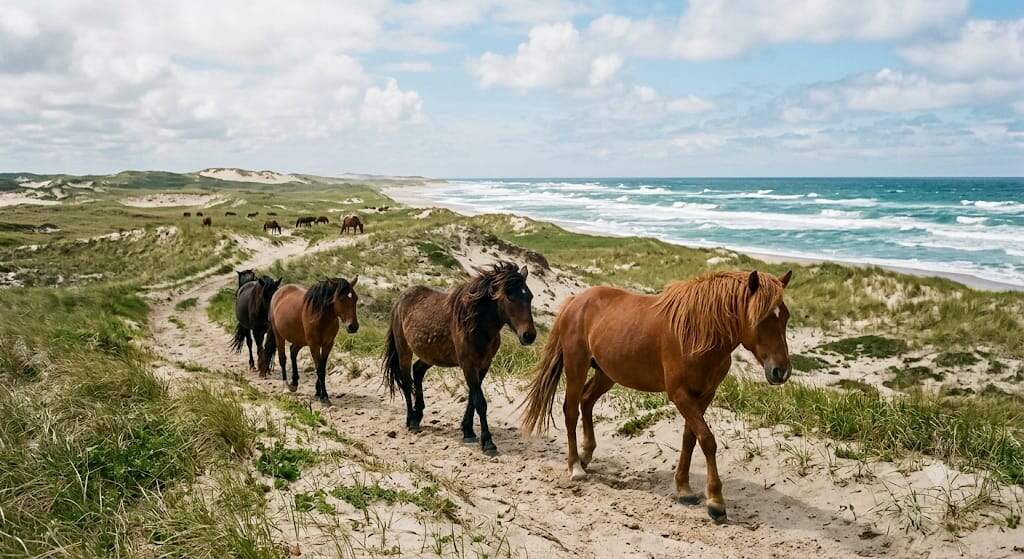
Imagine a crescent-shaped sliver of sand sitting out in the North Atlantic. It's isolated, plagued by thick fog, and whipped by ferocious ocean winds. There are no trees. There are no paved roads. No permanent human towns exist here. Yet, against all biological logic, hundreds of wild horses run free across these massive shifting dunes.
This is Sable Island. Most people find out about it through stunning Instagram photos of feral stallions running along misty beaches. But the pretty pictures hide a brutal, fascinating reality. Survival on this remote Canadian sandbar is a daily fight, and the history of how these animals got there is filled with myth and misconception.
If you've ever dreamed of seeing this place or just wondered how a large mammal survives in the middle of the ocean without human help, let's look at the actual facts.
A Strip of Sand in the Atlantic Ocean
Sable Island sits roughly 180 miles southeast of Halifax, Nova Scotia. It's incredibly small. The island measures only about 26 miles long and barely whitespace over a mile wide at its thickest point. It's basically a giant sandbar sticking out of the continental shelf.
Because it's just sand, the island constantly changes shape. The wind blows the dunes around, stretching the tips of the crescent and reshaping the coastline every single year. It's a fragile ecosystem completely at the mercy of the Atlantic Ocean.
You won't find a permanent human population here. Parks Canada runs a small station to manage the area, and a handful of researchers or weather monitors stay for stretches of time. But the true rulers of the island are the horses, alongside the world's largest breeding colony of grey seals.
How Hundreds of Horses Survive on Nothing But Grass and Sand
The biggest question people have is simple. What do they eat? There are no apple trees, no grain buckets, and no barns to shield them from freezing winter blizzards.
The Sable Island horses have adapted to a brutally restricted diet. Their primary food source is marram grass, which grows across the dunes. This tough, coarse grass binds the sand together and keeps the island from washing away. The horses spend up to 19 hours a day chewing it just to get enough calories. During the summer, they also eat beach pea and various wild legumes.
Water is another challenge. You can't drink ocean water, and there are very few permanent freshwater ponds on the island. To survive, these horses have learned a unique trick. They use their hooves to dig deep wells into the sand dunes until they hit the freshwater lens that floats above the heavier saltwater beneath the island.
This harsh lifestyle takes a massive physical toll. The marram grass is covered in fine windblown sand. When the horses chew the grass, they chew the sand too. This grinds down their teeth much faster than normal domestic horses. By the time a Sable Island horse reaches old age, its teeth are often worn down to the gums, making it impossible to eat enough food to survive the winter.
The Dark History of the Graveyard of the Atlantic
The island isn't just famous for its wildlife. Long before it became a protected park, sailors knew it by a terrifying name: the Graveyard of the Atlantic.
Because the island is low-lying and constantly shrouded in dense fog, it was a death trap for wooden sailing ships navigating the busy shipping lanes between Europe and North America. The shifting sandbars underwater extend far beyond the visible beaches, catching captains completely off guard. Over 350 documented shipwrecks have occurred on the shores of Sable Island since the late 1500s.
This shipwreck history links directly to the biggest myth about the horses. For decades, popular stories claimed the horses were survivors of these tragic shipwrecks, swimming ashore from sinking vessels and breeding into the herd we see today.
It's a romantic story, but it's completely wrong.
Historical records and genetic testing have proven that the horses were intentionally brought to the island during the mid-1700s. A Boston merchant named Thomas Hancock shipped horses, cattle, and sheep to the island in an attempt to start a farming venture or keep livestock available for shipwreck survivors. Later, the introduced horses bred, reverted to a feral state, and adapted perfectly to the sandbar. The cattle and sheep didn't last, but the horses did.
The Strict Rules of Visiting This Protected National Park Reserve
In 2013, Canada officially declared Sable Island a National Park Reserve. This move changed everything for the horses and the few tourists who try to visit.
Under Parks Canada management, the horses are classified as a naturalized species. They're treated exactly like wild animals, meaning human interference is completely banned. If a horse is starving during a rough winter, nobody brings hay. If a horse gets sick or breaks a leg, veterinarians don't fly in to treat it. Nature takes its course. This hands-off policy ensures the herd stays genetically resilient and adapted to the environment, even if it feels cruel to watch from the outside.
This strict protection applies to human visitors too. You can't just hop on a boat and show up on the beach.
Every single visitor must get advance permission from Parks Canada. There's a strict limit on how many people can be on the island at one time to prevent the fragile sand dunes and marram grass from being trampled. When you walk around, you must maintain a mandatory distance of at least 65 feet from the horses at all times. If a horse approaches you, you have to back away.
What Most People Get Wrong About the Sable Island Horses
Social media portrays these animals as majestic, pristine creatures living a peaceful paradise life. The reality is much grittier.
These horses look vastly different from the groomed horses you see at a local stable. They're smaller, stockier, and have incredibly thick, shaggy coats to protect them from the damp, freezing ocean winds. Their manes and tails are long, tangled, and matted with sand and burrs.
They live in small family groups called bands, usually consisting of one dominant stallion, a few mares, and their foals. Young stallions that don't have a band form loose bachelor groups, constantly looking for a chance to challenge a leader and steal his mares. Life is loud, competitive, and stressful.
The population fluctuates wildly based on the severity of the winters. In a good year, the herd can grow to over 500 animals. But a single brutal winter with heavy ice and deep snow can cause a massive die-off, reducing the population by more than twenty percent in a matter of months. It's a natural cycle of boom and bust that has kept the herd in balance with the island's limited vegetation for centuries.
How to Actually Get to Sable Island
If you want to be one of the few people who see this place in person, prepare for a logistical challenge and a massive hit to your wallet. There are only two real ways to get there, and both depend entirely on the unpredictable Atlantic weather.
The first option is a small charter plane. Companies fly out of Halifax and land directly on the south beach of the island. There's no asphalt runway here. The pilot has to land on firmly packed sand at low tide. If the sand is too soft, or if the fog rolls in, the flight is instantly canceled or postponed.
The second option is an expedition cruise ship. A few adventure cruise lines include Sable Island on their itineraries around Atlantic Canada. Passengers ride Zodiac boats from the main ship through the rolling surf to land on the beach. If the swells are too high, the boats can't launch, and you'll end up staring at the island from a mile away through binoculars.
Because of these extreme conditions, day trips often cost thousands of dollars per person, and there are absolutely no overnight accommodations for regular tourists. You arrive, spend a few hours walking the dunes with a guide, and leave before the weather turns dangerous.
If you're planning a trip or researching the area, keep these immediate next steps in mind:
- Check the official Parks Canada website for current visitor guidelines and registration fees.
- Look into authorized tour operators based out of Halifax if you prefer a guided day flight.
- Budget for trip insurance that covers weather-related cancellations, as cancellations happen frequently.
- Prepare proper gear, including waterproof boots, windproof layers, and a high-quality camera lens to capture the horses from the required legal distance.
Sable Island remains one of the wildest places left on earth. It's an isolated sandbar where humans are just temporary observers, and the horses continue their centuries-old battle against the elements.