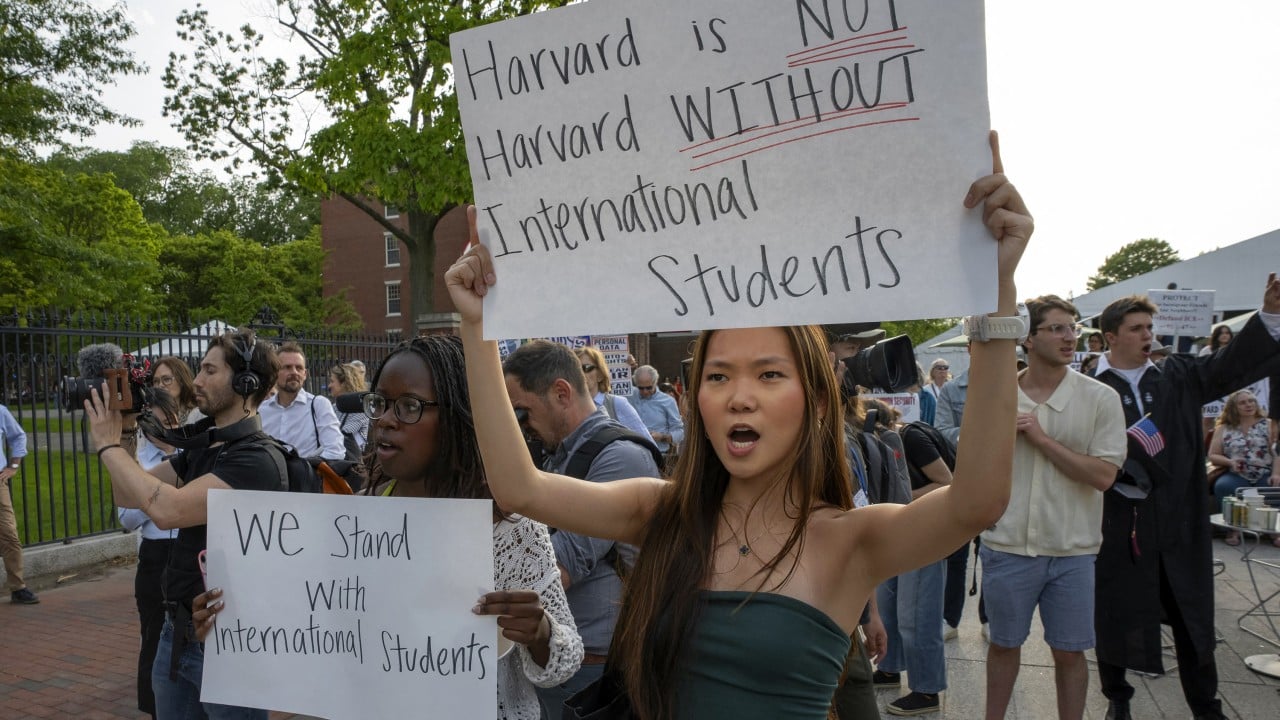
Washington just threw a massive wrench into the machinery of international academia and global journalism. By ending a decades-old policy that allowed foreign students and media workers to live in the United States without constant renewals, the White House has signaled a new, hyper-restrictive phase in its foreign policy.
The immediate fallout is obvious. Beijing is furious. Chinese Foreign Ministry spokesperson Lin Jian wasted no time calling the new US visa rules discriminatory and explicitly warned that China reserves the right to take reciprocal countermeasures.
If you think this is just a minor bureaucratic tweak, you are mistaken. This policy fundamentally alters how international talent views the United States. For decades, the "duration of status" system allowed individuals on F-1 student visas and I-1 journalist visas to stay as long as they remained enrolled or employed. That predictability is gone. Now, everything operates on a ticking clock.
What the New Rule Changes and Why it Matters
The Department of Homeland Security published the final rule on July 16, 2026, setting off panic across global universities and newsrooms. The rule officially takes effect on September 15, 2026.
Under the previous framework, as long as you kept your grades up or kept your media job, you didn't have to keep begging the federal government for permission to stay. The new system replaces this with rigid, unforgiving deadlines. Most international students are now capped at a maximum of four years.
Think about that. A standard undergraduate degree takes four years. If you experience a medical emergency, change majors, or require an extra semester to finish a thesis, you must file a formal extension application. You must submit to new background checks. You must pay more fees and undergo biometric screening.
The rules for journalists are even more severe. Most foreign reporters will be restricted to fixed periods of up to 240 days. For Chinese nationals, that window shrinks to a mere 90 days.
Imagine trying to cover an economy, an election, or an administration when you have to reapply for your visa every three months. It is an administrative nightmare designed to make long-term investigative reporting nearly impossible.
Targeted Restrictions on Chinese Nationals
The policy doesn't hide its true target. While the shift from duration of status to fixed terms impacts over a million international students globally, the specific sub-rules aimed at Chinese citizens show where the political animus lies.
Chinese journalists are being singled out with the 90-day cap. This is not a new tactic. The first Trump administration tried a similar move back in 2020, which President Joe Biden later relaxed to allow one-year stays. Now that the Trump administration is back in power as of January 2025, they have resurrected and hardened these exact restrictions.
The administration argues this is about national security. DHS Secretary Markwayne Mullin explicitly claimed the old system compromised national security and created an environment ripe for immigration fraud.
The reality on the ground looks very different. Stripping away predictability from students and reporters does not catch bad actors. It mostly paralyzes normal, law-abiding people who just want to finish their degrees or do their jobs.
Why the New US Visa Rules for Students and Journalists Make No Sense
The economic and intellectual costs of this policy will be staggering. Let's look at the student numbers. Data from the Department of Homeland Security shows there were more than 1.8 million student visa admissions in 2024 alone. International students pump billions of dollars into US universities, often paying full out-of-state tuition that subsidizes domestic students.
By introducing massive red tape, the US is telling global talent to go elsewhere. Countries like Canada, the United Kingdom, and Australia are more than happy to welcome these high-performing individuals.
Doug Rand, a former DHS official, pointed out the obvious flaw in this approach. He stated that most Americans understand the value of welcoming international students and getting rid of needless red tape, while this rule does the exact opposite.
The restrictions go beyond simple duration limits. The new rules prohibit graduate students from changing their educational objectives or transferring to another institution without explicit, prior authorization from the government.
If a master's student realizes their research lab is a bad fit, or if a brilliant advisor moves to a different university, that student cannot simply transfer. They are locked in.
David J. Bier, director of immigration studies at the Cato Institute, criticized this micromanagement severely. He noted that international students who have spent years in the country will now face a sudden, truncated 30-day window to secure corporate sponsorship after graduation or face immediate deportation. The grace period used to be 60 days. Halving it to 30 days leaves virtually zero room for logistical errors, delayed university paperwork, or slow hiring managers.
Strangling Academic Innovation
The long-term danger here is the slow drain of scientific talent. The United States has historically won the global technology race because it acts as a magnet for the world's brightest minds.
When you make the immigration process hostile, you don't just stop people from entering. You convince the people who are already here to pack their bags. We are already seeing a trend of high-profile Chinese scientists leaving prestigious American appointments to return to institutions in Beijing, Shanghai, or Shenzhen. This policy will accelerate that flight.
A student pursuing a complex PhD in artificial intelligence or quantum computing cannot operate under the constant threat of visa denial every time their project evolves. Research changes. Hypotheses fail. Objectives shift. Treating a change in academic focus as a potential immigration violation shows a fundamental misunderstanding of higher education.
The Immediate Risk of Retaliation
Foreign policy never happens in a vacuum. Every action provokes an equal reaction. When Lin Jian warned of reciprocal countermeasures, he wasn't bluffing.
We have seen this playbook before. When the US restricts Chinese state media or shortens visas for Chinese reporters, Beijing routinely responds by expelling American journalists from outlets like the New York Times, the Wall Street Journal, and the Washington Post.
This retaliatory cycle degrades our collective ability to understand what is happening inside China. At a time when geopolitical tensions are at an all-time high, reducing the number of boots on the ground is a dangerous move. We need more accurate reporting from Beijing, not less.
The retaliation will likely spill over into academia as well. US students and researchers hoping to study Chinese history, language, or politics on the mainland will find their visa pipelines choked. Joint research initiatives between American and Chinese universities will collapse under the weight of political scrutiny.
Real Impacts for Students and Media Houses Right Now
If you are a student or a newsroom manager, you cannot afford to wait and see how this plays out in court. The rule is scheduled to go live in mid-September.
News organizations must restructure their entire foreign correspondence budgets. Maintaining a bureau in Washington or New York under a 90-day visa cycle means constant travel expenses, endless legal fees, and regular disruptions in coverage. Journalists will spend half their time preparing renewal packages instead of breaking stories. Advocacy groups like Reporters Without Borders have already flagged this, noting that the endless cycle of renewals forces journalists to self-censor out of fear that drawing the administration's ire will lead to a swift visa rejection.
For students currently in the US, the rules provide some transition provisions. Those already enrolled under the old system can generally remain for their current program or up to four additional years. But anyone applying for a new program, moving from an undergraduate to a master's degree, or entering the country for the first time this autumn will face the full brunt of the new regime.
What You Can Do to Protect Yourself Under the New Regulations
Navigating this hostile immigration environment requires a proactive strategy. You cannot rely on your university's international student office to solve everything after the fact.
First, lock down your academic timeline. Sit down with your academic advisor immediately to chart an explicit path to graduation that fits strictly within the four-year limit. Avoid unnecessary major changes or dual degrees that drag out your time on campus unless you have already secured legal counsel for an extension application.
Second, prepare for the 30-day post-graduation cliff. Do not wait until your final semester to start hunting for a job or looking for Optional Practical Training placement. The reduction of the post-graduation grace period to 30 days means your employer sponsorship paperwork must be ready to deploy the moment you walk across the graduation stage.
Third, keep meticulous records. Because extensions will now require formal background checks and biometric screening, any minor discrepancy in your address history, employment records, or course load could trigger an administrative delay or an outright denial.
Media organizations must consider rotating reporters more frequently or shifting certain analytical roles to hubs outside the United States, such as Toronto or London, to bypass the chaotic 90-day renewal cycle entirely.
The US immigration system is turning into a geopolitical battlefield. The open-ended era of international study and reporting in America is over. You need to adjust your plans accordingly.