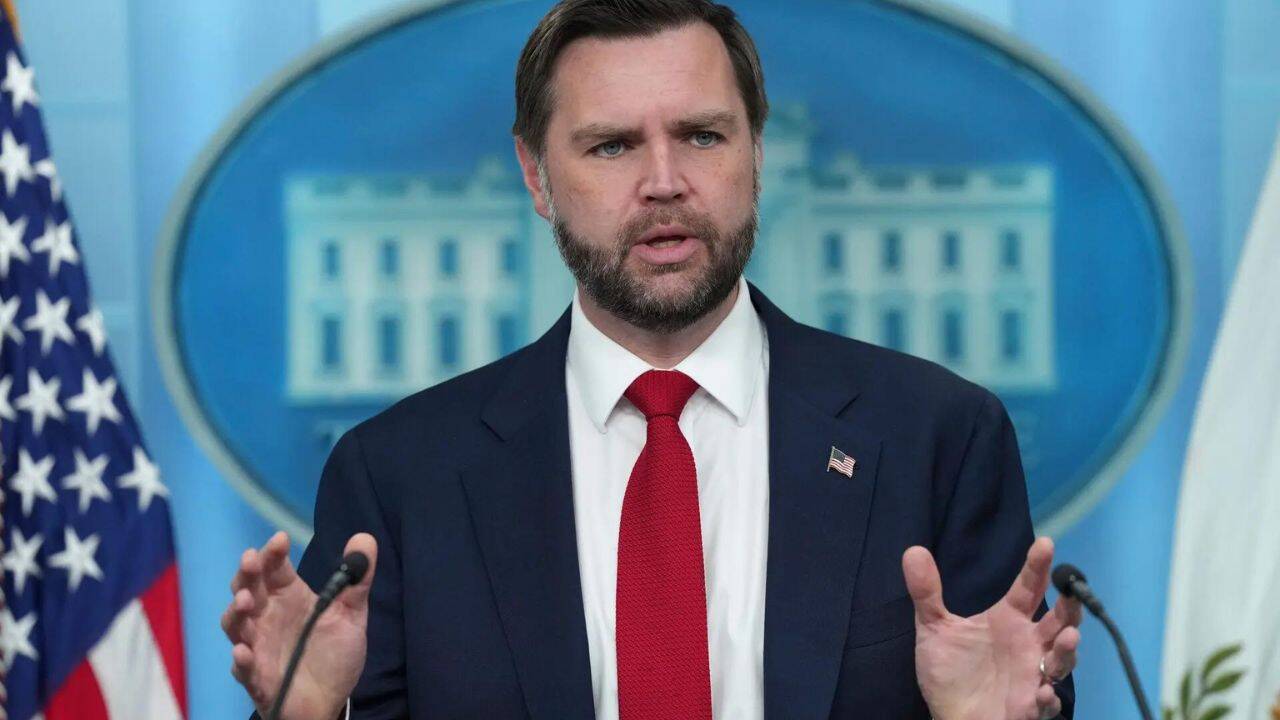
The headlines are screaming about a massive diplomatic breakthrough in the Swiss Alps, but the reality on the ground is a chaotic scramble. On Monday, the White House announced a major shift in foreign policy when the US eases oil sanctions on Iran for a temporary sixty-day window. Vice President JD Vance emerged from intense, eighteen-hour negotiations at a luxury resort in Burgenstock, Switzerland, claiming he secured a historic win. According to Vance, Tehran has agreed to let international nuclear inspectors back into the country.
But if you look closely at what happened, the celebration feels incredibly premature. Almost immediately after Vance spoke to reporters, the Iranian foreign ministry began walking back the narrative. They claimed they made absolutely no new commitments regarding their nuclear program and that formal technical negotiations haven't even officially begun. This massive gap between Washington's triumphalism and Tehran's cold denial shows just how fragile this new peace deal really is.
Investors, politicians, and global energy markets are trying to figure out what this temporary truce means for the price of crude and the stability of the Middle East. The move comes on the heels of a brutal forty-day military conflict that sent shockwaves through global energy markets. While President Donald Trump proclaims that the vital Strait of Hormuz is now completely open for business, critics are sharpening their knives. They note that the current administration is basically reinventing a wheel they spent years trying to break.
The Sixty Day Window of Tension
The mechanism behind this sudden policy shift is a temporary waiver issued by the US Treasury Department. Under the direction of Treasury Secretary Scott Bessent, Washington has paused its aggressive blockade on Iranian oil and petrochemical exports until August 21. This gives Tehran a brief opportunity to legally market its crude to its primary buyers, mostly China, and process payments through international banking channels without facing sudden secondary sanctions.
In exchange for this immediate financial relief, the Trump administration insists that inspectors from the International Atomic Energy Agency get total access to Iranian nuclear sites. These facilities have been completely dark to international observers since the US and Israel launched airstrikes against them during the explosive twelve-day war last year. Tehran kicked out the UN watchdogs immediately after those strikes, accelerating their enrichment activities in secret.
Key Milestones in the 60-Day Agreement:
- June 22: US Treasury issues temporary sanctions waiver on crude oil.
- Late June: Technical teams meet in Switzerland to iron out inspection protocols.
- July: Reopening of blocked shipping lanes and monitored transport in the Strait of Hormuz.
- August 21: Expiration of the initial 60-day waiver and evaluation of Iranian compliance.
The underlying issue is that the text of the agreement is incredibly vague. Vance told reporters that the current framework is merely a foundation. He used a simple metaphor, stating that they haven't built the house yet, they've just poured the concrete for the foundation. The problem is that both sides are arguing over what that house is supposed to look like.
Dueling Narratives From Washington and Tehran
The political spin coming out of this weekend's summit is dizzying. President Trump took to social media to tell the public that Iran will fully cooperate with major weapons inspections to ensure honesty. He then followed that up with a direct threat, telling reporters that if Iran misbehaves, he will do what he has to do.
Meanwhile, Iranian Foreign Ministry spokesman Esmaeil Baqaei completely dismissed the idea that Iran had surrendered its sovereignty. The Iranian delegation, led by Foreign Minister Abbas Araghchi, views the situation through an entirely different lens. To them, the US finally buckled under the economic pain caused by the closure of the Strait of Hormuz and was forced to lift its illegal blockade. Iranian officials are telling their domestic audience that they didn't give up a single inch of their nuclear ambitions to get their oil flowing again.
This disconnect isn't just standard diplomatic posturing. It points to a deep flaw in the entire negotiation process. Vance admitted that the talks almost collapsed entirely on Sunday. The Iranian delegation threatened to walk out in a fit of rage after Trump posted aggressive comments online regarding military operations in Lebanon. Vance had to spend hours behind closed doors calming the Iranians down, explaining that the president's social media outbursts were simply reactions to regional provocations. A diplomatic strategy that relies entirely on a single vice president managing his boss's social media fallout is inherently unstable.
The Ghost of the Obama Era Accord
The most ironic aspect of this entire development is who it outrages the most. Hardline conservative politicians in Washington are furious because this new framework looks suspiciously like the 2015 Joint Comprehensive Plan of Action. That was the landmark nuclear deal signed by the Obama administration which President Trump famously tore up in 2018, calling it the worst deal in history.
Experts are pointing out that Vance is essentially trying to recreate the exact same inspection mechanisms that the previous administration spent years dismantling. The new agreement even includes provisions to release billions of dollars in frozen Iranian assets currently sitting in Qatari bank accounts.
To make this pill easier to swallow for the American public, Vance rolled out an unusual economic defense. He credited Trump's son-in-law, Jared Kushner, with an idea that forces Iran to spend its unfrozen cash directly on American agricultural exports. Vance argued that if these assets are released, they will be used to buy massive quantities of American soybeans, wheat, and corn, effectively enriching US farmers while feeding the Iranian population.
Asset and Economic Projections under the New Proposal:
- Total Estimated Frozen Overseas Assets: $24 billion
- Scope of Current US Oil Waiver: 60 days of unrestricted transport and sales
- Primary Destination of Iranian Crude: Refineries in mainland China
- Authorized Use of Unfrozen Funds: US-produced agricultural commodities only
Policy wonks are completely unimpressed by this twist. They point out that money is fungible. If Iran can use its freed-up cash to buy basic food supplies from American farmers, it frees up billions of other dollars in its domestic budget to rebuild its military, fund regional proxy groups, and reconstruct its heavily damaged infrastructure.
Global Market Consequences and the Risk of a Third Oil Shock
The immediate reaction from global markets was a collective sigh of relief, but it might be short-lived. Wall Street saw a slight easing of crude prices following the news that the Strait of Hormuz would stay completely open. Iran had closed the waterway during the peak of the recent fighting, which immediately triggered massive economic shockwaves across Europe and Asia.
Some energy analysts are warning that the world is still hovering on the edge of a major energy crisis. Former international energy officials state that even with this temporary deal, the global supply chain is incredibly vulnerable. If the technical talks in Switzerland fall apart over the next month, the snapback of sanctions will hit the market like a physical blow.
Israel is also a major wild card in this equation. The government in Jerusalem is deeply unhappy with the diplomatic track Vance is pursuing. Israeli leaders have made it clear that they do not feel bound by any memorandum signed in Switzerland. Their military forces remain active in southern Lebanon, and they have openly reserved the right to strike Iranian targets if they believe Tehran is moving closer to a nuclear weapon. If Israel decides to launch a unilateral strike during the 60-day window, the US-Iran deal will instantly evaporate.
Actionable Next Steps for Businesses and Investors
If your business or investment portfolio is exposed to global energy markets or international trade, you can't afford to take this peace announcement at face value. This is a highly volatile situation that requires active monitoring.
- Audit Your Supply Chain Energy Exposure: Don't assume oil prices will stay low through the autumn. Run stress tests on your logistics costs based on a scenario where the 60-day waiver expires in late August without a permanent renewal.
- Track Agricultural Export Shifts: If you operate in the agricultural sector, monitor the specific shipping schedules for wheat and soybeans. The Kushner-designed asset release program could create a sudden, massive demand spike for specific US commodities.
- Monitor the Technical Workgroups: Watch the low-level technical meetings happening in Switzerland and Doha. The political speeches are mostly theater; the real indicator of success will be whether UN inspectors physically cross the Iranian border by mid-July.