Imagine spending nine years driving to a destination, only to zip past it in a few hours because you forgot to build brakes into your car. That is basically what NASA did with the New Horizons mission to Pluto.
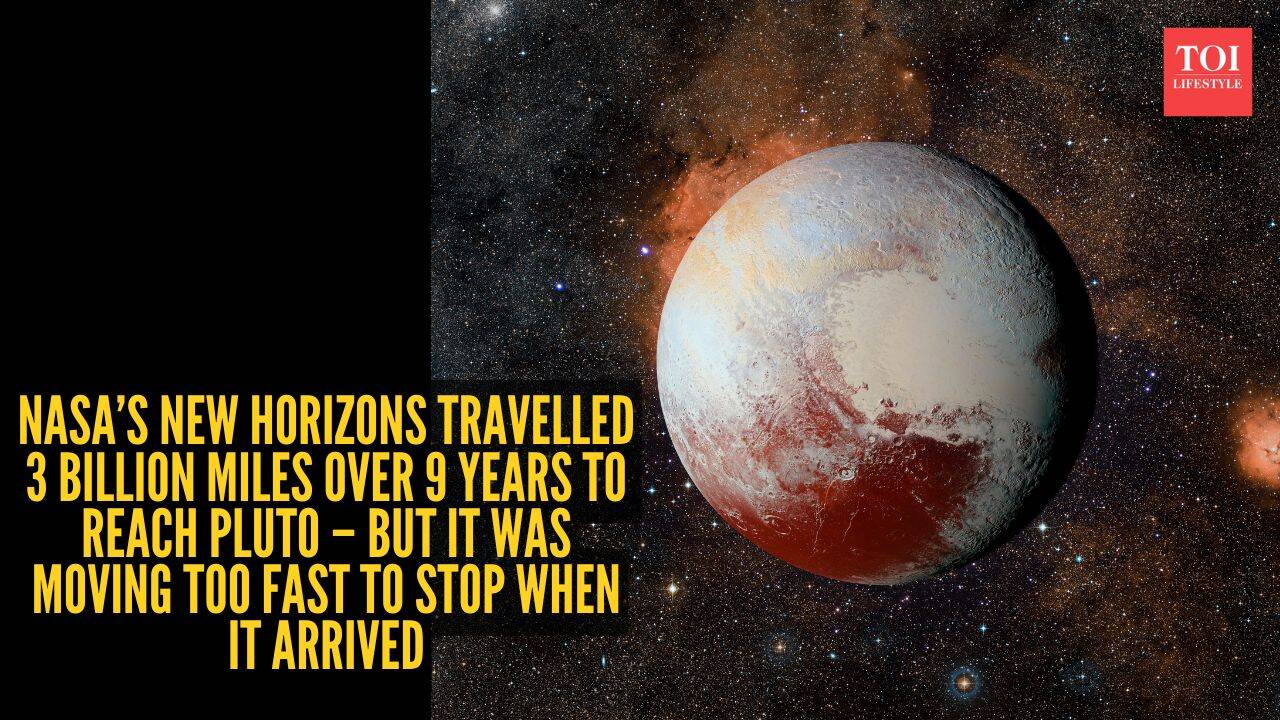
In July 2015, the world watched in awe as a piano-sized spacecraft beamed back the first close-up, high-definition images of Pluto. We saw a stunning icy world with giant mountains, nitrogen glaciers, and a giant heart-shaped plain. But almost as quickly as it arrived, New Horizons was gone, hurtling forward into the dark abyss of the Kuiper Belt. Meanwhile, you can read related developments here: The Real Reason The Elon Musk And Sam Altman Feud Just Exploded.
Many people wondered why NASA did not just park the spacecraft in orbit. Why spend $700 million and nearly a decade of traveling three billion miles just to get a temporary glimpse?
The answer is not a lack of interest or poor planning. It comes down to basic, unforgiving physics. To understand the bigger picture, we recommend the excellent analysis by ZDNet.
The Nine Year Rush to a Brief Encounter
When New Horizons launched from Cape Canaveral on January 19, 2006, it did not just leave Earth. It screamed off the launchpad.
Riding on top of a massive Atlas V rocket, the small probe reached a speed of over 36,000 miles per hour. It was the fastest man-made object ever launched from Earth at the time. To put that into perspective, New Horizons passed the Moon in just nine hours. The Apollo astronauts took three days to make that same trip.
NASA needed this extreme speed. Pluto is incredibly far away, sitting roughly 30 to 40 times farther from the Sun than Earth. If New Horizons traveled at the speed of typical planetary probes, the scientists who built it would have been long retired, or dead, before the spacecraft ever arrived.
Even with that record-breaking head start, the trip still took nine and a half years. Along the way, the probe got a vital speed boost from Jupiter. It stole a tiny fraction of the gas giant's orbital energy, using a gravity assist to slingshot itself even faster toward the edge of the solar system.
This extreme speed solved the travel-time problem, but it created an entirely new crisis for the arrival.
Why Space is a One Way Ticket Without a Massive Brake
When New Horizons finally closed in on Pluto in the summer of 2015, it was screaming through space at about 31,000 miles per hour (around 14 kilometers per second) relative to the dwarf planet.
In space, there is no air resistance to slow you down. If you want to stop or enter orbit around a planet, you have to use rocket engines to push against your forward momentum. This is called orbital insertion. You have to burn fuel in the exact opposite direction of your travel to shed enough speed so the target's gravity can grab you.
But Pluto is tiny. It is only about two-thirds the size of our Moon, and its mass is a measly fraction of Earth's. Because it is so small, its gravitational pull is incredibly weak. The escape velocity of Pluto is just 1.2 kilometers per second.
If a spacecraft approaches Pluto traveling faster than 1.2 kilometers per second, Pluto’s gravity simply cannot hold onto it. It will bend the spacecraft’s path slightly, but it cannot capture it.
New Horizons was traveling at 14 kilometers per second. That is nearly twelve times faster than Pluto's escape velocity. To stay, the spacecraft had to slow down dramatically. It could not.
The Harsh Math of the Rocket Equation
To understand why New Horizons could not brake, we have to look at the Tsiolkovsky rocket equation, which dictates how space travel works. The formula is expressed as:
$$\Delta v = v_e \ln \left(\frac{m_0}{m_f}\right)$$
In this equation:
- $\Delta v$ is the change in velocity needed (the braking force).
- $v_e$ is the rocket's exhaust velocity (how fast the fuel burns out of the engine).
- $m_0$ is the initial mass of the spacecraft (including fuel).
- $m_f$ is the final mass of the spacecraft (without fuel).
Here is the brutal reality of this math. Because it is a logarithmic relationship, the fuel you need increases exponentially with the speed you want to change. If you want to double your braking capacity, you do not just double your fuel. You might need to carry ten times more.
New Horizons launched with a total mass of about 478 kilograms. Only about 78 kilograms of that was hydrazine propellant, used primarily for tiny course corrections. That small amount of fuel gave the spacecraft a maximum speed adjustment capacity ($\Delta v$) of only about 390 meters per second.
To slow down by the 13,000+ meters per second required to orbit Pluto, New Horizons would have needed to carry more than 230 metric tons of hydrazine fuel.
Think about that. The probe itself weighed less than half a ton. To stop, it would have had to carry 580 times its own weight in fuel.
Even if we used highly efficient liquid hydrogen and oxygen fuel, the spacecraft still would have had to carry more than 24 times its weight in propellant. The massive Atlas V rocket that launched New Horizons could never have pushed a spacecraft that heavy off Earth, let alone accelerated it to the speed needed to reach Pluto in nine years.
The Trade Off that Saved the Mission
NASA engineers knew all of this from day one. They faced a simple, binary choice.
Option A: Build a massive, heavy spacecraft with enough fuel to orbit Pluto. This would have required multiple launches, orbital assembly in Earth's orbit, and a price tag in the tens of billions of dollars. Worse, because it would have been so heavy, it would have traveled much slower. The journey would have taken decades.
Option B: Build a light, stripped-down spacecraft that could be launched directly into deep space at extreme speeds. It would only get a single, fleeting pass at Pluto, but it would get there in under a decade for a fraction of the cost.
NASA chose Option B. It was the only practical way to make the mission happen.
To maximize the science return from such a brief window, the spacecraft was packed with incredibly advanced cameras and sensors. Because the flyby was so fast, every single observation had to be choreographed to the second years in advance. During the closest approach, New Horizons did not even have the power or time to point its antenna at Earth to send data. It spent every second spinning, pointing its instruments at Pluto and its moons, storing the data on solid-state drives.
It took more than 15 months for the spacecraft to finish beaming all that data back to Earth over the slow, deep-space network.
Where New Horizons is Headed Now
The decision to make New Horizons a flyby mission did more than just get us to Pluto quickly. It left the spacecraft with its speed intact, allowing it to continue its journey into the Kuiper Belt.
In 2019, New Horizons flew past Arrokoth, a bizarre, pancake-shaped contact binary object located a billion miles beyond Pluto. It became the most distant object ever explored by a human spacecraft.
As we move through 2026, New Horizons is still operating, pushing deeper into the outer edge of our solar system. Its nuclear battery, a Radioisotope Thermoelectric Generator (RTG), is slowly decaying, but it should keep the spacecraft alive into the 2030s. It is currently transmitting valuable data about the heliosphere, the protective bubble created by our Sun, as it prepares to enter interstellar space.
If NASA had forced the spacecraft to stay at Pluto, our understanding of the outer solar system would be frozen in 2015. Instead, we got a historic look at a dwarf planet, and a scout that continues to push the boundaries of human exploration.
If you want to keep track of where the spacecraft is right now, you can check real-time distance updates directly through NASA’s New Horizons Mission Page. You can also download raw images taken by the probe's LORRI camera to see what deep space looks like through the eyes of a machine currently billions of miles away from home.