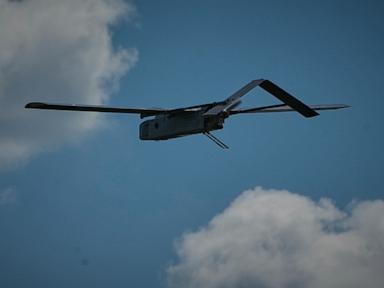
We are running out of time to stop machines from deciding who lives and dies on the battlefield.
The United Nations and the International Committee of the Red Cross (ICRC) just issued another stark, joint warning regarding autonomous weapons systems. Popularly known as killer robots, these systems select and engage targets using sensor processing and artificial intelligence rather than direct human inputs. Read more on a connected topic: this related article.
The message from Geneva is straightforward: the technology is accelerating at a terrifying pace, and international law is fast asleep at the wheel. As negotiators head toward critical talks under the Convention on Conventional Weapons, the international community faces an uncomfortable truth. Traditional diplomacy moves at a snail's pace while military tech moves at the speed of silicon.
The Reality Of Algorithmic Warfare
Let's clear up a common misconception. Autonomous weapons aren't characters from a sci-fi franchise. They are actively evolving technologies being integrated into modern conflicts from Eastern Europe to the Middle East. Further journalism by The New York Times delves into comparable perspectives on the subject.
While remotely piloted drones still require a human operator to pull the trigger, fully autonomous systems hand over the kill switch to an algorithm. Once activated, they find, track, and attack targets based on pre-programmed parameters without further human intervention.
UN Secretary-General António Guterres and ICRC President Mirjana Spoljaric pointed out a terrifying reality in their recent statement. We are standing on the edge of a moral precipice. Delegating lethal decisions to machines strips away the fundamental human qualities of empathy, context, and proportionality that keep warfare grounded in any semblance of law.
Why Major Powers Keep Dragging Their Feet
If the dangers are so obvious, why don't we have a global ban yet?
The roadblock isn't a lack of awareness. It is naked geopolitical competition. Major military powers, including nations like Russia and the United States, have historically resisted binding treaties that restrict advanced artificial intelligence development. Defense contractors and military strategists view autonomy as the ultimate force multiplier. They argue that machines don't get tired, panicked, or vengeful, meaning they could theoretically make fewer calculation errors than stressed human soldiers.
That argument ignores the terrifying reality of software glitches, systemic bias, and unpredictable machine learning environments. When an algorithm misidentifies a civilian gathering as a hostile combatant, who sits in the dock to face war crimes charges? The programmer? The commander who pressed start? Or the machine itself?
Current legal frameworks fall apart completely when the operator loses meaningful control over the weapon's trajectory and target selection.
The Push For A Binding Treaty
Diplomatic friction has forced humanitarian organizations to look beyond traditional forums like the UN Convention on Certain Conventional Weapons, which has spent years gridlocked by consensus requirements. Instead, momentum has shifted toward the UN General Assembly, where a broad coalition of nations and civil society groups are pushing for strict prohibitions and binding regulations.
The objective isn't necessarily a blanket ban on every form of military automation, but rather drawing a hard legal line against systems that operate without meaningful human oversight. This means setting clear mandates:
- Establishing strict boundaries on what types of targets algorithms can engage.
- Requiring permanent, unbreakable human supervision loops where a person retains the absolute ability to deactivate the system.
- Imposing strict accountability standards on state actors who field automated kill chains.
Tech developers and AI engineers are sounding the alarm themselves. When the architects building the underlying neural networks warn that their creations are too dangerous to leave unmonitored, governments ignore them at their peril.
The window to establish preventative international rules is closing fast. Once fully autonomous lethal systems become standard military architecture across global arsenals, putting the genie back in the bottle will become impossible. The upcoming diplomatic sessions in Geneva represent one of our final chances to ensure that human judgment remains the absolute final authority over life and death.