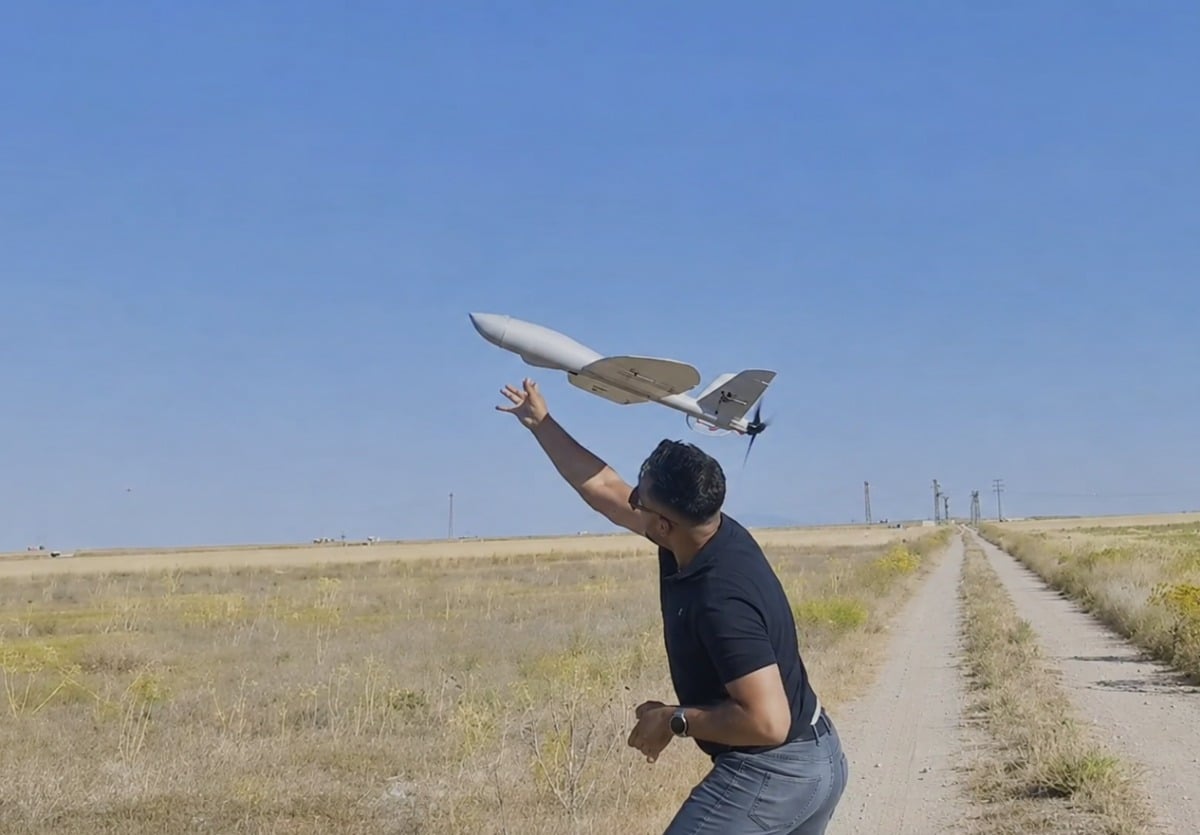
Military test ranges don't lie. When an autonomous weapon system scores a direct hit under live field conditions, defense ministries notice. The recent live-fire trial of the IRYDA+ X1 platform proved that the joint Poland and Turkey’s drone swarm system can hit ground targets with sub-meter accuracy. This isn't another paper prototype or marketing video. It is a production-ready weapon platform built to operate when normal communication networks collapse.
The defense industry spends billions trying to make small uncrewed aerial vehicles work together. Most attempts fail because the software cannot handle radio jamming or unexpected telemetry loss. By combining Polish manufacturing and field leadership with Turkish software infrastructure, this new cooperative platform solved the coordination problem. The system just passed its key precision test, signaling a major shift in how middle powers in Europe handle tactical defense procurement.
People tracking military tech want to know exactly how these systems function when the GPS goes dark. They want to know the physical payload limits, the destructive radius, and when these units hit the field. This breakdown covers the architecture of the IRYDA+ X1, the raw results of the June 2026 field trials, and the immediate deployment roadmap for Eastern Europe.
Inside the One-Meter Precision Strike Milestone
During the live field tests, a single operator managed multiple airborne units simultaneously. The drones didn't rely on constant human intervention to maintain formation or select their flight paths. Instead, they used distributed network logic to share flight tracking data directly between airframes.
The test results confirmed an operational accuracy of roughly one meter. For a small, low-cost platform, hitting a one-meter target circle purely on internal logic is incredibly difficult. Most commercial or modified civilian drones drift by several meters when navigating complex wind currents or experiencing minor sensor calibration errors.
[Target Coordinate]
       │
       ▼
 ┌───────────┐       ┌───────────┐       ┌───────────┐
 │  UAV 01   │◄─────►│  UAV 02   │◄─────►│  UAV 03   │
 └─────┬─────┘       └─────┬─────┘       └─────┬─────┘
       │                   │                   │
       └─────────┬─────────┴───────────────────┘
                 │
                 ▼ (Autonomous Airburst Execution)
         [5-Meter Altitude]
                 │
        ⚡ 💥 ⚡ 💥 ⚡ 💥 ⚡
                 │
                 ▼
     [30-Meter Destruction Zone]
The system proved its target engagement profile by executing a specialized terminal flight path. Instead of slamming directly into the soil like a traditional point-detonation mortar, the drone triggered its simulated warhead exactly five meters above the coordinates. This specific altitude isn't accidental. Airburst mechanics drastically change the effectiveness of small explosives.
Detonating a light weapon at ground level causes the earth to absorb a massive percentage of the blast energy and shrapnel. By firing the warhead five meters up, the platform generated a lethal footprint measuring 30 meters in diameter. This spread makes the platform highly effective against light vehicles, exposed electronic installations, and scattered field units.
The Polish and Turkish Industrial Alliance
This platform didn't emerge from a legacy multi-nation conglomerate. It is the direct product of a commercial partnership between Warsaw-based MBF Group S.A. and Shark Aviation Dynamics in Turkey. This pairing links two distinct defense strategies that have been evolving rapidly over the last four years.
Poland needs immediate, high-volume manufacturing solutions to secure its borders and fulfill its modern defense doctrine. Turkey possesses a highly mature uncrewed hardware development pipeline, tested across multiple active global conflict zones. This joint project avoids the typical bureaucratic gridlock found in pan-European defense programs.
The management of MBF Group S.A. brings direct combat experience to the table. The company board is led by retired Colonel Janusz Czarnecki, a veteran with nearly thirty years of service in the Polish Armed Forces. Having leaders who understand the mud, the cold, and the realities of logistics changes how products move from design sheets to active inventory. Promising ideas often fail on the battlefield because they are too delicate or require perfect weather. Czarnecki noted during the post-test brief that this platform marks a clear transition from laboratory experimentation to operational military relevance.
Hardware Specifications and Operational Limits
The design emphasizes portability and simple field assembly. Troops cannot spend forty minutes setting up a launch track when an operational area becomes active. The physical performance metrics highlight a highly optimized light frame built for rapid deployment.
- Payload Capacity 300 grams of specialized equipment or explosive material.
- Maximum Operational Speed Greater than 30 kilometers per hour.
- Flight Endurance Up than 60 minutes of continuous airborne operation.
- Total Mission Range Greater than 20 kilometers from the initial launch point.
The 300-gram weight limit might look modest to those used to massive missile systems. That is a mistake. Modern materials science means a 300-gram shaped charge or fragmentation warhead can easily disable an armored vehicle's optics, punch through light supply trucks, or clear radar dishes. The long flight time allows units to loiter over an area, waiting for high-value assets to expose themselves before striking.
Surviving in Contested Electronic Warfare Environments
Modern conflicts show that standard GPS signals disappear within minutes of an engagement. If a drone relies entirely on satellite navigation, it becomes an expensive brick the moment a commercial jammer turns on. The IRYDA+ X1 handles this reality through two distinct technical methods.
Adaptive Autonomous Group Flight
The drones don't rely on a central master unit. If the lead aircraft gets shot down or suffers a hardware fault, the remaining airframes instantly recalculate the mission logic. They shift positions, reassign targeting priorities, and continue the flight plan without waiting for an operator to reset the system. This prevents a single point of failure from ruining an entire mission.
Radio Frequency Data Syncing
The platform utilizes a localized, high-frequency data network that constantly hops across different bands. The software checks for interference and automatically pushes communications into clean spectrum spaces. This keeps the aircraft connected to each other even when long-range links back to the human operator are completely severed.
The Immediate Operational Roadmap
The development schedule is moving quickly to capitalize on these successful test results. Industry insiders don't have to wait years for the next update. The commercial rollout is happening throughout the summer of 2026.
The full international debut of the IRYDA+ X1 will take place during the first half of July 2026. This technical showcase is scheduled in Turkey, where international procurement specialists and defense attachés will view the swarm logic during live flight demonstrations.
Immediately following the Turkish exhibition, the first physical hardware shipments will move to Central Europe. The initial deployment packages will consist of operational sets containing eight paired aircraft units. These modules are going straight to Warsaw.
Once the hardware arrives in Poland, MBF Group S.A. will initiate field demonstrations for the Polish Armed Forces, the Polish Border Guard, and selected specialized security units. The goal is simple. They want to show border security teams exactly how an operator can launch a multi-unit swarm to inspect a remote sector or interdict an illegal entry attempt without risking a single human life.
How Procurement Teams Can Prepare for Swarm Deployment
Integrating autonomous swarms requires changing how small tactical units operate. Legacy military organizations are built around centralized command structures where every action requires explicit permission. Swarm technologies turn that model upside down.
Field officers must learn to trust algorithms to handle local flight paths and spacing. Procurement teams evaluating this technology should focus on three immediate preparation steps.
- Update Small Unit Logistics Plans Ensure tactical vehicles can carry the multi-unit transit cases and possess the necessary power invertors to recharge drone batteries from standard field generators.
- Review Remote Operating Rules Rewrite standard operating procedures to define when an operator is permitted to allow autonomous terminal engagement without real-time video confirmation.
- Train for Zero-Signal Operations Field teams must practice deploying these assets under total electronic silence, trusting the internal navigation software to complete the search pattern and return to a designated recovery coordinate automatically.