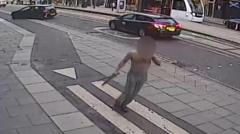
Friday night in a capital city usually means crowded pubs, food deliveries zipping through traffic, and people wrapping up the work week. Instead, parts of Edinburgh turned into a chaotic crime scene that stretched across multiple neighborhoods. A fast-moving wave of violence left five men injured and a trail of shattered glass in its wake.
Public focus naturally landed on the dramatic arrest. People watched the grainy footage of armed police confronting a bare-chested suspect. But the real story lies in how quickly a single individual managed to terrorize an entire city before law enforcement could pin him down.
When street violence moves this fast, the standard emergency response models get pushed to their absolute limits. Understanding the mechanics of this specific rampage reveals a lot about the current vulnerabilities in urban security and community safety.
Anatomy of a Fast-Moving Urban Crisis
The trouble started around 8:50 PM on Friday night in Sighthill. That is a residential area in the west of Edinburgh. Two young men, both 22 years old, were targeted near a local mosque. Within minutes, the situation morphed from an isolated assault into a city-wide emergency.
The attacker did not stay in one place. He used a vehicle to move rapidly between targets, driving erratically across Edinburgh before abandoning the car. This mobility makes tracking a suspect incredibly difficult for police dispatchers. By the time officers arrive at the first scene, the perpetrator is already miles away, picking out a new target.
CCTV footage captured the chaotic moments leading up to the final arrest. A topless man abandoned his vehicle, went on to strike a black man, and then assaulted a delivery rider. These delivery workers are incredibly exposed on our streets. They travel alone, often at night, and frequently have to stop in poorly lit areas to drop off orders.
The timeline shows that three of the five victims required hospital treatment. The men attacked were aged 22, 22, 24, 27, and 39. Fortunately, none of the injuries turned out to be life-threatening. Yet the psychological fallout for the victims and the wider neighborhoods will last far longer than the physical healing.
The Trail of Destruction Across Edinburgh
To understand how this crisis paralyzed parts of the city, you have to look at the sheer geographic spread of the incidents. This was not a localized brawl. It was a rolling rampage that struck commercial hubs and public spaces across the west and north of Edinburgh.
- Telford Road: At a petrol station, a taxi was systematically targeted. The windows were smashed completely, leaving the driver exposed and terrified.
- Ferry Road: The suspect entered a fuel station kiosk. Instead of a standard robbery, the individual focused on pure destruction, tearing down shelves and throwing items to the floor.
- Leith Walk: At a local pizzeria, the staff had to think on their feet. Seeing the armed suspect approach, they managed to slam down the security shutters right before he began striking the entrance with a weapon.
The quick thinking of that pizzeria staff probably saved lives. Small business employees rarely get training on how to handle an active, armed threat outside their front door. Lowering a metal shutter in a matter of seconds requires split-second decision-making under intense pressure.
Why Counter-Terrorism Investigators Step In
Police Scotland confirmed that counter-terrorism officers have joined the investigation. This move immediately changes the stakes of the case. When specialized units get involved, it usually indicates that the motivation behind the violence might stretch beyond a typical mental health episode or random street crime.
Prime Minister Sir Keir Starmer publically stated that the suspect appeared to be motivated by anti-Muslim hatred. Scotland’s First Minister John Swinney echoed those concerns, expressing deep distress over the targeted nature of the attacks. When political leaders at the highest levels comment on an active investigation, it underscores the potential societal fractures at play.
The involvement of counter-terrorism units does not automatically mean a formal terrorism charge will stick. These units possess specialized resources for tracking digital footprints, analyzing extremist networks, and determining if an attacker acted as part of a wider online movement. They look for manifestos, search histories, and communication logs that standard local detectives might miss.
Community organizations have pointed out that the targeting of minority individuals and properties creates a ripple effect of fear. The Scottish Association of Mosques and the Muslim Council of Britain both noted that local communities are feeling deeply anxious. When a mosque becomes the starting point for a violent spree, the entire neighborhood feels unsafe.
Securing Small Businesses in High-Risk Moments
For retail owners, petrol station attendants, and restaurant workers, these incidents show that threat models must change. A shop is no longer just dealing with shoplifters or rowdy late-night customers. They have to think about active violence.
Many fuel stations operate with a single employee during late shifts. That worker is incredibly vulnerable. While bulletproof glass protects the cash register area in some urban kiosks, many suburban and regional stations rely on standard glass doors. A motivated attacker with a heavy weapon can bypass those entry points easily.
The pizzeria on Leith Walk provides a massive lesson in situational awareness. They did not wait for the man to enter. They saw the danger on the street and reacted. Business owners should ensure that all staff members know how to operate security shutters instantly. If those shutters require a key or a complicated code hidden in a back office, they are useless in an emergency.
Physical security basics still matter. High-definition CCTV cameras that feed directly to cloud storage can help police identify a suspect within minutes. In this case, the footage proved vital for tracking the suspect's movements, vehicle details, and his eventual abandonment of the car.
De-escalation and Public Safety Realities
When armed police finally caught up with the 36-year-old suspect, they chose to deploy Tasers. They did not fire them, but the threat of force was enough to secure the arrest. This shows a high level of operational restraint in a chaotic environment.
Members of the public often wonder why it takes time to stop a single unarmed or melee-armed individual. The reality of modern policing involves verifying the threat level before taking life-ending action. Armed officers must assess whether a suspect has a hidden explosive, a firearm, or if they are experiencing a severe psychiatric break.
The public role in these scenarios is equally complex. Social media videos showed people running away from the suspect. That is exactly what you should do. Trying to film a violent individual on your phone from a few feet away puts your life at risk. The "Run, Hide, Tell" protocol remains the most effective strategy for civilians caught in an active attack.
What Happens Next for Community Security
The immediate threat has passed because the 36-year-old man faces charges and will appear in court. However, the work for local communities is just starting.
Security around religious buildings and minority-owned businesses will likely see a visible increase in the coming weeks. Police Scotland will maintain higher visibility patrols to reassure nervous residents. But long-term safety requires a mix of structural changes and improved local intelligence.
If you run a local business or manage a community space in an urban center, use this moment to audit your own security setup. Check your external cameras to see if they actually record clear footage of the street, not just your indoor inventory. Ensure your team knows how to lock down the building inside five seconds. Do not assume a violent crisis will happen somewhere else. Preparation is the only thing that changes the outcome when chaos hits your street.