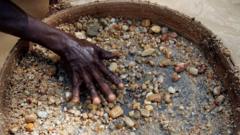
You think you know the diamond business. You think it's a battle between tech-savvy millennials buying cheap, perfect stones and traditionalists clinging to old-school romance. But you're wrong. The real story isn't happening in clean retail showrooms. It's happening in places like Kono, Sierra Leone, where artisanal miners swallow handfuls of red dust everyday, digging pits by hand because their entire economy depends on a shiny pebble that a plasma reactor in China or India can copy for pennies.
The debate around lab-grown diamonds has shifted completely. It's no longer an emerging trend or an alternative option. It's a massive market takeover that is actively rewriting global trade. If you're looking at this industry as a consumer, an investor, or just a curious onlooker, you need to see the cold financial reality behind the sparkle.
People search for this topic because they want to know if natural diamonds are completely dead, if lab stones will hold any long-term value, and who actually wins in this economic war. Let's look at the raw data, the human cost, and what's really happening on the ground.
The True Scale of the Lab Grown Diamonds Disruption
Let's talk numbers because the marketing campaigns lie to you. A decade ago, lab-created gems were a novelty. Today, they dominate the engagement ring market. In major Western cities, more than half of the diamond engagement rings sold are created in a laboratory.
Why? Because the price difference is absurd. You can walk into a jewelry store and buy a flawless two-carat lab stone for a fraction of what a mined stone costs. The price gap isn't shrinking. It's widening into a chasm. Wholesale prices for laboratory stones have plummeted by roughly eighty percent over the last few years.
That creates a massive headache for traditional mining giants like De Beers. Their CEO, Al Cook, has had to completely recalibrate how the historic cartel operates. De Beers even tried to flood the market with its own lab brand, Lightbox, to deliberately drive down synthetic prices and show consumers that these stones are cheap tech products, not rare heirlooms. It didn't work the way they wanted. Instead of protecting natural diamonds, it just taught consumers that beautiful diamonds don't have to cost a fortune.
The immediate casualty of this corporate chess match isn't the executives in London or Antwerp. It's the independent miner in West Africa.
From African Mud to High Tech Reactors
Step away from the mall for a second. Picture a muddy pit in Sierra Leone. Men are swinging picks under a blistering sun, sweating through their shirts, praying for a strike. They call their work a gamble blessed "by the grace of God." It's literal survival. For hundreds of thousands of artisanal miners, a single decent find means food on the table for months, school fees for their kids, and medicine for their families.
They don't have heavy machinery. They have shovels, sieves, and hope.
Now look at a factory in Surat, India, or Henan, China. Massive Chemical Vapor Deposition reactors run twenty-four hours a day. Technicians feed methane and hydrogen gas into a chamber, turn up the heat to thousands of degrees, and use microwaves to create plasma. Carbon atoms rain down onto a tiny diamond seed. A few weeks later, you have a rough stone that is chemically, physically, and optically identical to anything pulled from the earth.
The factory doesn't rely on luck. It relies on electricity. As long as the power stays on, the supply is infinite.
This creates a massive ethical and economic paradox. For years, synthetic diamond companies marketed themselves as the ethical choice. They screamed about blood diamonds and environmental destruction. But they conveniently left out the economic reality. If the natural diamond market collapses entirely, the communities that rely on artisanal mining don't suddenly find clean tech jobs. They starve.
Organizations like GemFair have been trying to bridge this gap. They track artisanal diamonds from the pit to the market, ensuring miners get fair prices and work under safer conditions. They try to give mined stones a different kind of value—a human origin story. But a compelling story is a tough sell when a consumer looks at two identical rocks and realizes one costs four times less than the other.
What Most Buyers Get Completely Wrong About Value
If you are planning to buy a diamond right now, stop and read this carefully. The biggest mistake people make is treating any diamond as a financial investment.
Diamonds are not gold. They aren't stocks. They are a depreciating consumer good, much like a luxury car. The moment you drive it off the lot, it loses value.
Here is how the two types stack up in the real economy:
- Natural Diamonds: They retain some resale value, but you will almost never get back what you paid retail. The jeweler needs their margin, and the market is currently flooded with secondary stones. However, because natural supply is genuinely finite—mines are closing down as they run out of viable ore—there is a hard floor on how low the price can go.
- Lab Diamonds: Their resale value is effectively zero. Do not buy a lab stone thinking you can sell it in ten years to cover an emergency. The technology to produce them gets cheaper every single month. When production efficiency scales up, the asset value drops. You are buying a beautiful piece of technology, not an appreciating commodity.
If your goal is purely visual impact for your money, buy the lab stone. You get a massive, flawless rock without a massive loan. If your goal is traditional heritage and an object that holds some remnant of intrinsic material wealth over generations, you look at natural. Just don't trick yourself into thinking either choice is a brilliant Wall Street play.
The Retail Lie and Squeezed Margins
Jewelry retailers are caught in a brutal vice. They make higher percentage margins selling lab stones because they buy them for almost nothing and sell them for a decent markup. But the total dollar volume is shrinking. Selling ten rings at a thousand dollars each doesn't bring in the same cash flow as selling ten rings at six thousand dollars each.
This has triggered a quiet panic. Brands are scrambling to find a new narrative. You see major luxury fashion houses explicitly picking sides. Some refuse to touch synthetic stones, betting that true luxury must be tied to scarcity. Others embrace them, highlighting design innovation and modern style.
The reality is that consumer behavior has fractured along generational lines. Older buyers with deep pockets still want the prestige of a natural stone. Younger buyers, facing high housing costs and inflation, simply refuse to drop two months' salary on a piece of compressed carbon. They would rather spend that money on a house deposit or a honeymoon.
Actionable Next Steps for Consumers and Investors
Don't let slick marketing from either side dictate your decisions. The diamond market is volatile, and you need a clear strategy whether you're buying a ring or looking at luxury retail assets.
First, define your purpose. If you are buying a piece of jewelry, ignore the noise about the diamond market collapse. Decide if you care about the history, origin, and rarity of the stone, or if you simply want a stunning aesthetic piece. If it's the latter, buy a lab stone but pay as little above the wholesale rate as possible. Shop around because retail markups on synthetic stones vary wildly.
Second, if you choose natural, demand true traceability. Don't settle for vague statements about ethical sourcing. Ask for authenticated documentation through programs like GemFair or blockchain-verified tracks that prove your money went toward supporting actual human miners in developing regions. That origin is the only thing keeping the natural market alive.
Finally, keep your eyes on the industrial sector. The real long-term future of synthetic diamonds isn't on someone's finger. It's in high-power electronics, quantum computing, and thermal management. As lab-grown prices bottom out, the tech sector will absorb the production capacity. That is where the real wealth will be generated, far away from the romanticized world of bridal jewelry.
The miners in Sierra Leone will keep digging because they have no other choice. They will look at the sky and hope for a miracle, even as factories across the ocean churn out perfect replicas of their dreams by the metric ton. The market has changed permanently. It's time to view diamonds for what they actually are: an industry stripped of its illusion, caught between ancient earth and modern machinery.