You are probably looking at your grocery receipts and gas station pump totals right now and wondering when the bleeding stops. The newly released economic data confirms what your bank account already felt. Official data shows that inflation accelerated in May as Iran war pushed up prices across the board, sending the Federal Reserve's favorite inflation metric to a painful three-year high.
While mainstream news outlets are busy printing panic headlines, they are missing the actual mechanics of what is happening underneath the hood of this economy. This is not just a story about expensive oil. It is a story about a complex web of global trade bottlenecks, resilient consumer spending anomalies, and a central bank that is trapped in a corner. If you want to protect your money, you need to understand the real forces at play here.
The Raw Numbers Behind the Inflation Spike
Let's get right to the core data that dropped from the Commerce Department's Bureau of Economic Analysis. The headline Personal Consumption Expenditures price index climbed to 4.1% in May compared to a year ago. That is a noticeable jump from the 3.8% rate we saw in April, and it marks the highest inflation level the United States has experienced since April 2023.
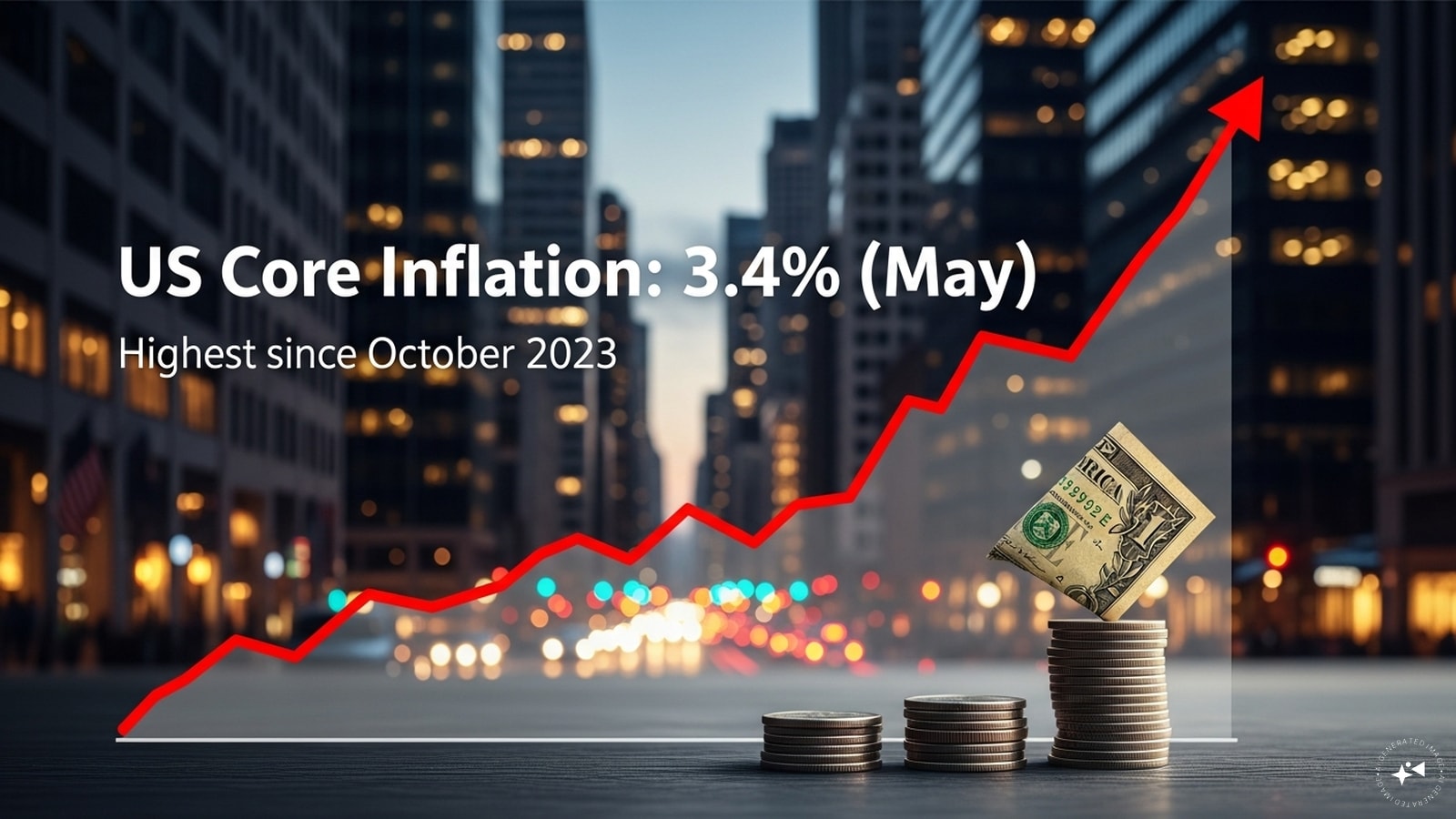
When you strip out food and energy to look at core inflation, the numbers still offer little comfort. Core inflation ticked up to 3.4% over the past twelve months. Many economists hoped that the price pressures would remain strictly confined to fuel tanks, but that is not what happened. Instead, the price shocks are bleeding into broader categories, proving that the economic fallout is expanding.
We can trace over 60% of this entire inflation surge directly to the energy sector. When the conflict in the Middle East escalated earlier this year, it triggered immediate panic. The biggest blow came on March 4, 2026, when the closure of the Strait of Hormuz choked off roughly 20% of the global oil supply. You cannot remove that much crude from the global market without triggering an absolute logistical nightmare. Brent crude quickly blasted past $120 a barrel, and everyday consumers are paying the price at the pump today.
Why the Strait of Hormuz Blockade Choked the Economy
To understand why inflation accelerated in May as Iran war pushed up prices, you have to look at how global supply chains operate. The Strait of Hormuz is not just some random shipping lane. It is the literal jugular vein of the global energy market.
When liquefied natural gas and oil exports got stranded in the Gulf, energy markets suffered what the International Energy Agency called the largest supply disruption in history. The shockwaves hit Europe and Asia immediately, but the interconnected nature of global pricing meant American fuel costs jumped right along with them. Daily gas price increases became a regular occurrence for drivers.
This reality created a massive secondary effect on transport and shipping costs. When it costs more to fuel a cargo ship, a semi-truck, or a cargo plane, the price of everything inside those transport vehicles goes up too. The cost of motor fuels in May was up roughly 25% from a year ago. That massive increase acts as an invisible tax on every single physical good sold in America.
The Weird Paradox of Resilient Consumer Spending
Here is the twist that is baffling a lot of amateur economic observers. Usually, when prices skyrocket, consumer spending falls off a cliff. People break out the budget spreadsheets, cut out the extras, and hunker down. But the data from May shows the exact opposite happened.
Overall consumer spending actually grew by 0.7% in May. Even when you adjust for inflation to see the real volume of goods bought, spending rose by 0.3%. How are people spending more money when everything costs more?
The answer lies in a couple of temporary financial cushions. First, larger-than-expected tax refunds landed in millions of bank accounts this spring, providing a temporary injection of liquidity. Second, a surging stock market throughout the early part of the year created a wealth effect among higher-income households, keeping luxury and discretionary spending incredibly strong.
But this spending boom comes with a dark side. Personal savings rates have cratered to just 3.0% in May. That ties the lowest saving rate we have seen since July 2022. People are not spending more because they are wealthier. They are dipping deep into their rainy-day funds just to maintain their current standard of living. This is an unsustainable trend that will eventually hit a wall.
How the Fed Got Cornered by the Conflict
The Federal Reserve was originally planning a series of interest rate cuts for 2026. The general consensus back in January was that inflation would drift back toward the 2% target, allowing the central bank to ease up on the economy. The outbreak of hostilities in late February completely shattered that playbook.
The central bank cannot easily lower interest rates when headline inflation is accelerating toward 4.1%. Doing so would risk supercharging the existing price pressures and letting inflation expectations run completely wild. On the flip side, keeping rates elevated for longer puts immense strain on regional banks, the commercial real estate market, and everyday borrowers trying to navigate credit card debt and mortgages.
The European Central Bank already had to rip up its script earlier this year, postponing its planned rate cuts and slashing its growth projections. The Fed is now facing the exact same dilemma. They are stuck in a holding pattern, forced to wait out a geopolitical conflict that they have absolutely no control over.
The Good Bad and Ugly Scenarios for the Rest of the Year
Where do we go from here? The trajectory of your household expenses over the next twelve months depends heavily on how the fragile diplomatic situation plays out in the Middle East.
The Best Case Scenario
There are some minor glimmers of hope on the horizon. Recent news of a potential US-Iran peace deal has caused oil prices to soften slightly below the peak danger zone, down toward the $80 a barrel mark. If the Strait of Hormuz reopens fully and shipping lines return to normal, the energy shock will begin to fade. In this situation, the inflation we saw in May represents the absolute peak of the 2026 cycle. Prices will stay sticky and elevated through autumn, but inflation could realistically drift back down toward 2.7% by early next year.
The Prolonged Stagnation Scenario
If the diplomatic talks stall and the maritime cleanup takes longer than expected, the energy infrastructure damage will keep supplies tight through winter. In this scenario, expect inflation to hover around 4% for the remainder of the year. Energy shortages will become highly visible in the third and fourth quarters, forcing businesses to raise prices permanently rather than using temporary surcharges.
The Global Stagflation Nightmare
The absolute worst-case scenario involves a total breakdown of the current ceasefire, leading to renewed strikes on energy facilities. If major processing plants face long-term physical damage, oil will easily breach historical highs. This would push global economies into a classic 1970s style stagflationary spiral, where growth plummets, unemployment rises, but prices continue to march upward anyway.
Practical Steps to Shield Your Finances Right Now
Waiting around for Washington or the United Nations to fix global supply chains is a losing strategy. You have to take direct action to protect your purchasing power while this volatility plays out.
First, fix your cash flow immediately. Since the national savings rate is sitting at a dangerous 3.0%, check your own numbers. If you are burning through savings to maintain a lifestyle that was budgeted for 2024 prices, you are playing a dangerous game. Freeze unnecessary subscription services, delay big-ticket electronics purchases, and build that cash buffer back up.
Second, look at your investment allocations. Inflation destroys the value of idle cash, but a volatile market means you cannot blindly throw money at speculative stocks either. Focus on companies with real pricing power. These are businesses that provide essential goods and services, meaning they can pass their increased energy costs directly onto consumers without losing their customer base.
Third, lock in fixed rates where you can. If you are holding variable-interest debt, prioritize paying it off or refinancing it immediately. The Fed is not going to rescue borrowers with quick rate cuts anytime soon. Assume that borrowing costs will remain higher for a longer duration than the market is currently admitting.
The acceleration of inflation in May proved that our globalized economy is incredibly fragile when major trade arteries get cut. The people who survive this period financially are the ones who stop wishing for lower prices and start adapting to the reality of the numbers in front of them. Optimize your budget, protect your cash reserves, and stay defensive until the geopolitical dust finally settles.