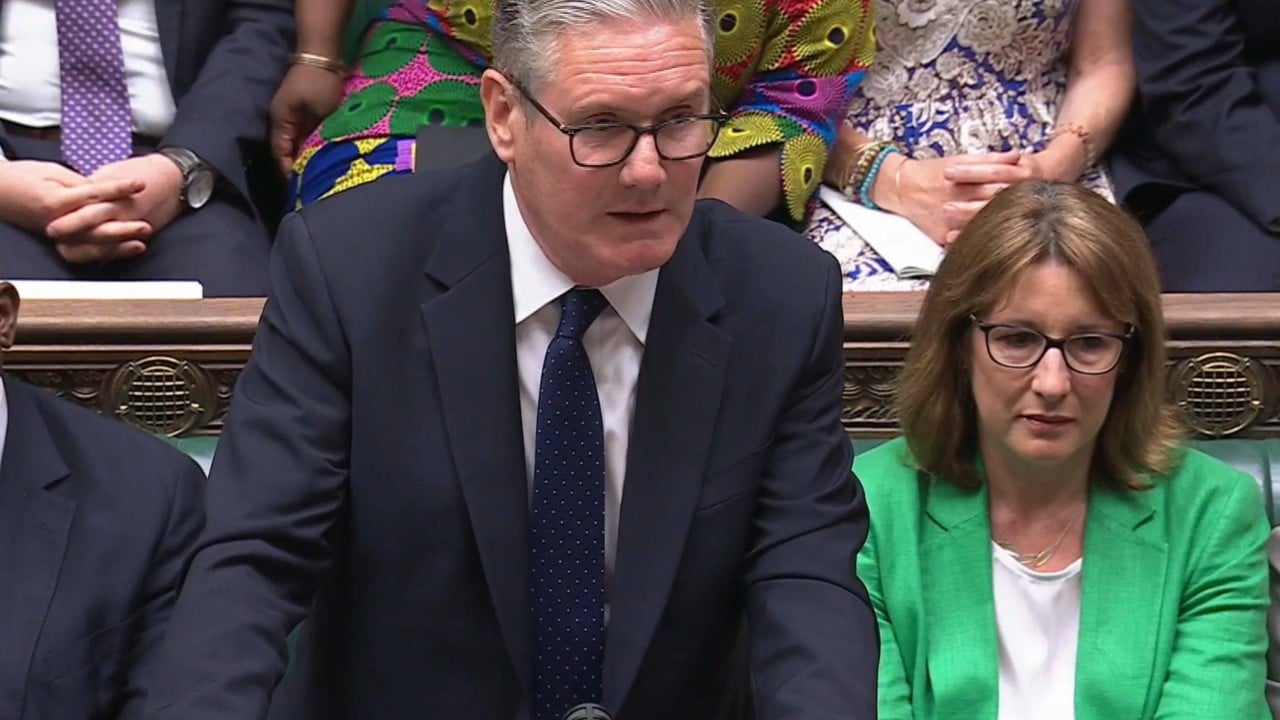
The final curtain call of a British Prime Minister is always a strange piece of political theater. On Wednesday, Sir Keir Starmer took his last turn at the despatch box for Prime Minister’s Questions. There were tears. There were standing ovations. Even his fiercest political rivals paused the usual tribal bloodsport to offer warm words.
But let's be honest. The polite applause in the House of Commons can't mask the brutal reality of how we got here.
Just two short years after securing a historic landslide victory in 2024, Starmer has been ruthlessly pushed out of office by his own party. It is a stunning collapse of political capital. The conventional wisdom says Starmer was simply a victim of bad luck, global inflation, and a notoriously fickle electorate.
That narrative is wrong.
Starmer's rapid downfall wasn't an accident. It was the predictable result of a leader who mistook a massive mandate for a personal endorsement of a technocratic, overly cautious style of governing that ultimately pleased nobody.
The Quiet End of a Landslide Era
If you watched the 50-minute session in the Commons, you saw a gentler, far more relaxed Starmer than the stiff lawyerly figure who has spent the last two years defending unpopular policy choices. Free from the immediate pressure of survival, he cracked jokes, traded barbs about England's World Cup run, and even took a swipe at Nigel Farage's by-election fight in Clacton.
“My advice to everyone is put your vote in the bin,” Starmer joked, referencing Farage's battle against the comedy candidate Count Binface.
But beneath the humor lay a heavy emotional undercurrent. His wife, Lady Victoria Starmer, watched from the gallery with their two teenage children. She wiped tears from her eyes as Starmer delivered his final words: “To all those in the gallery whose lives have been changed or improved by this Labour Government, and all across the country who struggle to be seen or heard — you're the reason I came into politics. To my wife and children, I love you. Goodbye.”
It was a dignified exit, but dignity shouldn't obscure the structural failure of his premiership. Starmer entered Downing Street on a wave of anti-Tory fatigue. He leaves because he failed to define what Labour actually stood for once they got the keys to Number 10.
The Bittersweet Final Sparring
What made the final PMQs fascinating was the contrast between the public sparring and the private decency revealed on the floor.
Opposition Leader Kemi Badenoch was quick to warn Labour MPs that changing leaders is no “silver bullet”. She reminded the chamber that Starmer once predicted she wouldn't last a year in her post. “Life comes at you fast,” she remarked, a sharp dig at how quickly Starmer went from landslide winner to an outgoing prime minister.
Yet, Starmer used the moment to publicly thank Badenoch for her private kindness. He revealed that she had reached out to him personally after his brother died of cancer, and again following an arson attack on his family home.
“We have had robust exchanges across this despatch box, but she has extended kindness to me privately at very difficult times,” Starmer said. It was a rare, genuine glimpse of humanity in a place usually defined by performative hostility.
But politics quickly reasserted itself. Even on his final day, Starmer couldn't escape the ghosts of his past internal party battles. During his remarks, he proudly claimed he had rescued Labour from the brink after the 2019 election.
“We were found to be institutionally antisemitic. I picked up our party. I turned it round,” Starmer declared.
That claim drew immediate, fierce condemnation from his predecessor, Jeremy Corbyn, who pointed out that the official Equality and Human Rights Commission (EHRC) report never actually used the term "institutionally antisemitic" to describe the party. Corbyn accused Starmer of spreading false allegations to bolster a "dismal record". It was a stark reminder of the deep, unhealed fractures that still run through the British left.
Why the Starmer Experiment Failed So Quickly
To understand why Starmer is leaving next week, you have to look at the gap between what voters wanted and what Starmer delivered.
In July 2024, the British public handed Labour a massive majority because they were desperate for change after years of Conservative chaos. They wanted better public services, higher living standards, and an end to the feeling that nothing in Britain worked anymore.
Instead, Starmer’s administration governed with a defensive, almost paralyzing caution. Fearing attacks from the right-wing press, they boxed themselves in with rigid fiscal rules and tax pledges.
The results were disastrous for his popularity:
- The Winter Fuel Debacle: Cutting the winter fuel allowance for millions of pensioners became a symbol of a government that was willing to squeeze vulnerable groups while failing to offer a broader vision for growth.
- The Child Benefit Revolt: Starmer resisted lifting the two-child benefit cap until a mutiny by his own MPs forced his hand.
- Economic Stagnation: He struggled to kickstart the growth needed to fund public services, leaving voters feeling like Labour was just offering a slightly more competent version of austerity.
His foreign policy record is stronger. Starmer was widely praised for his resolute support of Ukraine, a stance that earned him a minute of applause from European allies in Paris earlier this week. He kept Britain out of broader Middle Eastern conflicts and worked hard to repair relations with European Union neighbors.
But foreign policy successes don't pay the heating bills. When Labour was crushed in May's local elections, the writing was on the wall. His backbenchers realized that Starmer's brand had become toxic to working-class voters. They demanded a change.
What Andy Burnham Inherits
On Friday, Andy Burnham will be announced as the new leader of the Labour Party. On Monday, he will become Prime Minister.
Burnham, the former Mayor of Greater Manchester, is the absolute opposite of Starmer in terms of political style. Where Starmer was a remote, coolly analytical former prosecutor, Burnham is a natural communicator. He is a populist of the left who has built his reputation on standing up for the regions against the Westminster bubble.
Starmer promised his successor "wholehearted support" but added that he would give it "privately if asked for, not publicly when not asked for." It's a wise move. Burnham needs space to chart a completely different course if he wants to save Labour from a devastating defeat at the next general election.
Burnham's to-do list is formidable:
- Ditch the technocratic caution: He must offer a bold, positive vision for rebuilding Britain's public services.
- Address the cost-of-living crisis directly: Symbolic policy tweaks won't cut it anymore; voters need to see real, material improvements in their pockets.
- Rebuild the electoral coalition: Burnham must win back the voters who drifted toward Nigel Farage's Reform UK out of sheer frustration with the political establishment.
Next Steps for Political Observers
For anyone trying to make sense of the shifting winds in Westminster, the transition of power over the next few days will be critical. Do not just watch the official announcements. Focus on these real-world indicators of where the new government is heading:
- Watch the cabinet appointments on Monday: See if Burnham brings back the traditional left-wing voices of the party or keeps Starmer's centrist core in place. This will tell you how much of a break from the past he intends to make.
- Monitor the fiscal statements: Look for whether Burnham immediately signals a willingness to relax Starmer's self-imposed, rigid borrowing rules to invest in infrastructure.
- Track the poll numbers: See if Burnham gets a "new leader bounce" or if the public's cynicism toward Labour has already hardened.
The Starmer era is over. It was short, historically unique, and ultimately tragic. It proved that in modern politics, winning a landslide is the easy part. Knowing what to do with it is where the real work begins.