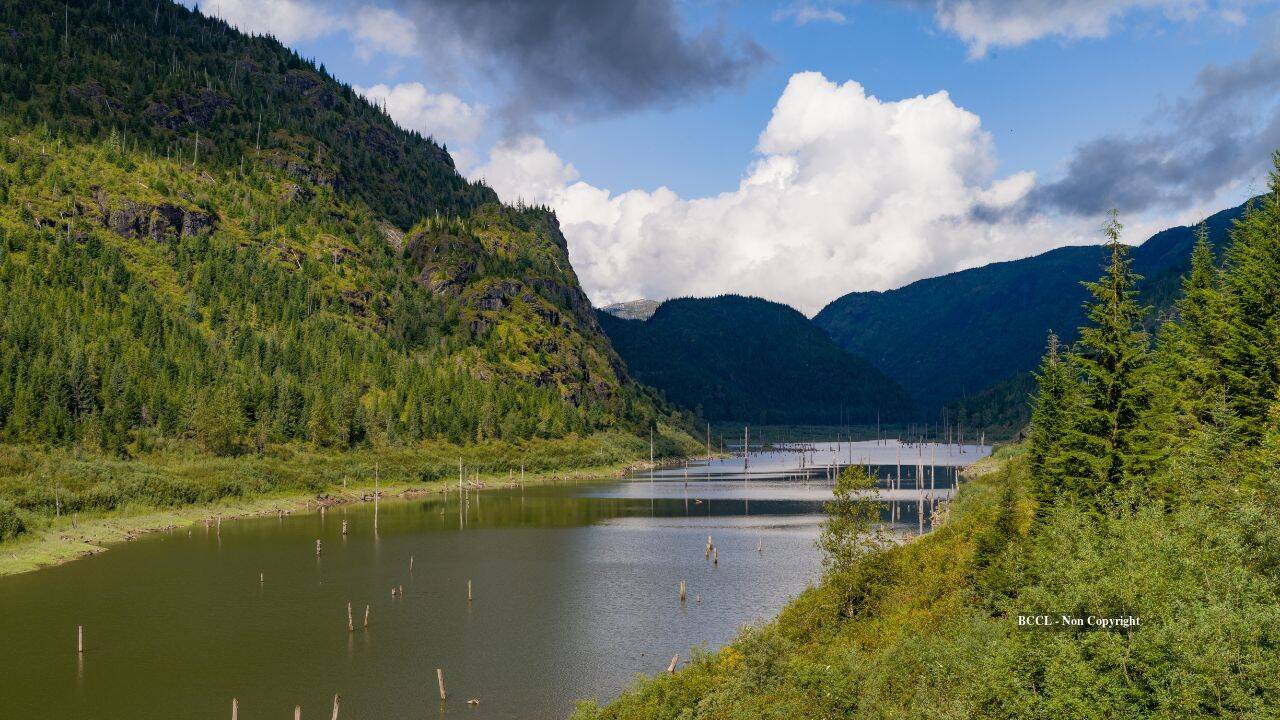
Imagine cruising across a massive, well-mapped mountain reservoir and running smack into a floating patch of land the size of two football fields, complete with mature spruce trees, nesting birds, and small mammals. It sounds like local folklore or a low-budget fantasy film. Yet, that is precisely what stunned boaters and utility operators encountered on British Columbia's Williston Reservoir.
This massive anomaly didn't just sit there. It broke free, vanished into the sprawling waterways for roughly fifteen days, and then reappeared thirty kilometers away. Naturally, the internet went wild with speculation. But if you look past the sensational headlines, the real story reveals how fragile and responsive our northern landscapes truly are under modern climate pressures.
The Anatomy of a Floating Ghost Island
When boaters first flagged the massive landmass near Finlay Bay, public skepticism ran high. In an era where digital alterations are trivial, people wanted proof. B.C. Hydro, the utility managing the reservoir, quickly confirmed its existence using satellite data from July 21.
The mass spanned roughly 105,000 square feet. It wasn't a loose collection of drift logs you could easily poke apart with a boat paddle. It was an integrated mat of peaty soil, interlaced roots, and decaying organic mulch that somehow kept itself buoyant. Treetops caught the wind like organic sails, dragging the entire ecosystem across the open water.
Why Did This Happen Now?
You might wonder how an entire section of shoreline packs up and leaves. The answer ties directly into extreme water fluctuations. Williston Reservoir hit its highest water levels in fourteen years following heavy summer rains and a massive winter snowpack.
That sudden surge flooded areas that had been dry for over a decade. The rising water undercut fragile shorelines, lifting organic mats that had spent decades anchoring themselves to the bedrock.
Bob Gammer, a spokesperson for B.C. Hydro, pointed out that while wood accumulation over years creates thick organic debris layers, the extreme hydrological push provided the exact trigger needed to unseat it. Not everyone agrees on the exact mechanics, though. Geologists like Simon Fraser University's John Joseph Clague have expressed surprise, noting that while shoreline erosion regularly drops trees into lakes, forming such a massive, cohesive, and fully forested floating mat remains exceptionally rare.
Is This Normal or a Sign of Trouble?
If you talk to marine ecologists, historical context changes the perspective entirely. Similar floating islands—sometimes called bog pushers—pop up occasionally in places like Wisconsin's Lake Chippewa. Before industrial logging and hydroelectric dams reshaped North American waterways by blocking natural debris flow, floating bogs and detached root masses were far more common sights.
Dams trap wood, alter natural flows, and create massive artificial lakes with erratic shoreline conditions. When water spikes happen, these hidden mats of vegetation find a way to break free.
The primary concern for authorities wasn't just ecological curiosity. A floating forest weighing thousands of tons poses a very real hazard to critical infrastructure, including dam intake structures and spillways. Fortunately, after disappearing into lesser-monitored arms of the reservoir, the island drifted safely into the Ospika Arm, coming to rest against a remote shoreline without causing damage.
Keep your distance if you happen to navigate northern waters anytime soon. Nature operates on its own timeline, and stability is often just an illusion.
Check out this coverage of the event: Floating island in northern B.C. appeared, vanished, then reappeared. This video provides a close look at the massive floating landmass captured by local observers in British Columbia.
http://googleusercontent.com/youtube_content/1