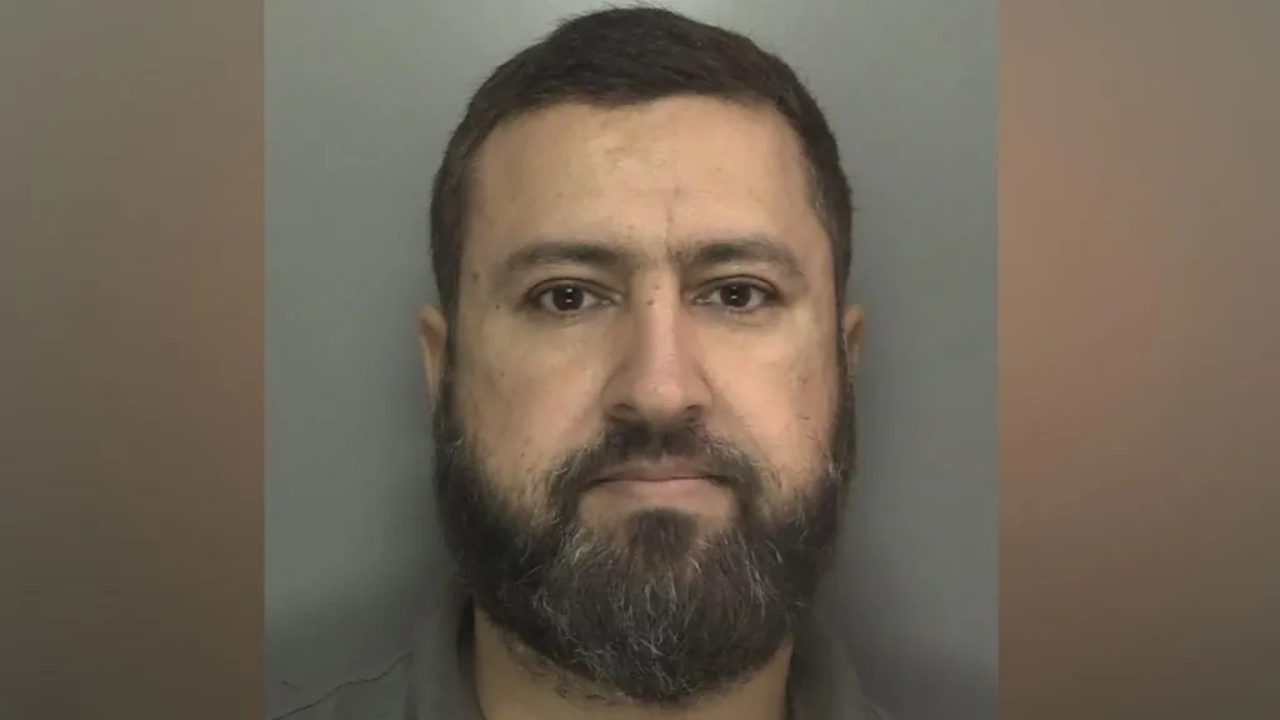
Paying someone else to do your homework is as old as school itself. But when a guy delivering your cardboard parcels is secretly pulling in hundreds of thousands of pounds by logging into student accounts and sitting full-scale university exams, the entire system has officially broken down.
The recent sentencing of 43-year-old Shahid Adnan at Liverpool Crown Court exposes a massive security blind spot in higher education. This was not a small-scale essay mill operations group. It was a massive, industrialized fraud network run right under the noses of university IT departments. Adnan, who split his time between driving for Amazon Flex and running a business called Study Sharp Ltd, just got handed a three-year prison sentence.
He managed to pocket at least £300,000 by acting as a ghost student for dozens of clients. When police looked at his finances, they found millions of pounds washing through his bank accounts.
People are treating this like a bizarre one-off story about an ambitious delivery driver. They're wrong. This case shows how easily the shift to online assessments can be exploited by anyone with a basic understanding of password sharing and an appetite for risk.
The Sloppy Mistake That Blew the Whole Operation Wide Open
The way Adnan got caught reads like a script from a bad comedy, which makes his multi-year success even more shocking.
In February 2023, a student at Liverpool John Moores University handed in a USB pen drive to a senior manager in the computer forensics department. It was supposed to contain a standard coursework submission.
Instead of just checking the word count, the university staff member ran a routine digital forensics tool on the drive. What popped up was a goldmine of incriminating data. The pen drive had been heavily used by Adnan. It still contained active links to his business, Study Sharp Ltd.
The biggest find was a set of spreadsheets. These documents contained the exact personal login credentials, passwords, module details, and assignment deadlines for a whole host of students.
The university realized immediately that someone outside the institution was logging directly into their secure portal. They weren't just buying essays; they were handing over total control of their academic identities. The university handed the findings over to Merseyside Police's Cyber Dependant Crime Unit. A raid on Adnan’s home on Lysander Close in Everton soon followed.
Inside the £300,000 Academic Subversion Machine
Adnan was smart about how he positioned his business. He advertised legitimate tutoring services, which gave him a perfect cover story. Once he established trust with struggling or lazy students, he offered the ultimate shortcut.
He didn't just write a paper and email it over. He took over the entire student experience.
- He obtained direct access to university portals.
- He monitored assignment schedules and test dates.
- He logged in directly during live exam windows to answer questions in real time.
- He charged premium rates, including a documented £250 fee for a single online exam.
During police questioning, Adnan claimed he didn't know he needed explicit permission from the university to log into someone else's account. It is a laughably weak defense for someone running a registered limited company dedicated to academic work.
The scale of the operation extended far beyond Liverpool. Detectives found evidence suggesting Adnan had completed academic work for roughly 124 students globally.
The Mind-Boggling Wealth Hidden Behind a Delivery Route
The most staggering part of the investigation was the sheer volume of cash moving through Adnan's accounts. His declared income came from his work as a private tutor and his shifts as an Amazon Flex driver.
His bank statements told a completely different story. Investigators found a jaw-dropping trail of cash across multiple platforms.
There was £1,505,156 sitting in a Barclays account. A Lloyds personal account held £600,590, while a Lloyds business account for his company contained another £245,279. Even his PayPal account was loaded with £110,214.
While the court tied at least £300,000 directly to the academic cheating fraud, the total amount of money passing through his hands topped £2.4 million. Senior Crown Prosecutor Andrew Madden noted that Adnan set up highly complex audit trails across these various accounts. He actively tried to obscure the source of the money and spent heavily on high-end luxury items to ensure the state would have a harder time clawing it back.
When police searched his Everton home, they didn't find the modest living space of an everyday delivery driver. They found high-end domestic appliances, luxury home furnishings, and two premium vehicles parked outside: an Audi and a BMW.
He pleaded guilty to fraud by false representation and unauthorized computer access in September. By October 2025, he finally admitted to money laundering charges. The three-year prison sentence handed down on June 17, 2026, marks the end of his operation, but the fallout for the higher education sector is just beginning.
Why Online University Portals Are Unsafe
The absolute ease with which Adnan bypassed university infrastructure should terrify academic boards. Higher education institutions spend millions on plagiarism software like Turnitin. They scan for copied sentences, AI-generated text, and stolen ideas.
They completely failed to notice that the person typing the answers wasn't even the person paying tuition.
Most universities rely on simple username and password combinations for student portals. Even when two-factor authentication is required, a student who is actively paying a fraudster will gladly forward the security code to let them log in. To the university's network infrastructure, Adnan’s login looked exactly like a legitimate student logging in from an off-campus apartment.
This creates a massive integrity problem. If a delivery driver can sit in his house in Liverpool and earn degrees for students globally, the value of those qualifications drops to zero.
It is incredibly unfair to the thousands of students who spend long nights studying, accumulating massive debt, and earning their grades honestly. It also poses a genuine danger to society. The Cyber Dependant Crime Unit pointed out that this type of fraud allows completely unqualified individuals to enter professional fields where specialized knowledge is a matter of public safety.
What Needs to Happen Right Now
Universities cannot go back to the old ways entirely, but they must adapt to this threat immediately. Relying on basic online portals without continuous verification is dead.
First, higher education institutions need to implement biometrics and keystroke dynamics during remote assessments. If the typing speed, rhythm, and physical location of the person taking an exam drastically change from their historical data, the system needs to lock them out immediately.
Second, the reliance on high-stakes online exams taken from home must decrease. In-person, supervised examinations on physical campuses are the only foolproof way to ensure that the person getting the degree is the person doing the work.
Finally, there must be harsher consequences for the students who buy these services. While Adnan is going to prison, the 124 students who used his services face academic ruin. Universities must systematically audit the historical submissions of any account linked to Adnan's spreadsheets. Stripping these individuals of their credits and degrees is the only way to send a clear message.
If you are a student thinking about using an online helper to get through your next exam module, don't do it. You aren't just risking a failing grade; you are handing your personal data over to criminals who keep spreadsheets of your identity, and you could end up caught in a criminal fraud investigation that ruins your future career before it even starts. Turn off the shortcuts and do the work yourself.