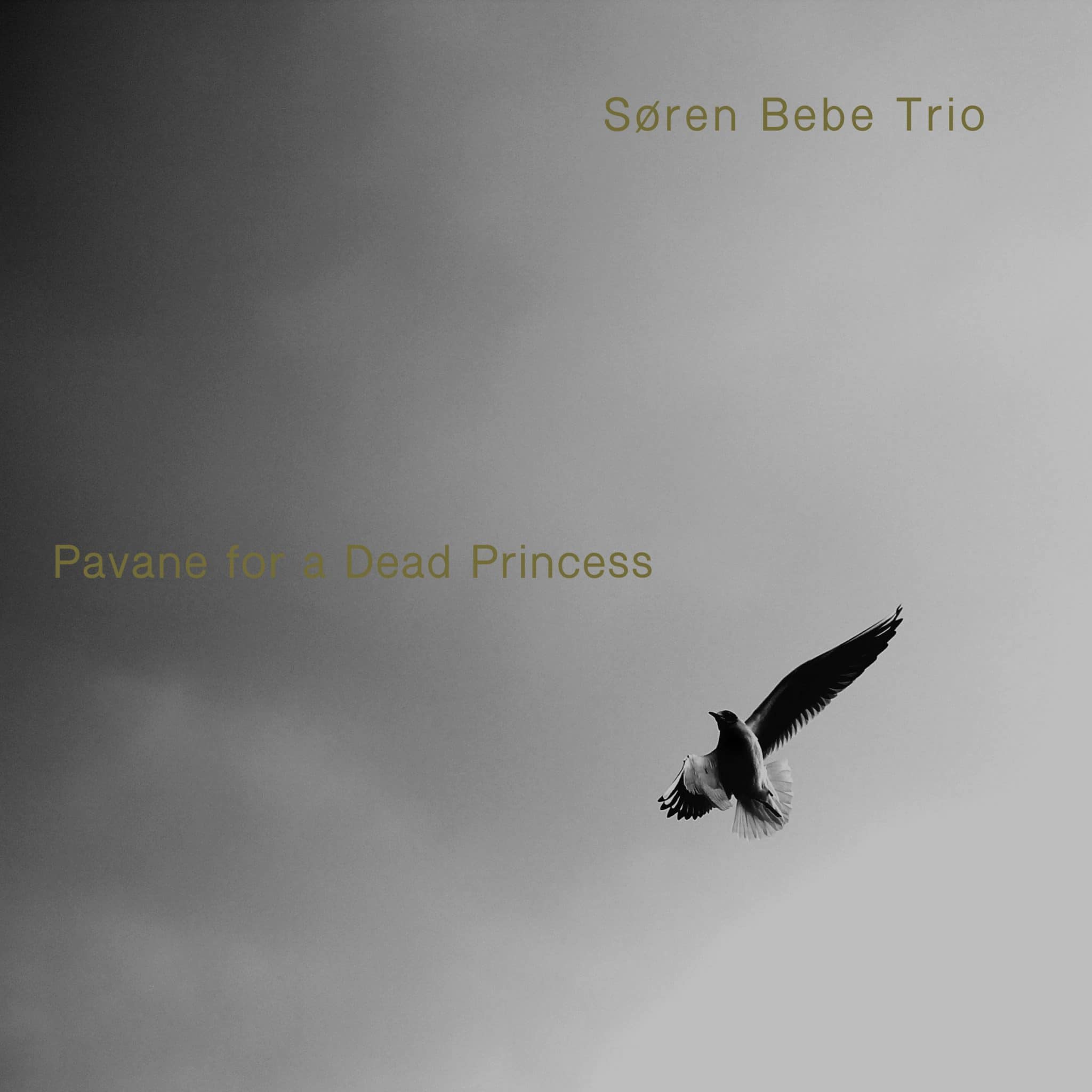
The New York Philharmonic confirmed on Wednesday that it will debut a newly restored orchestration of Pavane For A Dead Princess during its upcoming winter season at Lincoln Center. Music Director Gustavo Dudamel stated the performance aims to utilize recently discovered manuscripts to correct harmonic errors found in later printed editions. The initiative follows a multi-year archival project intended to return the composition to the specific acoustic intentions of its creator.
Archivists at the Bibliothèque nationale de France provided digital scans of original sketches to the philharmonic’s research team last year. These documents revealed that several dynamic markings and tempo indications had been altered in commercial scores distributed after 1910. The restoration project marks the first time a major American orchestra has attempted a full-scale correction of these specific notation discrepancies.
Historical Significance of Pavane For A Dead Princess
The piece remains one of the most recognizable examples of French impressionist music, originally composed for solo piano in 1899. Maurice Ravel, the composer, later arranged the work for a full orchestra in 1910, adding parts for two flutes, an oboe, two clarinets, and two bassoons. According to the Ravel Foundation, the composer intended the work to evoke a slow, dignified dance performed by a young Spanish princess at the court of the Infanta.
Music historians often highlight the composer’s own frustration with the work’s widespread popularity, which he frequently described as lacking in structural complexity. Despite his personal critiques, the arrangement became a staple of the orchestral repertoire due to its evocative use of the French horn. The upcoming New York performance will focus on the horn’s primary melody, restoring specific phrasing that historians claim was lost in mid-century interpretations.
Influence on Orchestral Training
Conservatories around the world utilize the arrangement to teach woodwind blending and brass control. Data from the Juilliard School indicates that the horn solo is among the most frequently requested excerpts in professional orchestral auditions. The technical difficulty lies not in the speed of the notes but in the breath control required to maintain a seamless melodic line across the instrument's middle register.
By restoring the original phrasing, the New York Philharmonic hopes to set a new pedagogical standard for how the melody is taught to students. Researchers noted that contemporary interpretations often emphasize a romanticized rubato that the composer explicitly warned against in his letters. The new edition will enforce a stricter adherence to the rhythmic pulse found in the 1899 piano version.
Technical Challenges of the New Restoration
Restoring a century-old score involves more than simply reading old notes on a page. The research team had to account for the physical evolution of instruments since the early 20th century. Modern French horns, for instance, possess a different bore size and tonal projection than those used in Paris during the Belle Époque.
Chief Librarian Lawrence Tarlow explained that the team collaborated with instrument makers to ensure the restored dynamics would translate effectively to modern equipment. The process involved testing various mouthpiece configurations to replicate the thinner, more focused sound of early French woodwinds. This level of detail ensures that the restored harmonic balance remains audible in the large, modern acoustics of David Geffen Hall.
Archival Findings and Notational Changes
The most significant change in the new score involves the treatment of the string section during the middle movement. Previous editions suggested a lush, heavy vibrato that often obscured the delicate interplay between the harp and the flutes. The restored manuscripts suggest a leaner, more transparent sound profile that aligns with the aesthetic of the French Baroque.
Staff at the Morgan Library & Museum assisted in verifying the handwriting on several supplemental pages found in private collections. These pages contained specific instructions for the percussionists that were omitted from the first published orchestral edition. The inclusion of these subtle metallic textures is expected to alter the overall color of the performance significantly.
Critical Reception and Artistic Debate
Not every musicologist agrees that a restoration of this magnitude is necessary for a work that is already a cornerstone of the repertoire. Some critics argue that the performance history of a piece is just as valid as the original intent of the composer. They suggest that the "standard" version of the Pavane For A Dead Princess has become its own entity through decades of interpretation by legendary conductors.
During a panel discussion at the Manhattan School of Music, several faculty members questioned whether listeners would even notice the subtle shifts in orchestration. They pointed out that the average concertgoer is more interested in the emotional resonance of the melody than in the precise placement of a dynamic marking. The debate highlights a long-standing tension in classical music between historical accuracy and evolving performance traditions.
Responses from the Philharmonic Board
The board of the New York Philharmonic has defended the project as an essential part of its mission to preserve and revitalize the classical canon. Board members argued that the restoration provides a unique marketing opportunity to attract younger audiences interested in the "authentic" history of famous artworks. Internal projections from the marketing department suggest that the premiere of the restored score will see a 15 percent increase in ticket sales compared to standard repertoire nights.
The project also received financial backing from several private donors who specialize in the preservation of French cultural heritage. These donors emphasized that the work is a global treasure that deserves the same level of restoration as a painting in the Louvre. The funding covered not only the research and rehearsal time but also the creation of a digital archive accessible to scholars worldwide.
Broader Trends in Orchestral Programming
The decision to focus on a single, well-known work reflects a broader trend among international orchestras to create "event" concerts centered on specific historical discoveries. Organizations like the Berlin Philharmonic and the London Symphony Orchestra have recently undertaken similar projects with the works of Mahler and Stravinsky. These efforts are designed to differentiate live performances from the vast library of recordings available on streaming platforms.
Industry analysts from the League of American Orchestras have noted that audiences are increasingly seeking educational components as part of their concert experience. Pre-concert lectures and digital program notes that explain the "why" behind a performance are becoming standard practice. The New York Philharmonic intends to release a series of short documentary videos detailing the restoration process leading up to the opening night.
Comparative Analysis of Performance Editions
There are currently four major editions of the score in circulation, each with minor variations in the wind parts. The Peters Edition and the Durand editions are the most commonly used by professional ensembles. The new New York Philharmonic edition will be the fifth major version, though it is currently intended for the orchestra's exclusive use before being offered for wider publication.
A comparative study conducted by the university's music department found that the Durand edition, while popular, contains at least 12 distinct engraving errors in the harp part alone. These errors have been corrected in the new restoration, which also restores a missing cello line in the final eight bars. These technical adjustments are expected to provide a more stable harmonic foundation for the famous concluding cadence.
Future Implications for the Classical Repertoire
The success of this restoration could lead the New York Philharmonic to investigate other works from the same era that may have been subject to similar editing errors. Archivists have already identified several suites by Debussy and Ravel that could benefit from a fresh examination of the primary sources. This move signals a shift toward a more academic approach to programming that mirrors the "period instrument" movement of the late 20th century.
Later this year, the orchestra plans to take the restored edition on a tour of several European cities, including a stop at the Théâtre des Champs-Élysées in Paris. This performance will serve as a homecoming for the music, allowing French audiences to hear the results of the American-led research project. The philharmonic’s legal team is currently negotiating the rights to record the performance for a commercial release in 2027.
The music community is now waiting to see if other major institutions will adopt the New York Philharmonic’s new score or stick with the traditional versions. Conductor Gustavo Dudamel is scheduled to host a public forum next month to discuss the artistic choices made during the restoration process. Musicians and scholars will be watching closely to determine if these changes become the new global standard for the work.
(mh=zzqK76HPYUPUQkGo)14.jpg)