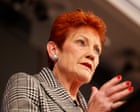
Pauline Hanson just spent 51 minutes on stage at the National Press Club ripping into multiculturalism, transgender advocates, and the mainstream media. While her critics call the performance shameful and accuse her of importing toxic American and British political tactics, something much bigger is happening. One Nation is surging in the polls.
Hanson is currently outpacing Anthony Albanese as preferred prime minister in Newspoll. Dismissing her as a fringe populist simply does not work anymore. You might also find this related article interesting: Why calling the Minab school bombing a mistake misses the point.
The reality is that Australia is in a bitter, resentful mood. Housing is entirely unaffordable for a generation. Student debt is climbing. The cost of living is hammering everyday people while corporate profits look great. When people feel left behind by the political establishment, they look for someone willing to smash the system. Hanson knows exactly how to capture that anger.
The Importation of Global Culture Wars
The central criticism of Hanson's address is that she is no longer just using her traditional anti-immigration playbook. Instead, she has fully adopted the modern culture war framework seen in the United States and the United Kingdom. As reported in latest articles by The Washington Post, the implications are widespread.
Greens senator Sarah Hanson-Young pointed this out directly, labeling the speech deplorable and noting that Hanson is simply trumpeting the same old lines we see from the American hard-right and conservative figures in the UK.
Look at what Hanson actually targeted during her speech. She claimed that a transgender ideology has penetrated almost every regulatory authority in Australia and accused schools of imposing a dangerous agenda on children. She even compared trans awareness to militant Islam.
This is lifted straight from the international right-wing playbook. It is about finding a small, vulnerable minority and turning them into a political scapegoat to drive anger and engagement.
Hanson also went after the country's public broadcasters. She promised that under a One Nation government, SBS would be completely abolished, claiming the internet has made it irrelevant. She also pledged to significantly gut and reshape the ABC.
By attacking public institutions and marginalized groups, Hanson is mirroring the exact strategies Donald Trump uses in America and Reform UK uses across the British political landscape.
The Monocultural Lie and Real World Disconnectedness
The core of Hanson's speech was her declaration that Australia must become a monocultural society. She stated that while the nation is multiracial, everyone must live under one cultural umbrella.
To back up her point, she cited 2021 census figures showing that 23% of Australians speak a language other than English at home. She asked how social cohesion is possible when people cannot speak the language.
The problem with this argument is that it relies on a massive logical flaw. Speaking a second language at home does not mean someone cannot speak English fluently at work, school, or in public life. It is entirely possible—and incredibly common—to be fully integrated into Australian society while maintaining cultural connections at home.
Advocacy groups were quick to condemn the rhetoric. Refugee and multicultural organizations reported an immediate uptick in hostile behavior and racism directed at their staff and volunteers following the broadcast. Language has real-world consequences. When a political leader suggests that nearly a quarter of the population is eroding national identity, it gives bigots a green light to act out.
Hanson also doubled down on her long-standing anti-Islam rhetoric. When a journalist asked her directly if Australia was in danger of being swamped by Muslims, her response was swift: "Not if I get any say in it."
This follows a history of legal trouble regarding race relations. In 2024, a federal judge found Hanson had engaged in racial discrimination against Greens senator Mehreen Faruqi. The lines she used at the Press Club are not new, but they are getting louder.
Where One Nation Actually Fails Australian Workers
If you want to understand why Hanson's platform is contradictory, look at her economic policies. She spends a lot of time presenting herself as a champion of the working class against the political elite. Yet her actual voting record and economic stances tell a completely different story.
During her address, a protest banner suddenly unfurled behind the podium. It read: "I opposed a pay rise for workers while I took a $100,000 pay rise for myself."
The stunt was claimed by the activist group GetUp, and it highlighted a massive vulnerability in Hanson's populist armor. Hanson has consistently opposed minimum wage increases for the lowest-paid workers in the country. During the Press Club event, she defended this by arguing that small businesses simply cannot afford wage hikes.
Labor frontbencher Matt Thistlethwaite took aim at this hypocrisy, stating that Hanson had revealed her true colors. One Nation claims to fight for the struggling suburban Aussie, but when it comes to putting more money in those workers' pockets, the party sides with corporate deregulation. Hanson even advocated for making it easier for bosses to fire their employees. If these policies became law, everyday Australians would face less job security and lower wages.
Energy Mythmaking and the Nuclear Distraction
The economic disconnect extends directly to her environmental and energy plans. Hanson heavily criticized the Albanese government's renewable energy transition, claiming that environmental regulations are throttling the Australian economy.
Her solutions sound simple on a podcast but fail under any serious scrutiny:
- Ban all wind and solar farms.
- Cancel the Snowy Hydro 2.0 project.
- End all subsidies for renewable energy.
- Build a domestic nuclear reactor.
Hanson openly admitted she would consider having taxpayers underwrite the massive cost of building a nuclear power plant. This comes even though Australian voters decisively rejected Peter Dutton's large-scale nuclear proposals at the last federal election.
The strategy ignores basic economic reality. The CSIRO's recent GenCost report proved that an electricity grid relying on 82% renewables would be roughly a third cheaper than current wholesale power costs. Nuclear energy is consistently the most expensive option available, takes decades to build, and introduces massive financial risks.
By blaming the cost-of-living crisis on a renewable energy hoax, Hanson avoids having to offer real, workable solutions for soaring power bills.
Why the Major Parties Are Terrified
The conventional wisdom among political journalists used to be simple: ignore Hanson, don't give her a platform, and her movement will fade away. That strategy has completely failed. One Nation is no longer a fringe protest vote. It is turning into a major political force that is actively cannibalizing the traditional conservative base.
The Liberal and National parties are stuck in a deep panic. Former Prime Minister Tony Abbott recently backed a preference deal with One Nation, warning that the Liberals cannot survive by just being a little less woke than Labor. Meanwhile, the Nationals have officially ruled out a deal, creating a massive rift on the conservative side of politics.
Labor is equally terrified. The party recently issued new internal talking points to its MPs, directing them to treat Hanson as if she is the real opposition leader.
The old trick of fact-checking Hanson does not work anymore. Populism is built on emotion, not spreadsheets. When the major parties spend all their time pointing out that her numbers do not add up, it just makes her look like a victim of the establishment in the eyes of her supporters. Her base does not care about policy details; they care that she is angry about the same things they are angry about.
What to Look for Next
The political landscape in Australia is shifting rapidly, and the old rules no longer apply. To understand where this momentum is heading, watch how these key areas develop over the coming months:
- Watch the Lower House Shifts: Keep a close eye on Hanson's upcoming moves. She is openly flirting with running for a lower house seat in the 2028 federal election rather than staying in the Senate. If she makes the jump, it will turn that local campaign into a national media circus.
- Track the Coalition Preference Feud: Watch how the Liberal and National parties handle preferences. The internal fighting over whether to team up with One Nation or block them will likely fracture conservative unity in key regional seats.
- Monitor Local Union Campaigns: Pay attention to how trade unions respond. Given Hanson's anti-worker stances on minimum wage and unfair dismissal, expect unions to launch aggressive, targeted advertising campaigns in working-class suburbs to expose her actual voting record.
Hanson is no longer an outlier standing outside the political system. By taking the stage at the National Press Club and setting the agenda for the national conversation, the perpetual outsider has successfully walked inside the tent. Dismissing her rhetoric as mere rubbish ignores the very real economic pain that is driving voters straight into her arms.


