When a patch of land fails, our modern instinct is to fix it immediately. We want deep ploughing. We want imported topsoil scraped away. Most of all, we want to buy expensive, commercial "wildflower meadow in a tub" seed mixes and scatter them everywhere, hoping for a fast-forward button on biodiversity.
But we are usually wrong.
A ground-breaking study published in the journal Restoration Ecology shows that human over-intervention is often a waste of time and money. In fact, if you just step back, nature restores itself with far more resilience, local suitability, and genetic diversity than any store-bought seed mix can ever offer.
The proof lies in Sayer's Meadow, a two-hectare (five-acre) plot of land in the village of Bodham, North Norfolk. In 2005, a family stopped farming a notoriously difficult, heavy clay field. They did not seed it. They did not buy fancy blends. They simply walked away, save for one crucial annual chore.
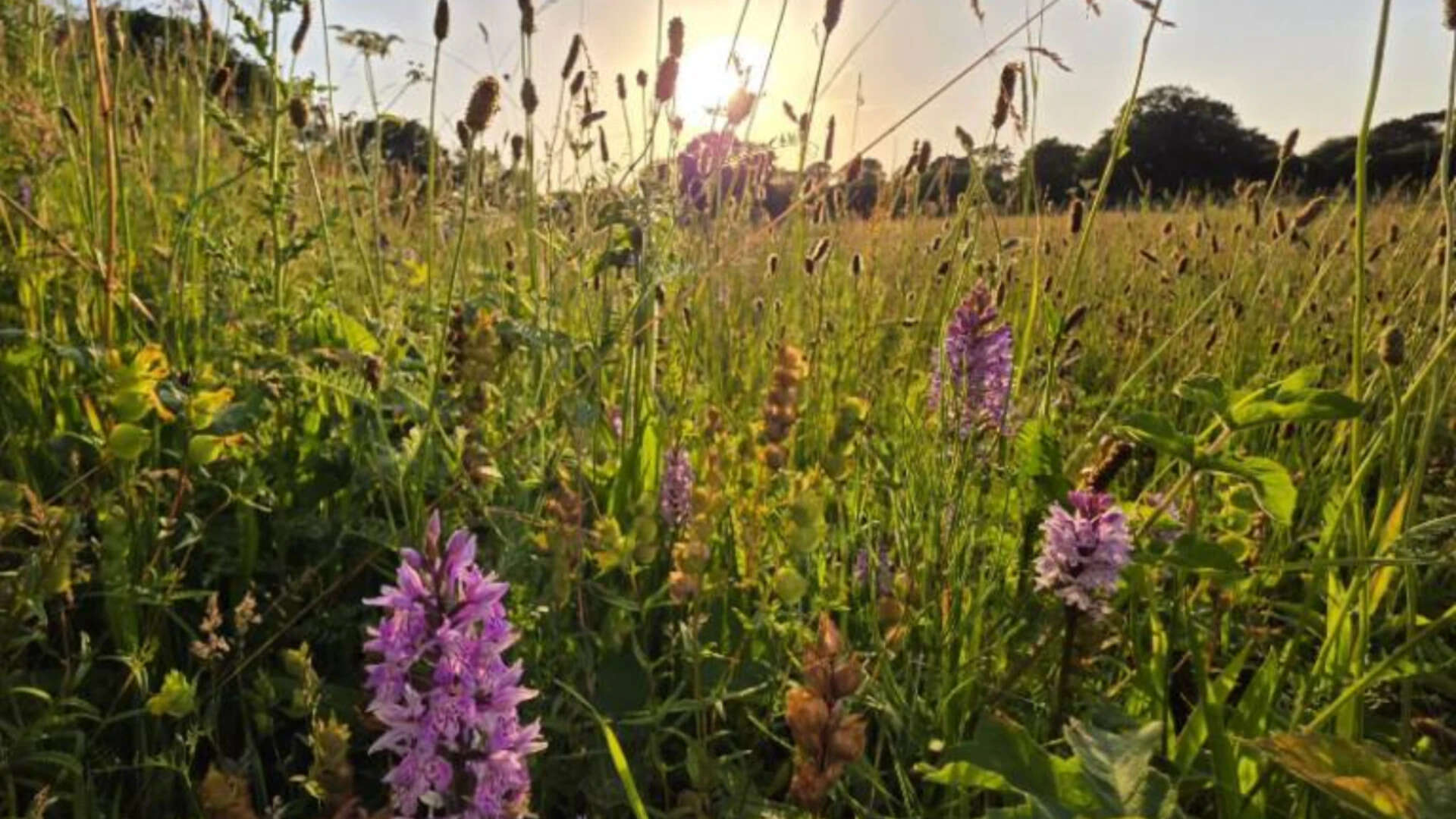
By 2022, the result was a thriving, species-rich wildflower sanctuary packed with rare orchids and buzzing with life.
Here is what really happened on that North Norfolk farm, why the "experts" were wrong, and how you can apply these lessons to restore land without spending a fortune.
The Myth of the Instant Meadow
When Professor Carl Sayer of University College London (UCL) and his family decided to stop growing oilseed rape on their clay field in 2005, the advice from conservationists was unanimous: You have to seed it.
The conventional wisdom in habitat restoration says that modern agricultural soil is too degraded, too nutrient-heavy, or too isolated to recover on its own. To build a meadow, the handbook typically dictates:
- Deep ploughing to disrupt the soil.
- Stripping the nutrient-rich topsoil (often costing thousands of pounds).
- Sowing highly commercialised seed mixtures.
The problem? Commercial seed mixes are often genetic duplicates grown far away. They might look pretty for a season, but they are not adapted to local soils or microclimates.
Sayer resisted the urge to plant. He wanted to see what nature would do if left to its own devices.
The family implemented just one management tool: a traditional, late-summer hay cut.
The One Rule: The Late-Summer Cut
Letting nature take its course does not mean absolute neglect. If you completely abandon agricultural land in temperate climates, it eventually turns into scrubland, brambles, and eventually forest. To maintain a grassland or meadow, you need a disturbance agent.
Historically, this was grazing livestock or wild herbivores. For Sayer’s Meadow, it was a tractor.
Each late summer, the family cut the grass and, critically, removed the cut hay. This is the golden rule of wildflower restoration.
Agricultural soils are packed with nitrogen and phosphorus from decades of fertilisers. Fast-growing, aggressive grasses love high nutrients; they will quickly shoot up, choke out sunlight, and kill off delicate wildflowers. By cutting the plants and removing them, you slowly strip nutrients out of the soil over time. This creates the low-nutrient environment where diverse wildflowers naturally outcompete aggressive weeds.
The Decade of Slow Magic
Between 2011 and 2022, Professor Sayer and his friend Pete Robinson conducted meticulous botanical surveys every two to three years to document what was actually showing up. They set up 24 permanent one-metre-square plots across the field to track the exact shift in biodiversity.
The data tells a dramatic story of natural recovery:
- 2011 (Six years post-abandonment): The survey plots had an average of about 10 plant species per square metre.
- 2022 (Seventeen years post-abandonment): The average species count doubled to nearly 20 species per square metre.
- The Rare Arrivals: Out of nowhere, highly sensitive, locally rare plants began to populate the field, including the southern marsh orchid, greater tussock-sedge, yellow rattle, and common centaury.
Average Plant Species per Square Metre (Sayer's Meadow)
2011: [##########] 10 species
2022: [####################] 20 species
The yellow rattle is particularly important. Often called the "meadow maker," this plant is semi-parasitic on aggressive grasses. It taps into grass roots, weakens them, and opens up physical space in the turf for other wildflowers to take root. Once yellow rattle arrived on its own, the meadow’s diversity exploded.
How Did the Seeds Get There?
If the family did not sow any seeds, how did sensitive plants like orchids—some with no known populations nearby—end up in Sayer’s Meadow?
Wind is part of the answer, but the research team points to a different, unsung hero: wild animals.
Deer and other mammals roaming through the North Norfolk countryside act as natural, walking seed banks. Seeds stick to their fur, get wedged in their hooves, or pass through their digestive tracts, depositing themselves perfectly into the Norfolk clay.
This animal-led seed dispersal ensures that the plants arriving in the meadow are already fully adapted to the local ecosystem. They are survivalists.
Why This Upends Public Conservation Policy
Right now, government-funded conservation schemes across the UK and Europe dump millions into active planting. Landowners are paid to plough, buy commercial seed mixes, and micro-manage habitats.
The Sayer’s Meadow study proves we are spending money we don't need to spend.
Passive, nature-led restoration is:
- Immensely cheaper: No seed budgets, no heavy machinery hire.
- Genetically superior: It preserves local plant genetics rather than introducing generic, mass-cultivated varieties from seed factories.
- More resilient: Natural selection decides which plants survive on the site, creating a meadow tailored to its specific soil, drainage, and local weather patterns.
Your Action Plan: How to Restore Your Own Land
If you have a paddock, a large garden, or a small holding that you want to turn into a wildflower haven, do not rush to buy seed packets. Follow the Sayer's Meadow blueprint instead:
- Stop fertilising immediately. You need to starve the soil of nutrients so the weeds and aggressive grasses lose their competitive edge.
- Do not plough. Tilling the soil often wakes up millions of buried, dormant weed seeds (like dock and nettles), creating a maintenance nightmare.
- Mow once a year in late summer. Wait until late August or September when wild plants have finished flowering and dropped their seeds.
- Rake and remove every scrap of cut grass. Never leave the cuttings to rot on the ground; this returns nutrients to the soil and smothers emerging seedlings.
- Embrace the ugly phase. In years one through four, the land might look like a messy patch of weeds. Be patient.
Nature has been restoring landscapes for millions of years. Sometimes, the most scientific thing we can do is get out of the way.