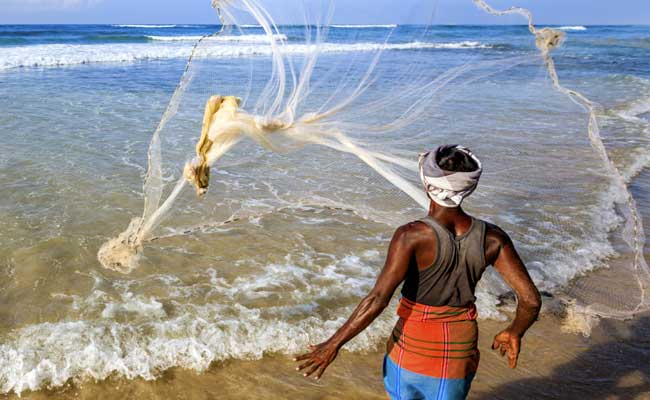
Another week, another arrest in the narrow stretch of water separating Tamil Nadu from northern Sri Lanka. Nine Indian fishermen were taken into custody near Talaimannar after their mechanized trawler crossed the International Maritime Boundary Line (IMBL). Sri Lanka’s navy spotted over 50 Indian vessels operating south of Iranativu on Wednesday evening, seized one boat, and handed the crew over to local fisheries officials in Mannar.
It sounds like a straightforward story of illegal border crossing. But anyone who has tracked this region knows it’s never that simple.
The real issue isn't just nine guys who wandered past a invisible line in the water. It’s an economic and ecological trainwreck decades in the making, and both governments keep treating it like a temporary nuisance instead of a structural collapse.
The Reality Behind the Border Crossings
If you talk to the fishing communities in Rameshwaram or Nagapattinam, you quickly learn that nobody crosses into Sri Lankan waters for fun. They do it because the Indian side of the Palk Bay is essentially dead.
Decades of intensive bottom trawling—a practice where heavy weighted nets are dragged across the seafloor—have completely wiped out the local marine habitats on the Indian side. The sea floor has been scraped bare. To make a living and service the huge loans they took out to buy motorized trawlers, Indian crews have to go where the fish actually are. That happens to be the Sri Lankan side of the bay, where ecosystems had decades to recover while northern Sri Lanka was locked down during the civil war.
When the civil war ended in 2009, Sri Lankan Tamil fishermen returned to the water, expecting to rebuild their lives. Instead, they found massive fleets of heavily equipped Indian trawlers ripping up their nets and scooping up the catch.
This isn't just a political spat between New Delhi and Colombo. It's a bitter, direct conflict between two working-class Tamil communities who share a language, culture, and history, but are fighting over a rapidly shrinking economic pie.
Why the 1974 Agreement Failed to Solve Anything
Politicians love to bring up the 1974 Indo-Sri Lankan Maritime Agreement that recognized Sri Lanka's sovereignty over the island of Katchatheevu. Later, in 1976, another agreement barred fishermen from both nations from operating in each other's Exclusive Economic Zones.
That sounds clean on paper. On the water, it broke down almost immediately.
The Palk Strait is barely 30 miles wide at its narrowest point. When you're running a boat in choppy waters without advanced GPS gear, staying on the correct side of an arbitrary line is tough. But more importantly, the legal framework never accounted for the huge imbalance in fishing power. Indian fishermen had big, heavy trawlers funded by state subsidies, while Sri Lankan fishermen were mostly using small fiberglass motorboats with gillnets.
The Sri Lankan Navy stepped in to enforce the border aggressively. Over 120 Indian fishermen have been detained in early 2026 alone, with dozens of expensive trawlers impounded. When Sri Lanka seizes a boat now, they rarely return it. They confiscate it permanently. For a small boat owner in Tamil Nadu, losing a trawler means instant bankruptcy.
The Ecological Mess Nobody Wants to Fix
The core of the problem isn't diplomatic; it's ecological. Bottom trawling destroys everything in its path, from coral reefs to breeding grounds. Sri Lanka banned bottom trawling outright years ago to protect its fisheries. India has tried to phase it out, encouraging deep-sea fishing in the Indian Ocean instead, but the transition has been slow and poorly funded.
Deep-sea fishing vessels require different gear, different training, and access to different markets. Giving a fisherman a partial subsidy to buy a deep-sea vessel doesn't work if he can't afford the remaining cost or doesn't know how to navigate open-ocean tuna fishing.
So, the fleet returns to the Palk Bay every single night. They play a high-stakes game of cat-and-mouse with Sri Lankan naval patrols, risking arrest, confiscation, and occasionally naval gunfire, just to bring home a decent catch.
Practical Steps to Break the Deadlock
We can't keep repeating this cycle of arrests, high-level diplomatic phone calls, releases, and re-arrests. Here is what actually needs to happen if both countries want to fix this permanently:
- Enforce a Genuine Phase-Out of Bottom Trawling: The Tamil Nadu government must stop offering fuel subsidies for trawlers operating in the Palk Strait and instead buy back old trawling gear at fair market value.
- Joint Fisheries Management Committee: Establish a direct, daily line of communication between local fishing unions in Tamil Nadu and Sri Lanka's Northern Province, bypassing the bureaucratic delays of Colombo and New Delhi.
- Equip Small Boats with Boundary Transponders: Install basic, tamper-proof geo-fencing transponders on all small Indian fishing craft that alert the crew audio-visually before they cross the IMBL.
- Fund True Deep-Sea Fishing Capacity: Replace short-term political relief packages with fully funded, community-led deep-sea fishing infrastructure along the Tamil Nadu coastline.
Until both nations address the ecological reality of the Palk Strait, nine arrests today will just turn into nine more arrests tomorrow.