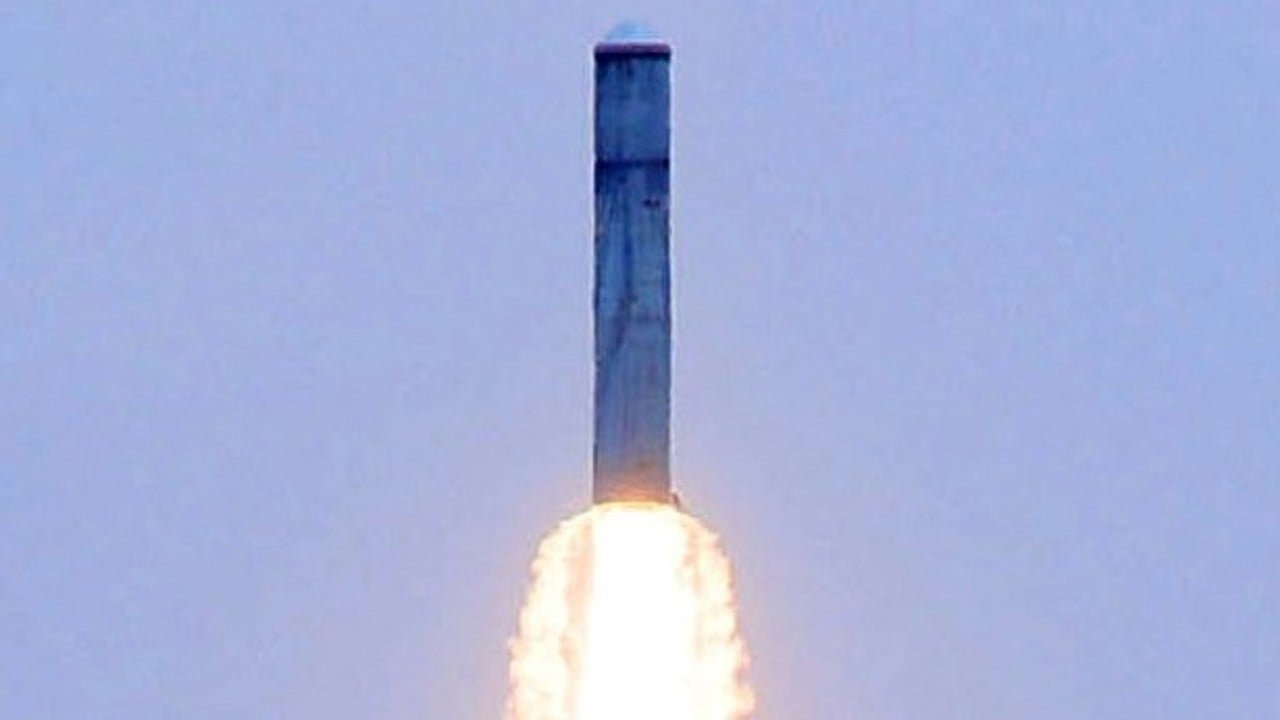
When a long-range ballistic missile splashed into international waters between Tuvalu, Nauru, and the Solomon Islands on July 6, 2026, it didn't just rattle windowpanes across the Pacific. It blew wide open a painful political truth that regional leaders have tried to hide for years. The Pacific Islands are not united.
Despite decades of preaching collective diplomacy under the banner of the "Blue Pacific Continent," the region's response to Beijing's latest military flex was fragmented, hesitant, and visibly torn. Some leaders shouted warnings about regional security. Others shrugged or issued soft press releases that barely named the country firing the rocket.
If you want to understand why a single military test exposed such deep fault lines across 15 million square miles of ocean, you have to look past the official press statements. The real story is about cash, historical trauma, and a diplomatic tug-of-war that has left small island states fighting each other instead of standing together.
A Sudden Strike into International Waters
China's People's Liberation Army Navy launched the submarine-based missile from the South China Sea. It traveled roughly 7,300 kilometers before dropping a dummy warhead into a narrow corridor of high seas wedged between several exclusive economic zones. Beijing called the maneuver standard practice, insisting it complied fully with international law and wasn't targeted at anyone.
Technically, Beijing was right. The missile landed in international waters where no single state holds sovereign jurisdiction. But legally permissible actions can still be strategically aggressive.
Palau's President Surangel Whipps Jr. pulled no punches when describing the test. He pointed out that dropping live hardware right into the middle of island economic zones without real advance warning feels like an explicit threat. Tuvalu's Prime Minister Feleti Teo shared that disappointment, reminding his peers that the launch violated the core intent of the 2025 "Ocean of Peace" declaration signed in Honiara.
Yet the regional body that represents these countries—the Pacific Islands Forum— struggled to deliver a single, unified condemnation immediately after the impact.
Why? Because the forum's membership is deeply divided between nations bound to Beijing, nations allied with Washington, and nations trying to play both sides for infrastructure dollars.
Cash Diplomacy and Quiet Contradictions
Follow the money and the regional hesitation makes complete sense. Just days before the missile test occurred, Beijing handed over a $1.08 million check to the Pacific Islands Forum Secretariat to back regional development goals. Chinese diplomats met directly with forum leaders. They smiled for photo ops. They talked about economic partnerships.
Not a single word was mentioned about the imminent launch of a nuclear-capable delivery vehicle over their homes.
That kind of checkbook diplomacy creates severe leverage. Countries like the Solomon Islands and Kiribati have shifted their diplomatic allegiance to Beijing in recent years, securing massive loans and construction projects for ports, roads, and stadiums. Expecting those governments to sign a harsh joint resolution condemning Chinese military behavior is naive.
It gets more complicated when you look at nations like Papua New Guinea. Prime Minister James Marape called for an end to all missile tests in the Pacific. Notice his phrasing, though. He didn't single out Beijing alone. He directed his warning to all major global military powers. That distinction matters because it shields local economic interests while technically taking a moral high ground.
The Ghost of 20th Century Radiation
To grasp why Pacific islanders get furious about missiles dropping from the sky, you have to remember what happened in the 20th century. The region isn't an empty firing range. It's a populated home where foreign powers detonated more than 300 nuclear weapons between 1946 and 1996.
The United States conducted 67 nuclear tests in the Marshall Islands, vaporizing whole atolls and exposing thousands of locals to deadly fallout. France blew up Bikini Atoll's quiet atmospheric history and conducted over 100 underground tests at Mururoa and Fangataufa in French Polynesia. The United Kingdom tested its own devices at Christmas Island and Emu Field.
Those scars haven't healed. Marshall Islands President Hilda Heine frequently brings up that painful legacy whenever nuclear capabilities show up nearby. For islanders, watching modern strategic weapons fall into their ocean triggers real trauma.
In 1985, Pacific nations created the South Pacific Nuclear-Free Zone Treaty, known as the Treaty of Rarotonga. The entire goal was to keep nuclear weapons tests and radioactive waste out of their backyards. China signed the protocols attached to that treaty back in 1987, promising not to use or threaten to use nuclear weapons against treaty members.
Throwing dummy warheads into international waters surrounding those exact treaty signatories might satisfy maritime law loopholes, but it completely destroys the spirit of the agreement.
The Taiwan Line Dividing the Ocean
There's another major wedge breaking Pacific solidarity: diplomatic recognition of Taiwan.
Out of the handful of global nations that still maintain official diplomatic ties with Taipei, three are in the Pacific: Palau, Tuvalu, and the Marshall Islands. These three states were the loudest and fastest to condemn Beijing's missile test. They don't rely on Chinese state-backed loans, which gives their leaders full freedom to speak out harshly against Chinese military expansion.
On the flip side, countries that recognize Beijing often stall or soften their reactions. They don't want to jeopardize trade deals or anger Chinese officials who hold the purse strings for local civil infrastructure.
This creates an immediate deadlock inside the Pacific Islands Forum, which relies on consensus. When half the room wants to call out Beijing by name and the other half wants to protect their financial agreements, the end result is usually a watered-down statement full of diplomatic jargon.
Both Sides Are Playing Fire in the Blue Continent
Local activist groups aren't letting Western allies off the hook either. The Pacific Regional NGO Alliance recently pointed out that Beijing isn't the only power turning the region into an active war game zone.
The United States routinely test-fires Minuteman III intercontinental ballistic missiles from California across the ocean toward Kwajalein Atoll in the Marshall Islands. Major military drills like RIMPAC bring dozens of foreign warships and aircraft into Pacific waters every two years. Meanwhile, the AUKUS defense pact between Australia, the UK, and the US is bringing nuclear-powered submarines straight into the neighborhood.
When Western leaders ask Pacific states to unite against China's missile tests, local leaders often see a double standard. Washington and Canberra preach peace while building up military facilities in American Samoa, Guam, and northern Australia.
If Pacific nations condemn China while remaining silent on Western weapon tests, they lose their standing as an independent "Ocean of Peace". That paradox makes achieving true consensus almost impossible.
How to Fix the Regional Breakdown
If Pacific island nations want to regain control of their own security environment, they can't keep waiting for Beijing or Washington to show restraint. They need to change how they handle regional security threats internally.
Move Past Unanimous Consensus Rules for Crisis Statements
The Pacific Islands Forum fails to act quickly because a single pro-Beijing or pro-Taiwan member can block a joint declaration. Adopting a majority-vote mechanism for emergency security statements would allow the bloc to respond forcefully when military tests occur near their borders.💡 You might also like: why erika kirk not allowed in romaniaEstablish a Transparent Marine Environmental Standard
Instead of arguing solely over military geopolitics, leaders should focus on environmental and maritime safety boundaries. Demanding mandatory international notifications and environmental impact data for any rocket or missile re-entry within 500 miles of an EEZ shifts the debate from taking political sides to protecting shared marine resources.Pool Defense and Maritime Surveillance Funds
Small island states stay dependent on external military aid because they lack independent capability to track threats. Building a pooled regional coast guard mechanism funded through joint fisheries agreements would give Pacific states real data on what is happening in their surrounding waters without relying on foreign intelligence handouts.
China's July missile launch proved that global powers view the Pacific Ocean as a convenient testing area whenever they need to signal strength to their rivals. Until Pacific nations stop letting foreign checks divide their regional forum, their complaints will keep getting ignored by the powers pushing buttons across the globe.


