Lightning shouldn't strike the same place twice. When it does, you get out.
Grian Serrano is a 46-year-old merchant who spent his life trying to build something lasting on the narrow strip of Caribbean coastline known as La Guaira, Venezuela. Instead, he ended up buried alive. For the second time in his life, he had to look down at his hands and realize they were the only things standing between his family and a horrible, suffocating death.
It makes sense that this man who survived two natural disasters in Venezuela’s La Guaira vows to never return. You can only gamble with the earth so many times before your luck runs out completely.
The story of his survival isn't just a bizarre statistical anomaly. It highlights the deadly collision of poor urban planning, economic desperation, and a volatile geography that makes this strip of land a ticking time bomb.
The Night the Floor Disappeared
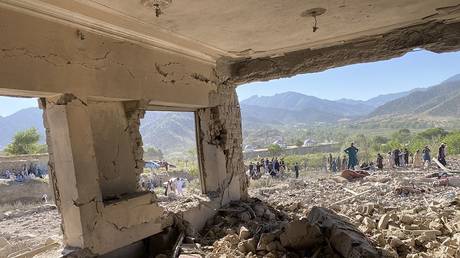
On a Wednesday in late June 2026, the earth beneath the coastal town of Caraballeda didn't just shake. It tore itself apart. Back-to-back twin earthquakes measuring 7.2 and 7.5 on the Richter scale rocked the region, flattening entire neighborhoods.
Serrano was inside his eight-story apartment building when the structure gave way. Within seconds, floors pancaked into a massive pile of twisted steel, dust, and concrete chunks. He was trapped in total darkness alongside his 8-year-old son, Gael, and his 69-year-old mother, Ingrid Rochabrun.
Pure instinct kicked in. He didn't wait for emergency services that might never arrive in a country already crippled by economic instability. He clawed at the rubble with his bare fingers, tearing his skin, blindly searching for the sounds of his family. With the help of two random passersby who refused to walk away, he pulled his son and mother out from the wreckage.
They lived. Most didn't.
Official government numbers confirm that the twin quakes killed over 1,700 people and injured more than 5,000. In La Guaira alone, hundreds of buildings crumbled into dust. The shockwaves rippled deep into the capital of Caracas and nearby states like Carabobo and Miranda. Sitting in a relative's house in Caracas today, covered in dark bruises around his left eye and limbs, Serrano looks like a man who has seen the end of the world. Twice.
Flashbacks to the Vargas Tragedy
To understand why Serrano is permanently leaving his homeland, you have to go back to December 15, 1999.
Back then, the region was officially named Vargas State. After days of relentless, unnatural downpours, the steep Ávila mountain range that towers over the coast couldn't hold any more water. Serrano was jolted awake by a household employee screaming about the nearby river.
He looked out his fourth-floor window and saw a horror movie playing in real-time. A massive wall of mud, water, and giant boulders was ripping through the streets. It was swallowing everything. He watched cars with terrified people trapped inside get swept away like plastic toys. People were frantically banging on the glass, begging for help that nobody could give them.
Serrano, his mother, sister, and nanny ran to the roof. They watched the lower floors of their building get battered by debris. When dawn broke and the waters slowed down, they literally walked over piles of trees and corpses to find safety.
That event, known globally as the Vargas Tragedy, killed an estimated 782 people according to official tallies, though locals suspect the true death toll was far higher. Another 2,000 vanished into the sea or under the mud. A quarter-million people lost their homes. Serrano survived that. Then, twenty-six years later, he ended up under the rubble of a collapsed building in the exact same region.
Bad Engineering or a Local Curse
Serrano thinks the land is cursed. He says it isn't normal for such horrific things to happen in the exact same place. It is hard to argue with his emotional logic when you lose everything you own twice in one generation.
Disaster specialists look at the situation with a cold, scientific eye. Ángel Rangel, the former director of Venezuela’s Civil Protection agency, points out that the real problem isn't supernatural. It is structural.
The coastal towns of La Guaira, including Caraballeda, are built on alluvial fans. This means the flat ground people build their homes on is actually composed of loose sediment, rocks, and soil washed down from the mountains over thousands of years. This type of terrain amplifies seismic shockwaves. It acts almost like jelly when a major earthquake hits.
Building on this soil requires flawless adherence to strict, modern seismic-resistant engineering rules. Those standards were updated after a massive earthquake smashed Caracas in 1967. The problem is that many of the high-rise apartment buildings in La Guaira were thrown up during the construction boom of the 1970s. Code enforcement was notoriously lax, and tracking down whether those buildings actually met safety standards is nearly impossible today. When the 2026 quakes hit, these aging concrete structures simply disintegrated.
The Trap of Geographic Reality
Why do people keep living there if it's so dangerous? Money and strategy.
La Guaira is Venezuela's second-smallest state, but it is incredibly important to the nation's survival. It sits just 19 miles north of Caracas. It hosts the country's primary international airport and its second-largest seaport. The 440,000 people who live there are mostly low-income workers. They don't live there for the view. They live there because their entire livelihoods depend on the airport, the shipping docks, and the beach tourism that feeds the capital.
When you are struggling to buy groceries, you don't think about structural engineering codes. You think about making rent. This economic trap forces families to stay in compromised buildings, ignoring the reality that they live on a geographic fault line beneath an unstable mountain range.
Serrano has had enough of that trap. He explicitly stated that if there is a third disaster, the earth will win the battle. He is packing up what little he has left and walking away from the coast forever.
How to Spot a Structurally Unstable Building
If you live in a coastal or seismically active area, you cannot rely entirely on municipal inspections. You need to know what to look for yourself. Avoid properties that display these critical warning signs.
- Alluvial or reclaimed soil foundation: Check geological maps of your area. If the building is constructed on river sediment or loose mountain runoff without deep pilings, it is at high risk during an earthquake.
- Soft-story construction: Watch out for buildings where the ground floor features wide open spaces like parking garages or retail shops with thin support columns while the upper floors are heavy concrete apartments. These ground floors often buckle instantly during a tremor.
- Deep structural cracking: Hairline cracks in plaster are normal settling signs. Diagonal cracks that cross concrete beams or pillars, or cracks wide enough to insert a coin into, indicate severe structural distress.
- Corrosion of internal rebar: In coastal zones like La Guaira, salty air penetrates cheap concrete. If you see rust stains bleeding through the concrete exterior, the steel reinforcement inside is rotting away and losing its strength.
Walk away from structures that fail these basic visual tests. Your life is worth more than a convenient location. Don't wait for a second warning sign from the earth. Take your family and move to solid ground.