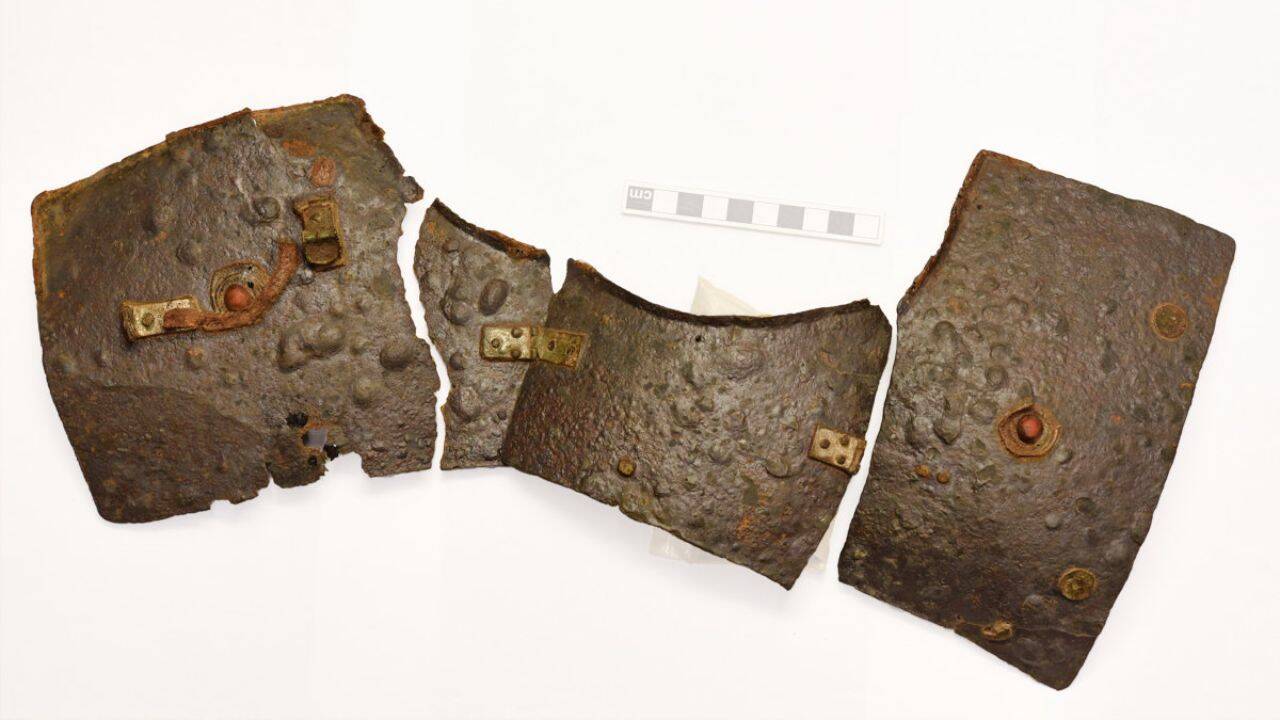
You won't find many complete suits of Roman body armour sitting in museum basements. Iron rusts away, scrap metal gets melted down, and centuries of soil turn military gear into formless red dirt. That changed when a massive block of earth from the Kalkriese battlefield in Germany went into an industrial CT scanner.
Inside was the oldest and most complete set of early Roman segmental armour ever found. Dating back to the famous Battle of the Teutoburg Forest in AD 9, this discovery gives us a brutal, unfiltered look at the fate of Rome's lost soldiers. Let's break down what this find actually means, why the engineering is surprising, and what that strange iron collar nearby implies.
The Reality of Roman Segmental Armour
Most people picture Roman legionaries wearing the classic banded iron armour, known as lorica segmentata, from movies and video games. Historians used to think early versions were crude prototypes. This find completely destroys that idea.
Excavated from the soil block at the Fraunhofer Institute using high-powered scans, the suit consists of roughly 30 individual iron plates joined by hinges, buckles, and bronze fittings. Despite two millennia underground, even tiny traces of the original leather straps survived.
The craftsmanship shows advanced engineering right from the start. It wasn't a clumsy first draft. It was a flexible, well-designed metal shell meant to keep a soldier alive against Germanic tribes. Interestingly, this early iteration lacks the upper-arm guards seen on later models from the second century, meaning Roman military designers constantly tweaked their gear for mass production.
The Mystery of the Iron Collar
The armour itself is a massive archaeological win, but the object found right next to its neck and shoulder area turns the discovery into a true human tragedy.
Restorers identified an iron restraint—often called a neck fiddle or shackle—designed to lock a prisoner's hands in front of their neck. The implications are grim.
When Publius Quinctilius Varus led three Roman legions into an ambush orchestrated by Arminius, roughly twenty thousand Romans died. Most survivors didn't get a clean death. The presence of this restraint right alongside the armour suggests a personal nightmare:
- Did a legionary survive the initial slaughter only to be captured, shackled, and stripped of his dignity?
- Was the restraint left behind during post-battle looting or ritual destruction of captured Roman gear?
We will never have a signed confession from the Germanic warrior who dropped it there. But it bridges the gap between cold strategic history and the terrifying reality of a soldier trapped in a collapsing empire.
Why This Changes How We Study Ancient Battles
If you visit archaeological sites, you usually find broken spearheads, coins, and tiny bronze fragments. Whole pieces of equipment are practically non-existent because iron is fragile over long periods.
Because conservators kept the armour encased in a massive 500-kilogram block of dirt until it reached a specialized facility, they managed to preserve the structural relationship of the plates. You can see how the chest and back plates buckled together, how the weight of centuries crushed the metal like an accordion, and how the system functioned on a living body.
Stop treating ancient military history as just a list of dates and troop movements. Look at the logistics. Look at the leather, the iron, and the sweat it took to march through the dark forests of Germania. This single suit of armour proves that behind every lost legionary was a complex web of industrial effort and a very personal, terrifying end.
Plan a visit to the Kalkriese Museum and Park in Germany once the painstaking restoration wraps up to see the actual suit on display.