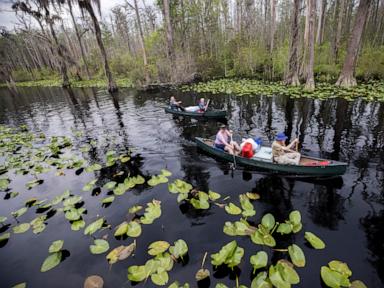
For decades, Georgia’s Okefenokee Swamp has sat quietly in the southeastern corner of the state, serving as a massive, moss-draped haven for wildlife while flying largely under the international radar. That changed when the United Nations Educational, Scientific and Cultural Organization officially added the Okefenokee National Wildlife Refuge to its prestigious World Heritage List during a committee meeting in Busan, South Korea. It is Georgia's very first World Heritage site and the first natural site in the United States to earn the honor in over thirty years.
If you have ever drifted across its tea-colored blackwaters, you already know why this designation is long overdue. If you haven't, it is time to look past the old stereotypes of Southern swampland and understand what makes this 400,000-acre wetland an ecological masterpiece.
What Makes the Okefenokee World Heritage Material
Getting onto the UNESCO list is no easy feat. Nominees must possess what the organization calls "outstanding universal value". The paperwork alone for the Okefenokee spanned a staggering 266 pages, detailing decades of scientific research, environmental monitoring, and indigenous history.
The swamp is North America's largest blackwater wetland. It functions as a self-sustaining powerhouse of biodiversity, housing more than 1,270 species of plants and animals. Endangered creatures like the red-cockaded woodpecker and the eastern indigo snake roam its cypress forests and open prairies.
Crucially, the swamp's floor is paved with deep beds of peat. This decaying plant matter has accumulated over thousands of years, locking away carbon and acting as an ancient archive of environmental change. Scientists can look down into those layers and read a 5,000-year history of climate shifts. That kind of ecological preservation is rare on a planet heavily altered by industrial expansion.
A History That Long Predates Modern Conservation
Long before environmentalists started drafting multi-hundred-page nomination dossiers, the Okefenokee was a place of profound spiritual significance. Starting around 2,500 B.C., ancestors of the Muscogee (Creek) Nation and other Native American tribes made their homes in and around the wetlands.
They gave the swamp its name: Okefenokee, derived from a Muscogee term meaning "land of trembling earth". Walk across certain floating peat mats in the interior, and you will feel the ground literally shake beneath your boots. That tactile connection to an ancient landscape is something you cannot replicate in a standard national park.
The Local Friction Behind Global Recognition
Not everyone living near the swamp popped champagne when the announcement came down from South Korea. Local politics surrounding the designation have been tense. In surrounding rural counties like Ware and Charlton, lawn signs and t-shirts bearing slogans like "Keep the U.N. out of the Okefenokee" became a common sight.
Some residents worried the World Heritage tag meant a loss of American sovereignty or a direct hand-off of management to foreign entities. Experts like University of Georgia political science professor Charles Bullock pointed out that local skepticism often stems from fierce regional independence.
The U.S. Fish and Wildlife Service has repeatedly clarified that UNESCO holds zero ownership or management authority over the refuge. The listing is strictly an acknowledgment of global significance and an agreement to monitor ecological threats. Day-to-day operations remain exactly where they have always been.
Why This Designation Changes Everything for Refuges
National wildlife refuges historically operate in the shadows of flashy national parks. While places like Yellowstone or the Grand Canyon pull in millions of international tourists annually, refuges lean heavily into conservation and quiet recreation.
Kim Bednarek, executive director of the nonprofit Okefenokee Swamp Park, noted that the UNESCO badge gives the refuge an iconic global brand. It elevates the swamp's profile on the world stage. This visibility brings fresh attention to ongoing conservation battles, including past threats from proposed titanium mining operations near the refuge's borders. Protection on an international scale makes reckless industrial encroachment much harder to justify.
How to Experience the Okefenokee Yourself
Visiting the swamp requires a shift in gear. You don't drive through the Okefenokee; you paddle it or take guided boat tours.
Head to the Okefenokee Swamp Park near Waycross, take the eastern entrance out of Folkston at the Okefenokee Adventures site, or venture down to the Suwannee Canal Recreation Area. Rent a canoe, pack plenty of bug spray, and head out onto the open water prairies where Alligators drift like logs and sandhill cranes bugle overhead.
Respect the wildlife, watch the water, and pay attention to the silence. You are moving through a newly minted global treasure that belongs to history as much as it belongs to Georgia.