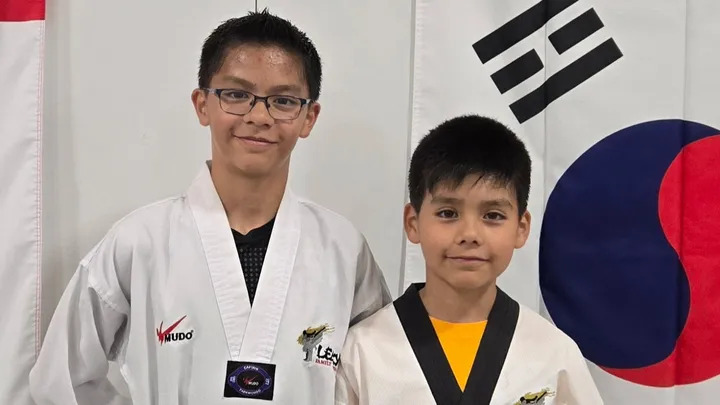
A Heartbreaking Discovery at Nutimik Lake
A devastating search in eastern Manitoba reached a tragic milestone when officials confirmed the recovery of 10-year-old Maximo Au Ramirez from Nutimik Lake. The young boy went missing alongside his 13-year-old brother, Aaron, after slipping into the treacherous, fast-moving currents near Sturgeon Falls in Whiteshell Provincial Park. While finding Maximo brings a grim sense of closure to one part of this nightmare, emergency crews and volunteer teams are refusing to pack up. The search for Aaron continues relentlessly.
The incident unfolded on a warm Saturday afternoon around noon. What was supposed to be a normal summer outing for a family visiting the park turned into a nightmare in seconds. Maximo was standing near the rocky shoreline along the Sturgeon Falls Trail when he lost his footing and fell into the surging water. Seeing his younger brother in immediate danger, 13-year-old Aaron reacted with pure instinct. He dove into the rapids to save him. Neither boy resurfaced. Meanwhile, you can explore other events here: Why The Us Saudi Arabia Civil Nuclear Deal Is Way More Than Just Energy.
For four grueling days, family members, first responders, and community volunteers held out hope. On Wednesday evening around 7:30 p.m., Lac du Bonnet RCMP received a call regarding a body spotted near the shoreline. Officers arrived shortly after and verified that Maximo had been found roughly 400 yards east of the falls. The recovery was made by local cottage owners assisting alongside the boys' uncle.
It's the outcome everyone feared, yet the effort to bring Aaron home to his family hasn't slowed down for a second. To understand the full picture, check out the recent analysis by TIME.
STURGEON FALLS INCIDENT SUMMARY
• Incident Location: Sturgeon Falls Trail, Nutimik Lake (Whiteshell Provincial Park, MB)
• Date of Incident: Saturday afternoon
• Victims: Maximo Au Ramirez (10, recovered Wednesday) and Aaron Au Ramirez (13, missing)
• Primary Hazards: Fast-moving rapids, slippery granite rocks, unpredictable undertows
• Responding Agencies: Lac du Bonnet RCMP, RCMP Underwater Recovery Team (URT), HEART
Anatomy of the Search and Rescue Operation
Searching for missing individuals in a natural river system like Nutimik Lake presents immense physical and logistical challenges. Sturgeon Falls isn't just a peaceful waterfall. It's a massive, churning rush of water connecting Nutimik Lake and Numao Lake along the Winnipeg River system. The sheer velocity of the water, combined with jagged sub-surface rocks, creates intense undertows and zero-visibility conditions for searchers.
The Manitoba RCMP Underwater Recovery Team (URT) joined forces early on with the Hutterian Emergency Aquatic Response Team (HEART). HEART, a specialized volunteer search organization known across Western Canada, brought advanced technology to the water. They deployed high-resolution side-scan sonar imaging systems attached to the sterns of their search boats. This sonar maps the lake bed in real-time, allowing operators to detect irregularities along the bottom that human eyes simply can't spot from the surface.
Aerial support has also played a crucial role. Drones equipped with high-definition cameras have flown continuous grids over the shoreline, rock outcrops, and surrounding eddies. Meanwhile, dozens of local boaters from surrounding communities banded together, forming search lines that stretched from Otter Falls all the way into Nutimik Lake.
Searchers found items of clothing believed to belong to Aaron along the search corridor early in the operation, giving crews targets to focus on. Yet, the river's force makes predicting movement under the water notoriously difficult. Water currents near rapids can push submerged objects into deep underwater crevices or hold them down under hydraulic rollers for days before releasing them downriver.
Community Unity in the Face of Utter Grief
When tragedy strikes small outdoor communities, the response is often swift and deeply moving. Nutimik Lodge owners Harry Thiessen and Allison Baker opened their doors to serve as an operational base and haven for the grieving family. The boys' parents and relatives have been staying on the lodge grounds since Saturday, waiting by the water through every single update.
To ease the financial burden facing the family during this unimaginable trial, the lodge owners established an official GoFundMe campaign aimed at covering emergency living expenses, search support costs, and eventual memorial arrangements. Community members across Manitoba donated tens of thousands of dollars within the first 48 hours, demonstrating how deeply this story touched people far beyond Whiteshell Provincial Park.
Volunteers haven't just donated money. They've brought food to search crews, offered personal watercraft, walked miles of dense, buggy brush along the shoreline, and provided emotional backing to a family enduring every parent's worst nightmare.
"They're hurting, they're in pain, they're in shock," said lodge co-owner Allison Baker-Thiessen during the multi-day search. "There are so many words you could put with that. It's indescribable. They just want them to come home."
Why Sturgeon Falls is Far More Dangerous Than It Looks
To someone standing on the shore, Sturgeon Falls looks like a scenic natural wonder. Tourists regularly flock to the trail to take photos of the rushing water tumbling over ancient Canadian Shield granite. But beneath that beauty lies an incredibly dangerous hydraulic environment.
The area features fast-moving water squeezed through narrow rock gaps. Over time, water lichen and algae coat the rocks near the edge, turning wet granite into a surface slicker than ice. A single misstep can send someone sliding straight into the main channel before they even realize they've lost their balance.
Once a person enters the rapids, several physical factors make self-rescue nearly impossible:
- Aerated Water reduces buoyancy: Rushing rapids churn massive amounts of air into the water. This white water is significantly less dense than still water, meaning life jackets offer less lift and swimmers sink much faster.
- Hydraulic Keepers create recirculating traps: Below the drop of a rapid, water pours over rocks and recirculates back toward the fall, creating a continuous spinning loop. This "washing machine" effect can hold a swimmer under water indefinitely regardless of how strong they can swim.
- Extreme Cold and Shock: Water moving through river systems like the Winnipeg River stays cold enough even in mid-summer to trigger involuntary cold-shock responses, causing victims to inhale water immediately upon submersion.
- Irregular Submerged Structure: The bottom of Sturgeon Falls is littered with boulder fields, underwater ledges, and fallen timber. Objects swept downriver easily get trapped underneath unseen structures.
Sturgeon Falls has claimed multiple lives over the past decade. Local residents and frequent park visitors have long voiced concerns regarding public access near the edge of the falls, sparking renewed calls for stricter safety barriers and clear visual warnings.
What Park Visitors Need to Know About Water Safety
Following this disaster, Manitoba Parks officials closed the trail leading to Sturgeon Falls while search operations continue. A provincial spokesperson noted that safety protocols and warning signage around high-risk waterways in Whiteshell Provincial Park are under review.
If you plan to visit state or provincial parks featuring fast-moving rivers, waterfalls, or rapid systems, you need to understand that warning signs aren't suggestions—they represent hard-earned lessons from real tragedies.
Here are non-negotiable rules for staying safe near fast water:
Treat Wet Shoreline Rocks as Hazards
Never walk on wet, dark, or algae-covered rocks near fast water. Granite near rapids is exceptionally slippery. Keep a buffer zone of at least 10 feet between yourself and the water's edge, especially when supervising children.
Wear Life Jackets Near the Shoreline, Not Just in Boats
If you are hiking with young children along river trails, put Personal Flotation Devices (PFDs) on them before you reach the water's edge. Slips happen in a fraction of a second. A properly fitted PFD won't prevent a fall, but it gives someone swept away a fighting chance to stay afloat.
Understand the Rescue Hierarchy
If someone falls into fast water, your instinct will be to jump in after them—exactly as 13-year-old Aaron courageously did for his brother. Tragically, untrained rescuers almost always become second victims due to cold water shock and powerful currents.
Remember the cardinal rule of water rescue: Reach, Throw, Row, Go.
- Reach: Extend a long stick, branch, or hiking pole from a stable position on dry land.
- Throw: Toss a throw rope, ring buoy, cooler, or life jacket to provide buoyancy.
- Row: Use a boat or craft if available, keeping distance from hazardous drop-offs.
- Go: Entering the water yourself should be an absolute last resort, reserved only for trained professionals with thermal protection and tethered safety gear.
Report Any Sighting Immediately
RCMP continue to urge boaters and visitors on Nutimik Lake to stay vigilant. If you spot footwear, clothing, personal items, or anything unusual floating in the water or washed up along the shoreline, do not tamper with the location. Immediately contact Lac du Bonnet RCMP at 204-345-8685 or notify local park authorities.
Moving Forward while Remembering the Lost
The recovery of Maximo Au Ramirez offers a painful beginning to closure, but the mission remains unfinished until Aaron is brought home. The tragedy serves as a solemn reminder of how quickly nature can turn hostile, even on a sunny weekend in a beautiful provincial park.
Emergency crews, HEART divers, and local volunteers are staying on the water. For anyone visiting fast-water areas this season, respect the power of river currents, keep children well away from slick rock edges, and prioritize safety above every photograph or view.