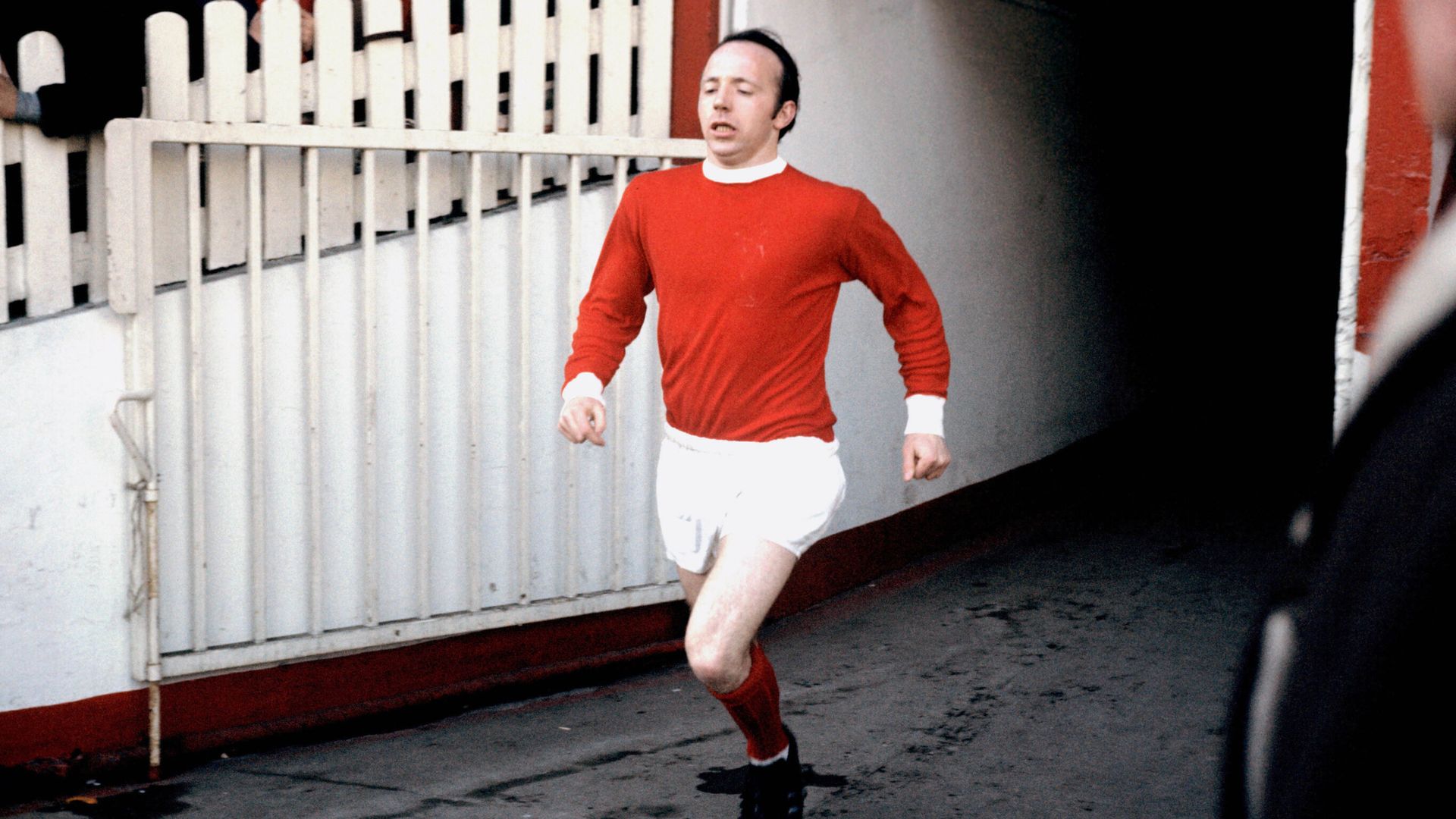
On July 15, 2026, a UK coroner delivered a ruling that shattered any remaining excuses the football establishment had left. Nobby Stiles, the toothless, dancing hero of England’s 1966 World Cup triumph, did not just grow old and lose his memory. His sport took his brain from him, piece by piece.
Stockport Coroner’s Court ruled that Stiles died from a brain condition directly caused by repeatedly heading a football. It is a stark, legally binding confirmation of what families have whispered—and shouted—for decades. The tough-tackling midfielder estimated to have headed a heavy leather ball 140,000 times during his career was essentially beaten into cognitive decline by his own profession. Recently making news in this space: Understanding The Fierce Rivalry Of America Vs Cruz Azul In Modern Mexican Football.
If you love football, this ruling should make you uncomfortable. It strips away the comforting myth that dementia in old players is just bad luck or a natural consequence of aging. It was an occupational hazard that was ignored for far too long.
The Cold Hard Verdict on Nobby Stiles and Dementia
Senior Coroner Alison Mutch did not mince words. She stated she was entirely satisfied that the reason Stiles developed Chronic Traumatic Encephalopathy (CTE) was because of the repeated heading of the ball during his career. Additional information on this are explored by Sky Sports.
Without those thousands of headers, he would not have developed it.
Let that sink in. The very skill that made him a Manchester United legend and a national hero was the catalyst for a brutal, decade-long decline. He died in October 2020 at the age of 78, severely demented, bed-bound, and unable to recognize the family he adored.
His neuropathology report revealed a devastating trifecta of brain decay:
- Alzheimer's disease
- High-stage Chronic Traumatic Encephalopathy (CTE)
- Stage-three limbic predominant age-related TDP-43
This was not a simple diagnosis. It was a brain ravaged by years of sub-concussive impacts. Dr. Daniel Du Plessis, the consultant neuropathologist who analyzed Stiles’ brain tissue, was unequivocal. He told the court he was "quite convinced" that heading the ball that many times caused his CTE.
Inside the Brain of a World Cup Legend
We often think of professional athletes as invincible. But Stiles’ son, John, painted a gut-wrenching picture of his father’s final decades.
John explained that his father was a deeply humble man. Football was left at the door. He never bragged about his medal. But by the time Stiles hit his late 50s and early 60s, a dark shadow crept over the household. He began repeating simple questions. He forgot everyday details.
"For a long time, there was a terrible impending feeling of doom by the family," John told the court. "We didn't know what was happening, but we could feel it coming on."
By 2010, the financial toll of Stiles' medical care became too heavy. The man who ran himself into the ground for his country was forced to sell his prized World Cup winner's medal to fund his basic nursing costs. That is the reality of the "glory" of 1966. He sacrificed his mind, and then had to auction off his memories to pay for a care home bed.
How Heading a Leather Ball Mimics Boxer Punches
It is easy to dismiss this as a problem of the past. People say, "Oh, they played with heavy leather balls back then. When it rained, those things turned into waterlogged bricks."
Yes, they did. In the 1960s, the standard leather ball weighed around 16 ounces. When wet, that weight skyrocketed. To make matters worse, training methods were primitive and repetitive. At Manchester United's Old Trafford, players practiced their heading by repeatedly striking a ball suspended from the ceiling by a string. They did it day in, day out.
John Stiles calculated a conservative estimate of his father's routine: 40 headers a day, five days a week, over a ten-month season, across a 17-year career. That equals 136,000 to 140,000 headers.
But don't assume modern players are safe just because synthetic balls don't absorb water.
During the inquest, the court heard that modern studies reveal heading a modern football still carries massive physical consequences. Striking a modern ball with your forehead transmits an impact equivalent to roughly 80% of a boxer's punch.
Imagine taking dozens of 80%-force punches to the head every single day at training. No doctor would clear a boxer to do that. Yet, football players do it routine after routine, week after week, year after year. The skull protects the brain from breaking, but it cannot stop the brain from sloshing forward and slamming against the bone. That micro-trauma builds up. It destroys brain cells. It creates the abnormal tau protein build-up that defines CTE.
The Legal Battle and the Football Association Denial
This ruling does not exist in a vacuum. It is a massive blow to the Football Association (FA) and other governing bodies.
Currently, dozens of former players and their families are suing the FA, the Football Association of Wales, and the English Football League. They argue these bodies were negligent and breached their duty of care. The lawsuit claims that the authorities knew—or should have known—the dangers of heading for decades and chose to look the other way.
The FA's defense? In March 2026, their lawyers told the High Court that it "has not been established by science" that heading a ball or "occasional" concussions lead to permanent brain damage.
That statement looks incredibly hollow now.
How can a sporting body claim the science isn't there when their own co-funded study in 2019 proved that professional footballers are three-and-a-half times more likely to die of neurodegenerative disease than the general public? How can they argue the point when Gordon McQueen’s inquest in January 2026 reached the exact same conclusion as Nobby Stiles' inquest? McQueen, another Manchester United and Scotland great, died of CTE-related damage.
The legal shield is cracking. The science is settled in the coroner's courts, even if the FA's lawyers try to deny it in the High Court.
What Football Needs to Do Next to Protect Players
We don’t need more hand-wringing. We don’t need more committees. We don't need another decade of slow-rolled research while another generation of players loses their minds.
John Stiles spoke outside the court and hit the nail on the head. He pointed out that we do not need more research to prove the link. We need action.
If you want to protect the future of the game and honor the legends who built it, here is what must happen immediately:
- Fund Care Homes, Not Just Campaigns: Families of former players are going broke trying to afford specialized dementia care. The millions of pounds sloshing around the top of English football should be used to create a dedicated, easily accessible fund for ex-players suffering from neurodegenerative diseases.
- Enforce Heading Bans in Youth Training: The FA is phasing out heading for children under 11 by 2026. This needs to be strictly enforced worldwide, and heading should be heavily restricted in training up to the age of 18. Developing brains should not be subjected to sub-concussive impacts.
- Drastically Limit Heading in Professional Training: Matches are one thing, but training is where the volume lies. Players make far more headers during midweek drills than they do during a 90-minute game. Clubs must transition to virtual reality training or low-impact drills to practice defensive positioning without physical head contact.
- Introduce Temporary Concussion Substitutes: Football's current concussion protocol is a joke. Team doctors are expected to make life-changing neurological assessments on the pitch in two minutes while a manager screams at them to get the player back on. Introduce temporary medical substitutions so players can be properly evaluated in a quiet dressing room.
Nobby Stiles gave his life to football, and the game let him slip away in a fog of confusion and anxiety. His family had to fight for six years just to get a court to acknowledge what killed him. The era of denial is officially over. It is time to treat head trauma in football with the gravity it deserves, or accept that the sport is actively destroying the people who play it.