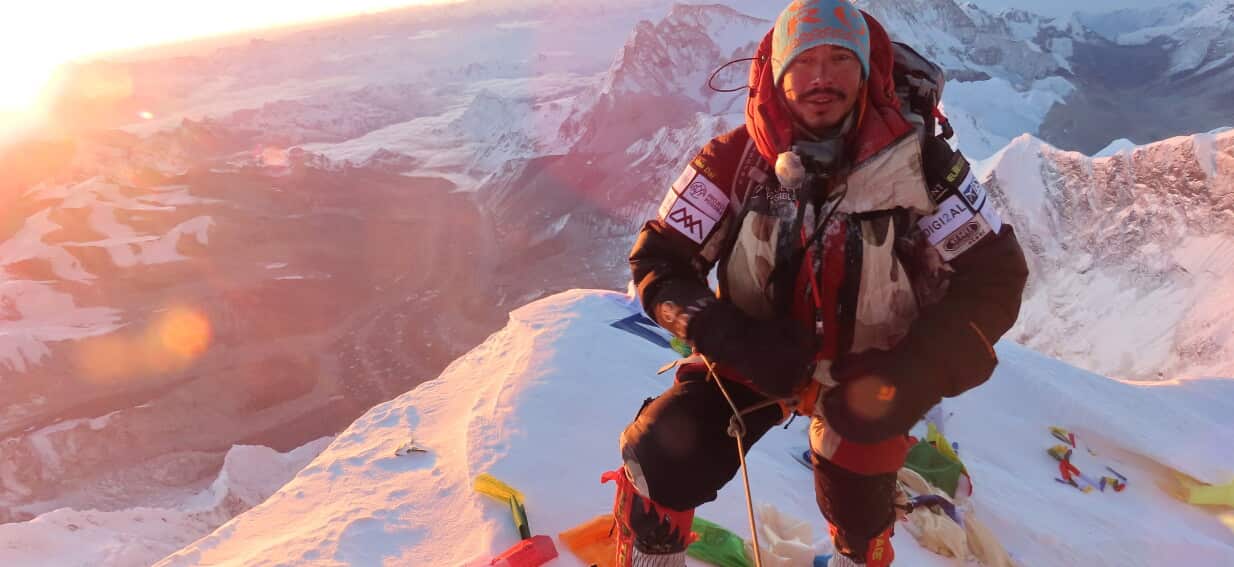
The climbing world lost one of its absolute titans when an avalanche swept across Pakistan's Broad Peak, claiming the lives of ten climbers, including the legendary Nepali-British mountaineer Nirmal Purja. Known globally as Nims Dai, Purja didn't just climb mountains; he completely shattered the conventional math of high-altitude mountaineering. His tragic death in the Karakoram range closes the final chapter on an extraordinary life defined by sheer grit, military discipline, and an refusal to accept traditional limitations.
The Last Ascent on Broad Peak
The disaster struck at roughly 7,000 metres on Broad Peak, the world's 12th-highest mountain located near K2 in Pakistan. Purja was leading a ten-member international expedition that included climbers from Nepal, Pakistan, Oman, the United States, and China. Tracking data showed the team caught in a rapid descent of about 800 meters following an unexpected avalanche. Despite immediate mobilization by the Alpine Club of Pakistan, military helicopters, and local rescue teams, adverse weather hampered efforts, and officials confirmed that no members of the expedition survived.
Before setting off, Purja shared his final intentions with the public. What started as an adjustment to climb just another peak morphed into a much larger goal. He realized that ticking off Broad Peak left only one mountain remaining for a historic milestone: becoming the first person in history to climb all 14 of the world's eight-thousand-meter peaks twice without supplemental oxygen.
Breaking the Mold Beyond the Death Zone
Most people first learned about Purja through his groundbreaking "Project Possible" campaign in 2019. He summited all 14 of the world's highest peaks in just six months and six days, smashing a previous record that had stood for years. Netflix immortalized this feat in the documentary 14 Peaks: Nothing Is Impossible, showing audiences the brutal reality of the death zone and the crucial, often underappreciated labor of Nepali and Sherpa climbers.
Before his mountaineering career took over, Purja spent 16 years in the British military. He served six years in the Brigade of Gurkhas before earning a spot in the elite Special Boat Service (SBS), a maritime special forces unit of the Royal Navy. That intense military background built the foundation of his physical endurance and mental fortitude. He approached high-altitude climbing with tactical precision, refusing to buckle under public criticism or standard industry timelines.
The Toll on the Global Climbing Community
The loss of ten climbers on Broad Peak highlights the unforgiving nature of the Karakoram range. Mountains above 8,000 meters don't care about past records, military credentials, or fame. Alongside Purja, families, friends, and colleagues are mourning trusted guides and international climbers like Omani mountaineer Nathira Ahmed, American climber Mallory Geis, and fellow Nepali mountaineers who formed the backbone of the expedition.
Tributes have poured in from world leaders, including Nepal's Prime Minister Balendra Shah, who noted that while the physical journeys of these climbers have ended, their legacy of courage will remain permanently etched in history. Elite Exped, Purja's adventure company, emphasized that his purpose was never just about personal glory, but about showing people that their own metaphorical mountains are climbable.
You don't honor climbers like Nims Dai by pretending the mountains are safe. You honor them by recognizing the absolute raw danger of the enterprise and the fierce passion it takes to stare down impossible odds.