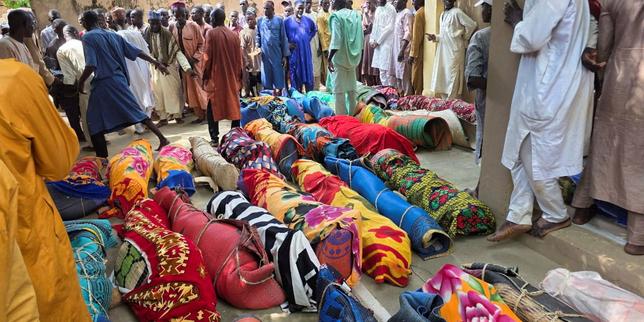
Fifty lives. That is the latest toll from the capsizing in Sokoto State. Most of them were children. They weren't tourists or thrill-seekers. They were farmhands and families simply trying to cross a river to reach their fields.
This happens too often in Nigeria. When news breaks of another boat sinking, there’s an immediate outcry, a promise of investigations, and then a deafening silence until the next disaster. It’s time to stop treating these events as unavoidable "accidents." They are systemic failures.
The Reality Behind the Headlines
Most reports focus on the "surcharge"—the overloading of the vessel. That’s the visible cause. A boat designed for twenty people carries eighty. Physics takes over, the boat tips, and the river does the rest. But blaming the boat operator is an incomplete picture. These people aren't choosing to risk their lives because they like danger; they are doing it because they lack options.
In northwestern Nigeria, water is a highway. When the roads are nonexistent or impassable, especially during the rainy season, people use what they have. Local farmers, heading to harvest rice in Goronyo, don't have the luxury of a ferry schedule or a bridge. They wait for a boat. If that boat is already packed to the brim, they board anyway. If they don't, they don't eat.
Why Safety Regulations Fail Every Time
You’ll hear officials from the National Inland Waterways Authority (NIWA) talk about safety codes. They have the power to regulate, inspect, and penalize. Yet, look at the ground reality.
- Weak Enforcement: Inspectors aren't at every riverbank. Even when they are, the economic pressure to keep boats moving often trumps safety protocols.
- Lack of Infrastructure: If you close down every "unsafe" boat, you paralyze rural economies. Communities rely on these crossings for school, medicine, and trade.
- Equipment Shortage: Life jackets are rarely standard. When they are available, they aren't maintained or properly distributed.
It’s a cycle. The government lacks the resources or the political will to provide safe, regulated alternatives. Consequently, the burden falls on the poorest citizens who pay for it with their lives.
What Actually Changes Things
If we want to stop these headlines, we need to look past the immediate tragedy and examine the infrastructure deficit.
First, bridge construction is not optional. It’s a prerequisite for basic safety in riverine areas. Focusing budgets on large-scale urban projects while rural communities drown in their own transit routes is a failed strategy.
Second, we need to rethink boat licensing. Right now, it’s basically an honor system. We need to hold local council authorities accountable for the vessels that operate in their districts. If a boat is unseaworthy, it shouldn't leave the dock. If the operator doesn't have a permit, the community leaders need to be the first line of enforcement.
Third, community-led safety initiatives work better than distant, top-down mandates. In some areas, local divers are the only reason anyone survives these incidents. Training these local heroes, providing them with basic rescue gear, and creating a community-based reporting system for dangerous boat conditions would save more lives than a thousand government press releases.
The Cost of Inaction
We talk about the "human factor" as if it’s an abstract concept. It’s not. The human factor is a grandmother losing her granddaughter. It’s a village mourning forty children who didn't come home from the rice fields.
Every time we dismiss these as "common" occurrences in the rainy season, we normalize the loss. We basically tell those communities that their lives are secondary to the inconvenience of building better infrastructure.
If you are following this story, don't just wait for the next toll. Demand transparency on the state of local waterways. Ask why, despite years of reports and studies, the same patterns of overloading and neglect persist.
Stop accepting that this is just how it is. It's not. It's a failure of governance, and it will keep killing people until the pressure for real, tangible infrastructure is louder than the promises made after the funerals.
Next time you see a report, look for the local investment stats, not just the death counts. The truth is found in the lack of progress on the ground. Demand better for those who have no choice but to use these rivers.