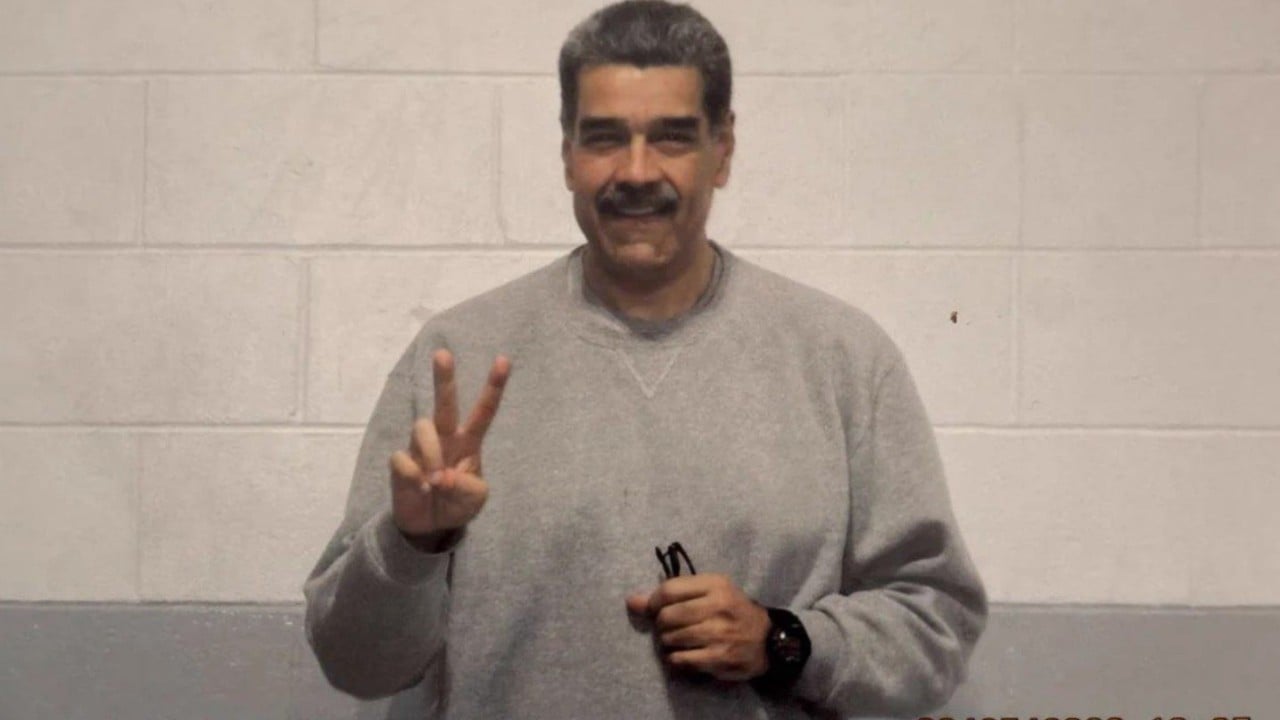
Legal battles rarely unfold like standard criminal proceedings when they involve foreign leaders snatched from their own capitals. Former Venezuelan President Nicolás Maduro and his wife, Cilia Flores, are pushing a massive legal gamble in Manhattan federal court. They want their entire federal drug trafficking case thrown out immediately, resting their entire defense on a centuries-old principle of international law: sovereign immunity.
If you are wondering how a sitting head of state or a foreign leader ends up facing a U.S. judge after a middle-of-the-night capture by special forces in Caracas, you have to look at the intersection of power, geopolitics, and criminal procedure. The January 2026 raid that brought Maduro and Flores to a Brooklyn detention center kicked off an unprecedented courtroom showdown. Now, their defense teams are trying to pull the plug before a jury can even be seated for their scheduled June 2027 trial. Discover more on a related topic: this related article.
The Core Argument Behind the Immunity Claims
Maduro’s defense lawyers filed papers in the U.S. District Court for the Southern District of New York arguing a straightforward premise. They claim that no American court has ever prosecuted a foreign leader recognized by their own country as a sitting head of state when charges were brought.
The defense memo lays it out bluntly. Heads of state are supposedly exempt from the criminal process of any national court except their own. It is an old rule rooted in the absolute independence of sovereigns. Maduro’s team argues that the actions cited in the fourth superseding indictment—such as issuing diplomatic passports or carrying out foreign policy—were official acts. Because of that, they contend a U.S. court lacks jurisdiction entirely. Additional analysis by The Guardian explores similar views on this issue.
Meanwhile, Cilia Flores filed separate papers arguing that she holds sovereign immunity as well. Her lawyers wrote that immunity is an attribute of Venezuela's sovereignty, meaning only Venezuela can surrender it. On top of that, Flores has separately petitioned the court for release to home confinement while awaiting trial due to worsening health conditions.
Why U.S. Courts Present an Uphill Battle for Maduro
Let’s be honest about how this usually plays out in American courts. Federal judges rarely go rogue on matters involving foreign relations. The U.S. judicial system historically defers heavily to the executive branch on who gets recognized as a legitimate foreign leader.
Washington stopped recognizing Maduro as Venezuela's legitimate president back in 2019 following disputed elections. Because the executive branch treats him as an illegitimate ruler or a de facto leader rather than a recognized head of state, federal judges have a legal hook to bypass status-based immunity arguments. Think back to previous high-profile cases involving foreign figures like Manuel Noriega. Courts ruled then that if the executive branch doesn't recognize the defendant as a protected head of state, the immunity defense crumbles quickly.
Prosecutors from the U.S. Attorney's Office aren't buying the defense's narrative either. They allege that Maduro spent decades turning his political offices into vehicles for narco-terrorism, conspiring with major cartels to flood the United States with cocaine. They view the operation that seized the couple as a surgical law enforcement action, while Maduro's camp calls it a kidnapping and labels him a prisoner of war.
What Happens Next in the Courtroom
Judge Alvin K. Hellerstein has set oral arguments for November 17 to sort through these explosive motions to dismiss. Federal prosecutors have until later this month to file their formal responses.
If the defense wins on immunity grounds, the case collapses, though the geopolitical fallout would be nuclear. If the defense loses—which legal analysts consider the more likely outcome given precedent—the case barrels toward a high-stakes trial scheduled for June 2027.
Keep an eye on the November 17 hearing. It will reveal whether international legal theory can shield a captured foreign leader from the full weight of American federal prosecution.