The commercial space race isn't just about eccentric billionaires, reusable rockets, or mining distant asteroids. It's about who pays the bill when a private satellite drifts out of its orbital slot and smashes into a multi-million-dollar communications array.
Right now, the skies are getting crowded. Low Earth orbit is filling up with thousands of commercial satellites tracking everything from global supply chains to climate patterns. China's commercial space sector alone is projected to hit 3.5 trillion yuan this year. With that massive volume of hardware flying around at thousands of miles per hour, disaster isn't a matter of if. It's a matter of when. You might also find this related story interesting: Why Banks Are Ramping Up Overdraft Fees Again.
When those disasters happen, space companies don't head to public international courts. They can't. The existing international treaties governing outer space were built for countries, not companies. If a private American telecom firm has a contract dispute with a commercial launch provider in Shenzhen, they need a neutral, legally binding, and highly technical arena to fight it out.
That arena is increasingly looking like Hong Kong. As discussed in recent coverage by The Wall Street Journal, the results are widespread.
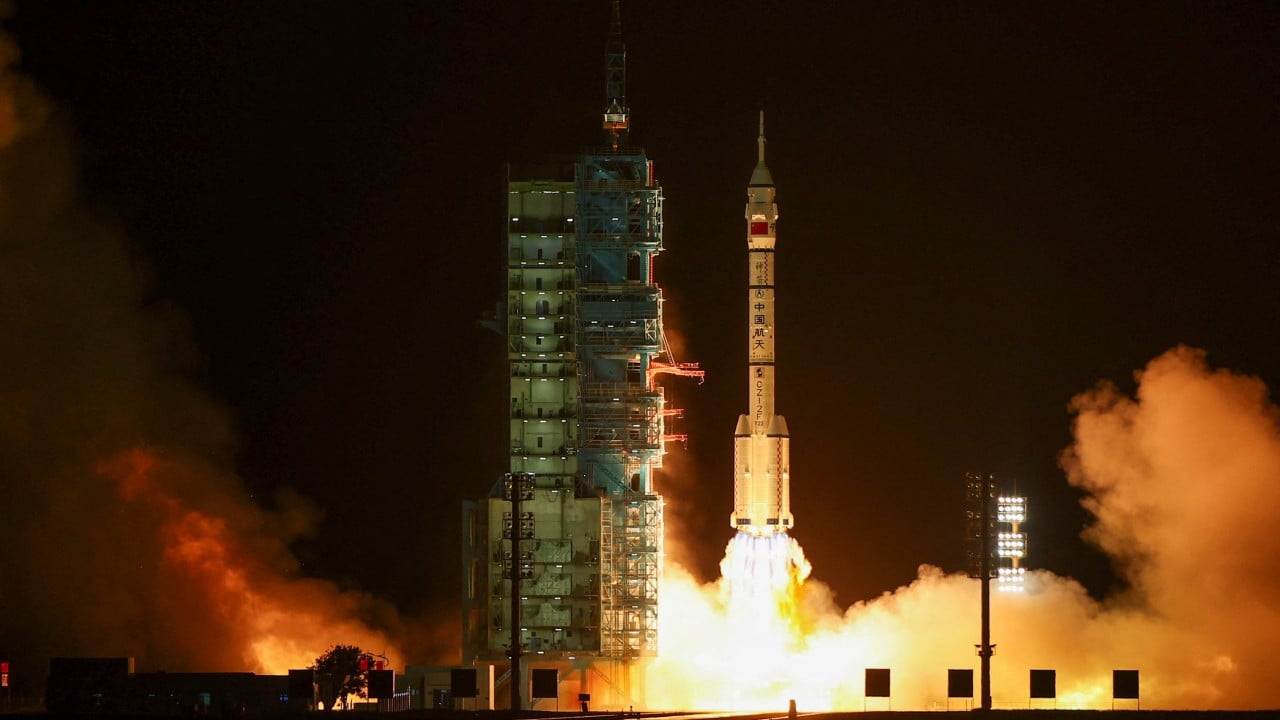
The city just sent its first payload specialist, Lai Ka-ying, into orbit aboard the Tiangong space station as part of the Shenzhou-23 mission. But Hong Kong's real value to the global space economy isn't in launching hardware. It's in the quiet, climate-controlled rooms of arbitration centres where the real financial risks of the space age are managed.
The Outdated Treaties Leaving Private Space Capital Exposed
To understand why a legal hub on the South China Sea matters to rocket scientists, you have to look at the massive gap in international space law. The foundational rules of the field, like the Outer Space Treaty of 1967 and the 1972 Liability Convention, were drawn up during the Cold War. They assumed that only national governments would ever go to space.
Under the 1972 Liability Convention, if a space object causes damage, the launching state is strictly liable. That worked fine when NASA and the Soviet space program were the only players. It doesn't work when hundreds of private entities are launching commercial constellations every month. If a private satellite fails due to a manufacturing defect, the state that launched it might technically hold the liability under international law, but the commercial entities involved have intricate private contracts that shift that risk.
Public courts are terrible at handling these disputes. If a satellite manufacturer in Europe sues a component supplier in Asia in a domestic court, the litigation can drag on for a decade. Worse, domestic judges rarely understand the nuances of orbital mechanics, spectrum interference, or payload integration.
Private commercial arbitration steps into this legal vacuum. It lets companies bypass state courts entirely. They can choose their own expert judges, keep their proprietary technological secrets hidden from competitors, and get a binding decision that can be enforced globally.
The Common Law Advantage in a Highly Specialized Field
Hong Kong has spent decades establishing itself as a premier destination for corporate dispute resolution. Its legal framework stands on a distinct foundation inside China: the common law system. This system is deeply familiar to international banks, Western insurers, and multinational technology firms.
The city's judiciary operates with complete independence, offering a predictable legal environment that bridges the gap between mainland Chinese manufacturing muscle and international capital markets.
The technical nature of space assets makes standard litigation risky. If you are disputing the failure of a Hall-effect thruster on a low-Earth-orbit satellite, you don't want a generalist judge deciding your fate. You need an arbitrator who understands the physics of electric propulsion and the specifics of space insurance policies.
The Hong Kong International Arbitration Centre (HKIAC) allows disputing parties to select arbitrators from a global pool of specialists. These are people who actually know what spectrum rights and payload deployment mechanisms are. The Permanent Court of Arbitration already has optional rules for outer space disputes that provide for specialized technical panels. Hong Kong's legal community is positioning itself to be the primary home for these exact proceedings in Asia.
The city is also doubling down on new legal infrastructure. In May 2026, the local judiciary set up the Hong Kong International Commercial Court (HKICC). This specialist division of the High Court is built to handle high-value, complex cross-border commercial arguments. It provides a direct, sophisticated court option that works hand-in-hand with the city's existing arbitration framework. If an arbitration award needs urgent enforcement or interim measures, this new court can move with the speed that the technology sector requires.
Bridging the Trillion Yuan Mainland Market with Global Capital
China's space sector is accelerating at an unbelievable pace. The country's 15th Five-Year Plan has identified the commercial space sector as a major strategic priority. Over a hundred commercial space enterprises on the mainland have raised billions of dollars to build out private launch vehicles and massive satellite constellations.
But those mainland commercial rocket builders face a major hurdle when trying to expand internationally. They need global insurance to underwrite the massive risks of launch failures. They need international customers to buy their satellite data or lease their payload space.
International aerospace firms and Western insurers are often hesitant to sign contracts that are governed by mainland Chinese law or subject to mainland courts. They worry about regulatory shifts and unfamiliar legal codes.
Hong Kong acts as the perfect pressure valve. Because of the "one country, two systems" framework, a mainland space startup can sign a contract with a European telecom giant and agree that any dispute will be arbitrated in Hong Kong under Hong Kong law.
The mainland firm feels secure because Hong Kong is part of China. The European firm feels secure because Hong Kong uses a transparent common law system.
This isn't just theoretical. The city also hosts the headquarters of the International Organization for Mediation (IOMed), the first intergovernmental body dedicated solely to mediating international disputes. This gives commercial space entities an entirely different path to resolve conflicts before they escalate into ruinous, multi-year legal battles.
Managing Secret Tech and Global Enforcement
Two practical realities make arbitration the only sensible choice for space ventures: confidentiality and enforcement.
If a commercial satellite malfunctions, the dispute will inevitably involve highly sensitive engineering data. It might include proprietary source code, classified sensor capabilities, or trade secrets regarding rocket propulsion. If you fight that out in a public court, your intellectual property becomes part of the public record. Your competitors can read through the court transcripts and see exactly how your satellite was built.
Hong Kong arbitration is completely private. The hearings happen behind closed doors. The documents remain confidential. The final ruling isn't published unless both parties agree to it. For a high-tech sector where intellectual property is everything, that protection is non-negotiable.
The second reality is enforcement. If a court in New York orders a foreign company to pay $50 million for a broken contract, collecting that money across borders can be an absolute nightmare.
Arbitral awards are entirely different. Thanks to an international treaty called the New York Convention, which has over 170 signatory states, an arbitration award handed down in Hong Kong is legally enforceable in almost every major economy on Earth. A company can take a Hong Kong arbitration ruling and use it to seize assets globally if the losing party refuses to pay.
Moving Past the Hype to Concrete Policy
For Hong Kong to truly capture this market, it cannot just rely on its reputation as a traditional legal hub. Space companies move fast, and the legal frameworks need to keep up.
Industry leaders are pushing for the city to establish a dedicated, one-stop space office. Prominent political figures, including Regina Ip, have openly urged the government to set up a specialized agency to coordinate space-related policies. This office would align university research, secure international participation, and help local businesses navigate the complex geopolitics of the global space economy.
The local government is already listening. Financial Secretary Paul Chan Mo-po directed the Hong Kong Exchanges and Clearing (HKEX) to review its listing requirements specifically for aerospace enterprises. The goal is simple: make it easier for commercial space startups to list their shares and raise global capital in Hong Kong.
The Office for Attracting Strategic Enterprises is actively tracking down global aerospace companies to convince them to set up operations in the city. Meanwhile, the Hong Kong International Legal Talents Training Academy is actively training local lawyers in the specifics of space law, preparing the next generation of practitioners for the complex legal issues that are coming down the line.
Practical Next Steps for Commercial Space Ventures
If you are running a commercial space startup, managing an aerospace investment fund, or underwriting orbital risk, you should stop treating dispute resolution as an afterthought. Waiting until a rocket fails or a satellite drifts out of its slot to figure out your legal strategy is a recipe for bankruptcy.
- Audit Your Existing Cross-Border Contracts: Look closely at your agreements with payload suppliers, launch providers, and ground station operators. If your dispute clauses point to domestic courts in unfamiliar jurisdictions, rewrite them to specify international arbitration.
- Specify Hong Kong as the Seat of Arbitration: Ensure your contracts name Hong Kong as the seat of arbitration and the HKIAC as the administering institution. This guarantees that your disputes will be handled under a predictable common law framework, keeping your technical data completely confidential.
- Involve Your Insurers Early: Space insurance is notoriously complex. Work directly with underwriters to ensure that your choice of dispute resolution forum matches their risk models. Insurers prefer predictable legal systems like Hong Kong's because it lowers their long-term legal exposure.
The global space economy is moving away from government exploration and turning into a massive commercial market. The entities that win this new space race won't just be the ones with the best engineers; they'll be the ones who know how to protect their capital, their intellectual property, and their operations when things go wrong in orbit. No matter who builds the rockets, the financial and legal rules of the road are being written right now on the ground in Hong Kong.