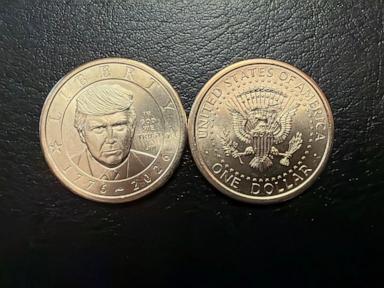
You can now find President Donald Trump's face stamped onto U.S. pocket change. That is not a hypothetical scenario or a joke from a late-night talk show. The U.S. Mint officially released a new series of dollar coins featuring Trump's likeness, and they are currently hitting circulation alongside availability on the federal agency's website.
For anyone tracking the intersection of American politics, federal law, and centuries-old traditions, this move raises immediate questions. How did a sitting commander-in-chief end up on a circulating piece of national currency? Let's look past the surface headlines to examine the reality of these coins, the legal debates surrounding them, and why this development breaks a century-long norm.
Breaking a Hundred-Year Tradition
Walk into any store, grab a handful of change, and you will quickly realize that American currency rarely features living people. George Washington famously declined to have his face put on early U.S. coins because he feared it looked too much like a monarchy. Over generations, that aversion hardened into actual restrictions.
In 1866, Congress passed laws explicitly barring the portraits of living individuals from appearing on public money. While those original rules primarily targeted paper money, subsequent practices kept living presidents off circulating coinage as well. Calvin Coolidge stands out as a rare exception, appearing on a commemorative half dollar in 1926 to mark the nation's sesquicentennial.
One hundred years later, history is repeating itself. The newly minted $1 coin features a stern-looking portrait of Trump in a suit and tie, framed by the word "LIBERTY" and the dates 1776 through 2026. Minted at the Philadelphia facility using a manganese brass composition that gives it a gold-like appearance, the coin is tied directly to celebrations for the country's 250th birthday.
Treasury Secretary Scott Bessent defended the rollout as a patriotic tribute meant to honor American heritage. Yet, the presence of a sitting president's face on active legal tender has instantly divided legal scholars and political observers.
The Legal Controversy Under the Surface
If federal rules have traditionally banned living leaders from currency, how did this coin get made? The Trump administration bypassed standard historical conventions by relying on the Circulating Collectible Coin Redesign Act of 2020.
Officials argue this legislation grants the Treasury secretary broad discretion to issue special coins marking the upcoming semiquincentennial. Critics see things differently. Economists and legal experts have pointed out that the decision skipped standard bureaucratic checks, such as a formal review by the bipartisan Citizens Coinage Advisory Committee.
Some academic voices have called the issuance legally questionable, arguing that it stretches existing statutes past their intended breaking point. Even so, the Treasury pushed forward. Approximately nine million of these coins are being manufactured, selling in rolls and bags to collectors while simultaneously filtering into everyday commerce. If you buy a bundle directly from the mint, you are paying roughly $2.44 per coin due to packaging and handling markups, even though they hold a face value of one dollar.
What This Means for Collectors and Everyday Americans
If you are hoping to stash these away as a future retirement investment, manage your expectations. Millions of these tokens are entering production, meaning they will not carry rare-artifact status anytime soon.
For everyday consumers, finding one in your change drawer will simply mean dealing with a piece of history that blurs the line between traditional numismatics and modern political theater. Whether you view the coin as a bold nod to America's milestone anniversary or an unprecedented break with democratic norms, it is officially part of the monetary supply.
Check your pocket change the next time you pay with cash. You might just pull out a conversation piece that will be debated for decades.