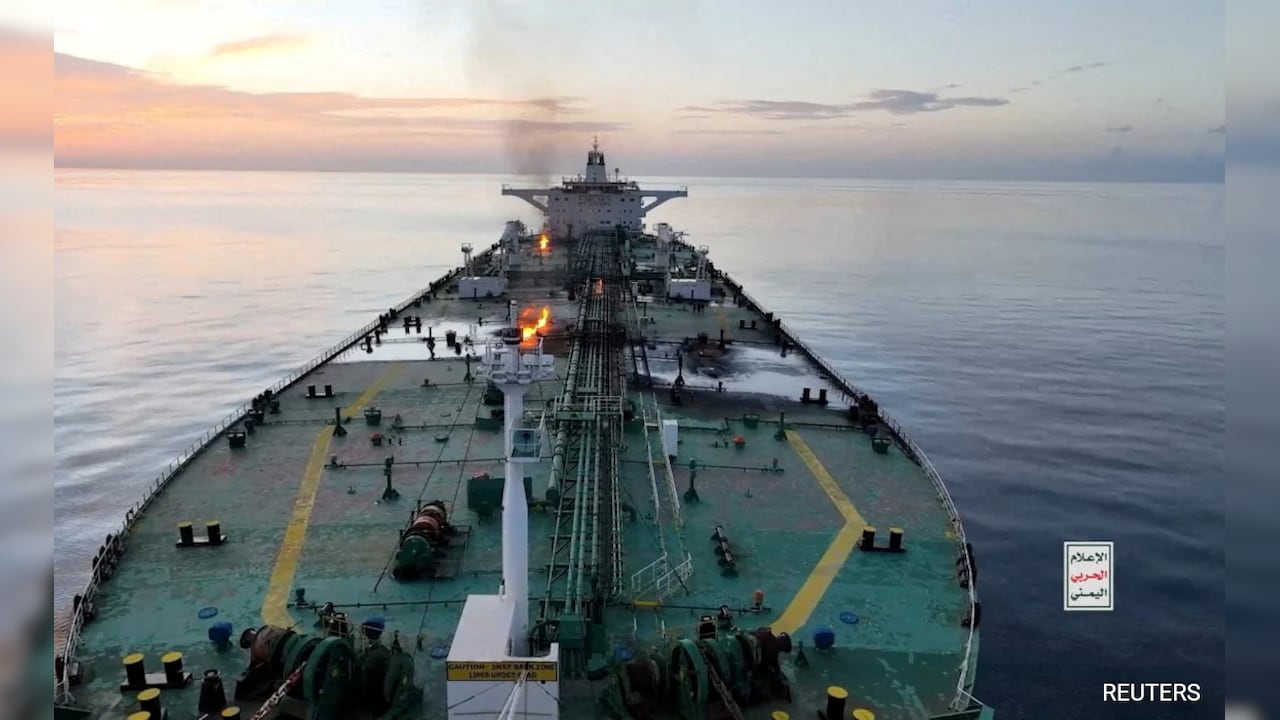
The global energy market is currently walking a terrifying tightrope. If you think the current friction in the Middle East is just a rerun of the shipping disruptions we saw a couple of years ago, you're missing the bigger, much more dangerous picture.
What's happening right now in the waters of the Middle East is entirely different.
The critical shipping channels that keep the world's economy alive are facing a simultaneous choke-out. During previous escalations, when Houthi rebels targeted cargo ships in the Red Sea, the global oil trade had a massive safety valve: the Strait of Hormuz was wide open and operating normally.
Not anymore.
With the Strait of Hormuz heavily disrupted and dangerous due to direct conflict between the US and Iran, the Red Sea is no longer just another trade route. It has become the absolute lifeline for global oil distribution. And right now, that lifeline is about to be squeezed.
The Double Artery Trap That Could Paralyze Global Energy
To understand why this is a massive crisis, you have to look at how oil flows through the region. Think of the Middle East's energy infrastructure as a human body with two main arteries.
On one side, you have the Strait of Hormuz. It's the heavy hitter, traditionally carrying about a fifth of the world's daily oil and gas supply. But since the flare-up of hostilities between the US, Israel, and Iran earlier this year, Hormuz has turned into a high-risk zone. Iranian forces mined key transit lanes, commercial tankers were struck by missiles near Omani waters, and shipping lines began refusing to use US military-guided routes because of severe security threats.
On the other side is the Bab el-Mandeb, the narrow gateway at the southern tip of the Red Sea.
When Hormuz became too dangerous to navigate, the world didn't stop consuming oil. Instead, oil producers did what they always do when a route gets blocked: they adapted. They diverted vast amounts of crude overland and onto ships waiting on the other side of the Arabian Peninsula.
The Red Sea became the escape hatch.
This worked for a while. It kept oil prices relatively stable and stopped a full-blown global economic meltdown. But this strategy created a massive vulnerability. By moving the bulk of the oil flow to the Red Sea, we put almost all our energy eggs in one highly volatile basket.
If the Houthis successfully choke off the Bab el-Mandeb now, there is no backup plan. Both of the region's primary oil corridors would be shut down at the exact same time.
Yanbu and the Failed Saudi Escape Route
Saudi Arabia has spent decades preparing for a worst-case scenario where the Persian Gulf gets cut off. Their primary insurance policy is the East-West pipeline, a massive engineering feat that can carry millions of barrels of crude oil a day from their eastern fields straight across the desert to the Red Sea port city of Yanbu.
When the Strait of Hormuz became too risky to navigate, the Saudis put this plan into overdrive. They diverted more than 70% of their normal daily crude exports through this pipeline to Yanbu.
It was a brilliant short-term fix. It kept the tankers loading. It kept the oil flowing to Europe and Asia.
But it also painted a giant target on the Red Sea.
During the Houthi attacks of late 2023 and 2024, the oil being shot at in the Red Sea was mostly transit cargo. The Gulf oil exports were still sailing out through Hormuz without issue. This time, the oil is actually being loaded right in the Red Sea.
If Houthi missiles start hitting ships or ports near Yanbu, the Saudi export engine halts completely. The pipeline doesn't matter if you can't put the oil onto a ship safely.
The Broken Truce and Why the Houthis Swung Back
For the past few years, a fragile, informal peace held between the Houthis and Saudi Arabia. The civil war that ravaged Yemen for a decade had settled into a quiet stalemate. That peace shattered completely when the Houthis launched missile strikes against Saudi targets, including Abha airport, accusing the kingdom of bombing an airport under Houthi control.
This isn't just a local dispute. It's a clear signal that the proxy war is heating up again, and the global oil trade is the primary hostage.
Senior Houthi officials have openly warned that if the escalation continues, they will shut down the Bab el-Mandeb entirely.
"If the situation keeps escalating, Bab el-Mandeb will be closed."
— Mohammad al-Farah, Houthi Politburo Member
Some analysts like to argue that the Houthis are just puppets of Iran. It's true that Tehran supplies them with intelligence, training, and high-tech drone and missile technology. But viewing the Houthis purely as an Iranian proxy is a dangerous mistake.
They have their own domestic political goals, their own grievances, and their own local survival to worry about. This makes them highly unpredictable. You can negotiate with a state actor like Iran because they have clear, calculated diplomatic pain points. You can't easily negotiate with an insurgent group that feels it has nothing left to lose and is fueled by intense ideological zeal.
The Hard Numbers Shaking Energy Markets
The scale of this shift is clear when you look at the raw shipping data.
- 7.4 million barrels per day (bpd): The volume of crude oil and petroleum products that transited the Bab el-Mandeb in June 2026.
- 4.2 million bpd: The volume that transited the same strait during the previous year.
- 7% of global oil output: The share of the entire world's daily oil supply currently relying on the Bab el-Mandeb to reach its destination.
This dramatic jump in volume shows how desperately the market has relied on the Red Sea to bypass the chaos in Hormuz.
If both straits are compromised, we are looking at a potential disruption of nearly a quarter of the world's daily oil supply. No amount of strategic reserves or increased production in Western countries can cover a gap that massive.
What Happens Next for Global Energy Markets
The illusion of a secure, alternative supply line is gone. If you are managing supply chains, investing in energy, or just trying to figure out where global inflation is headed, here are the real-world implications you need to watch.
Expect a Sharp, Multi-Month Volatility Spike
The era of cheap, predictable shipping routes is taking a back seat. If the Bab el-Mandeb faces even a partial closure, shipping companies will once again be forced to take the long, expensive route around the Cape of Good Hope at the southern tip of Africa. This adds thousands of miles, weeks of travel time, and millions of dollars in fuel and insurance costs to every single voyage.
Watch the Strategic Petroleum Reserve (SPR) Levels
Governments in the West have used strategic reserves to cushion price shocks in the past. But those reserves are not infinite. A prolonged, dual-choke-point crisis will quickly deplete these emergency stocks, leaving major economies highly vulnerable to prolonged high energy prices.
Keep an Eye on Regional Logistics Diversification
Companies that rely on imported goods or energy can't wait around for military escorts to solve the security problem. The reality is that maritime security initiatives are struggling to keep up with drone warfare. Operators are actively looking at rail, overland pipelines, and localized supply chains to get around the Middle East transit bottleneck entirely.
The map of global energy trade is being redrawn in real-time. If you aren't actively hedging against a prolonged disruption in both the Red Sea and the Persian Gulf, you're exposing yourself to a massive geopolitical blind spot.