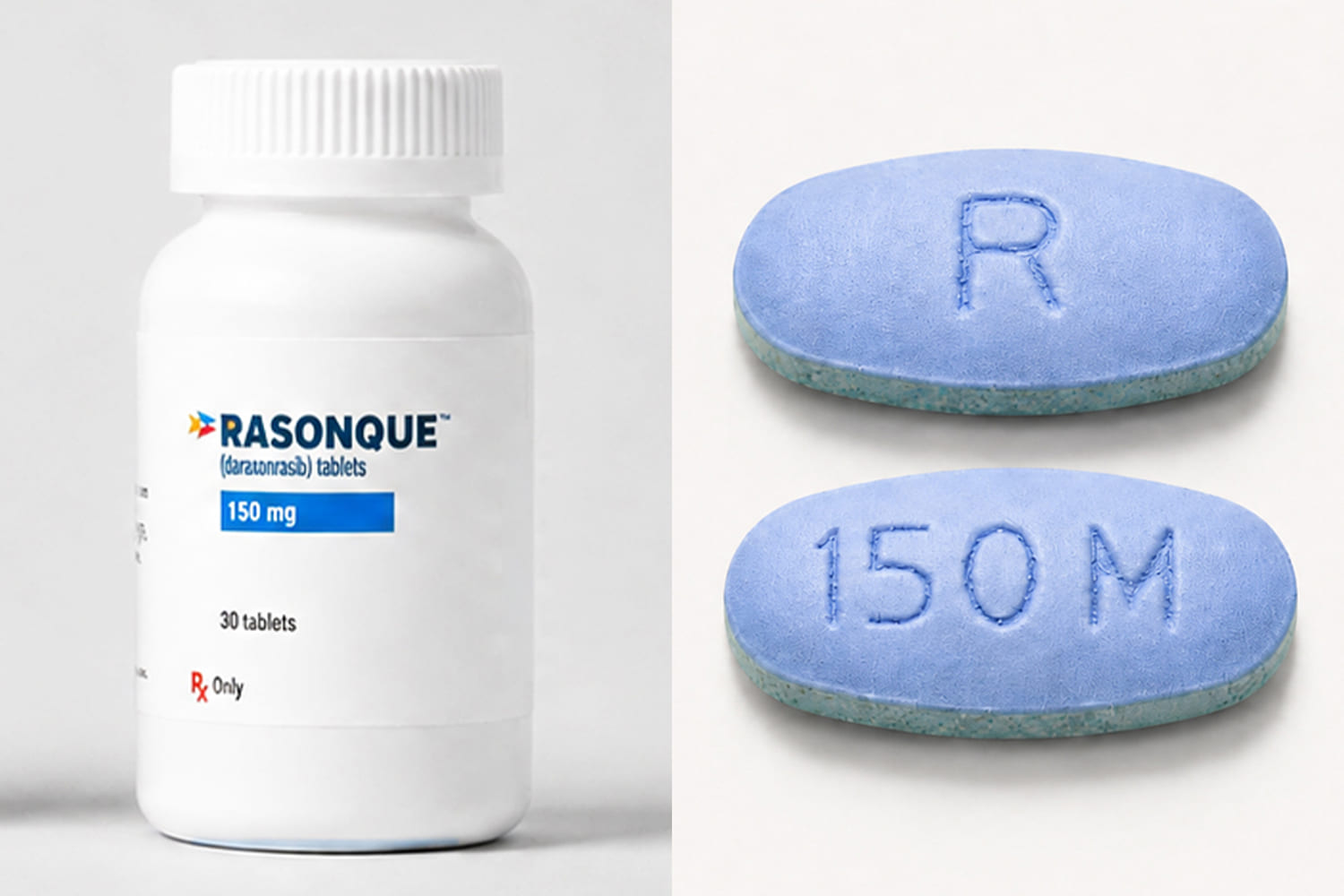
For decades, receiving a diagnosis of metastatic pancreatic cancer felt like a sentence with no appeal. Oncologists leaned on harsh chemotherapy regimens because they simply didn't have anything else. That dark era shifted dramatically when the Food and Drug Administration approved daraxonrasib, sold under the brand name Rasonque. Developed by Revolution Medicines, this daily oral medication is the first targeted therapy designed to hit the notorious RAS protein mutations that drive over 90% of pancreatic tumors.
If you or someone you love has stared down this brutal diagnosis, you know why this matters. Traditional chemotherapy treats cancer by carpet-bombing the body, killing healthy cells alongside malignant ones. Patients suffer through severe fatigue, nerve damage, and immune crashes, often stopping treatment because the side effects become unbearable. Rasonque works differently. It acts as a molecular clamp, shutting down runaway cellular growth signals at their source without requiring doctors to crack open an impossible biological target.
Breaking the Undruggable Barrier
For thirty years, scientists called the KRAS protein the holy grail of oncology. They also called it undruggable.
Most small molecule inhibitors need a tiny pocket or crevice on the surface of a protein to latch onto and block its function. KRAS has a smooth, greasy exterior that gives medicines nothing to grab. Researchers spent decades walking out of medical conferences empty-handed, wondering if they would ever find a way past this structural defense.
Rasonque bypasses the traditional binding problem by using a helper protein, creating a sticky molecular bridge that locks onto active RAS and neutralizes it. Because it targets the active state of the protein rather than a single specific mutation site, it works across a wide range of patients whose tumors rely on RAS signaling.
What the Clinical Trial Numbers Actually Show
The approval rests on the phase 3 RASolute 302 trial, which evaluated five hundred patients with previously treated metastatic pancreatic cancer. The results stunned researchers who are used to measuring progress in weeks rather than months.
Patients receiving standard chemotherapy lived for a median of 6.7 months. Those taking daily daraxonrasib achieved a median overall survival of 13.2 months.
Doubling survival time in metastatic pancreatic cancer is unprecedented. Beyond the raw timeline, progression-free survival climbed to 7.2 months compared to 3.6 months on chemotherapy. Tumors shrank in nearly a third of the patients taking the pill, offering a degree of physical relief that legacy treatments rarely provide.
Living with Rasonque
No targeted therapy is completely free of drawbacks. Patients taking Rasonque still experience side effects, most commonly severe skin rashes, mouth sores, nausea, and fatigue.
Yet the day-to-day reality for trial participants looked starkly different from conventional chemotherapy. People stayed on the medication longer because the toxicity didn't wreck their entire bodies. They maintained their independence, delayed worsening pain, and preserved their quality of life during months that would otherwise have been spent recovering in infusion clinics. Former senator Ben Sasse publicly shared how the experimental pill helped manage his symptoms and shrink tumor volume after his own terminal diagnosis, bringing national attention to the drug before its formal clearance.
Practical Next Steps for Patients
If you are navigating a pancreatic cancer diagnosis right now, you need to talk to your oncology team immediately.
- Verify your mutation status: Ask your doctor if your pathology report confirms a RAS or KRAS mutation. While Rasonque has broad multi-selective capabilities, knowing your specific molecular profile guides treatment timing.
- Review treatment history: The current FDA indication covers adult patients with metastatic disease who have already received at least one prior systemic therapy or cannot tolerate multi-agent chemotherapy. If you are currently responding well to a first-line therapy, oncologists generally advise against switching prematurely.
- Explore financial and access support: Revolution Medicines has priced the drug high, but insured patients often qualify for commercial co-pay assistance programs that significantly lower out-of-pocket costs. Ask your clinic's financial navigator to look into assistance options right away.
This approval doesn't mean the fight against pancreatic cancer is over. Cancers eventually learn to adapt and build resistance to targeted therapies. But doubling life expectancy transforms an impossible prognosis into a manageable chronic condition for many families, marking the biggest leap forward this field has ever witnessed.


