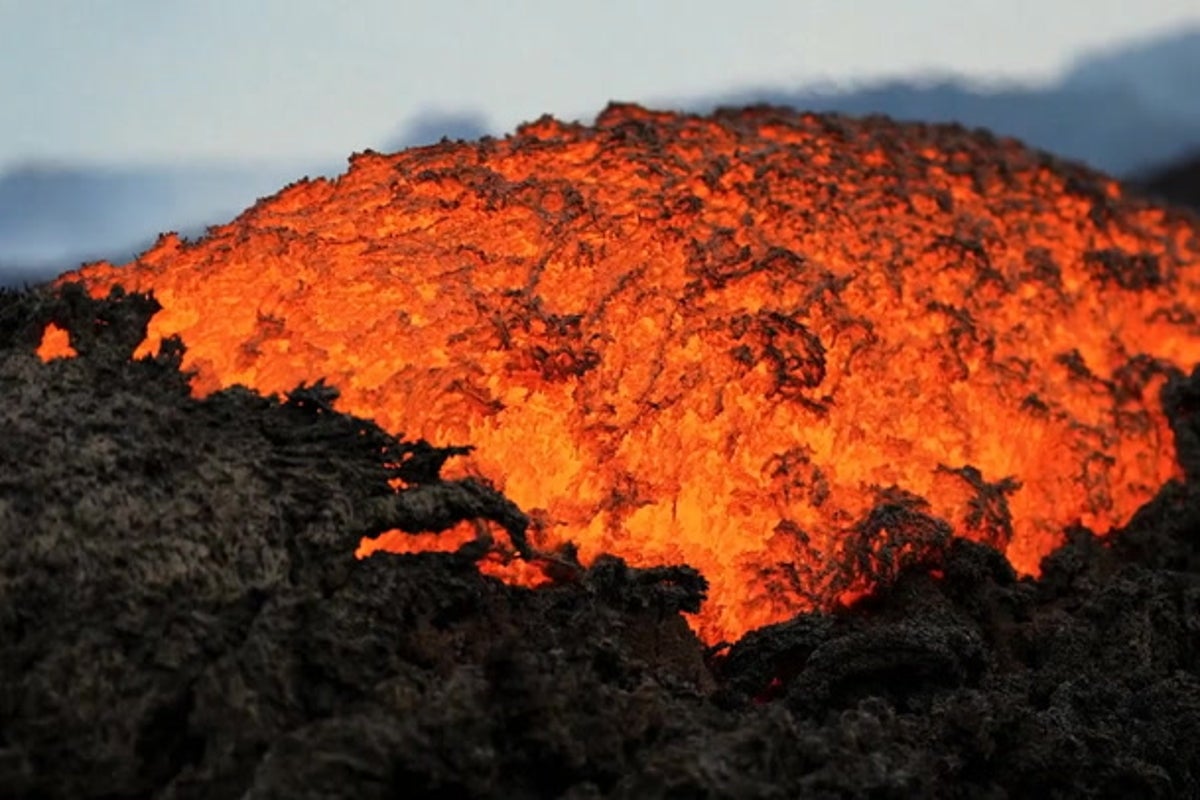
The headlines always look exactly the same whenever Mount Etna erupts. You see words like "chaos," "danger," and "terror" splashed across international news sites. Screaming fonts paint a picture of a continent on the brink of a volcanic apocalypse. If you just look at the dramatic photos of molten rock shooting into the dark Sicilian sky, it's easy to assume that local towns are running for their lives.
That narrative is completely wrong. Meanwhile, you can explore similar stories here: Why Official Aid Alone Won't Save Venezuela After The Double Earthquake.
When the news broke that a fresh Mount Etna eruption was underway on the eastern flank of the mountain, locals in Catania didn't panic. They didn't pack their bags. They went out for espresso. Living next to Europe’s most restless geological giant changes your perspective on what constitutes a real crisis. The mountain has been putting on these fiery displays for over 500,000 years. This latest event is just business as usual for the volcano, even if it looks like the end of days on your social media feed.
Understanding what is actually happening on the ground requires looking past the sensationalism. The Italian Civil Protection Department recently bumped the alert level from green to yellow. The National Institute of Geophysics and Volcanology, known locally as the INGV, noted that lava started spilling from an active vent at an altitude of roughly 3,000 meters. That sounds incredibly high and intimidating. In reality, that elevation keeps the danger zone completely isolated from the vibrant towns scattered across the lower slopes. To explore the full picture, check out the excellent article by USA.gov.
The Reality Behind the June 2026 Mount Etna Eruption
The activity that kicked off in late June centered around the eastern flank of the mountain. Volcanic tremors started ticking upward, which is the standard geological signal that magma is pushing its way toward the surface. Soon after, glowing rivers of rock began winding down the uninhabited slopes.
It looks terrifying on a drone camera. Up close, it is a slow, predictable crawl. The lava from Etna is highly viscous. That means it moves like thick molasses rather than a rushing river of water. You can literally walk away from it. The primary zone receiving this molten debris is the Valle del Bove, a massive, barren horse-shoe-shaped depression that has acted as the volcano’s natural spillway for millennia. No one lives there. No houses are being swallowed up.
The yellow alert level isn't a call for evacuation. It's a logistical trigger for scientists and regional authorities to step up their game. They increase satellite observation, deploy more thermal sensors, and restrict access to the highest trekking trails. The real hazard to ordinary people isn't the red-hot rock. It's the airborne dust.
When the summit craters explode, they shred molten material into tiny fragments of glass and rock. This volcanic ash climbs thousands of meters into the atmosphere, creating dark, heavy plumes. If the wind blows south, that ash drops right onto the city of Catania and its neighboring villages. It doesn't burn houses down, but it coats everything in a gritty, black powder. It ruins windshields, clogs gutters, and makes roads incredibly slick. The local airport occasionally shuts down for a few hours because jet engines don't mix well with airborne glass, but things usually return to normal as soon as the wind shifts.
Why This Volcano Defies Normal Geology
Most people learn in school that volcanoes form directly on top of tectonic plate boundaries or over isolated hot spots like Hawaii. Etna breaks the rules. It sits right in front of the subduction zone where the African plate is sliding beneath the Eurasian plate.
New data published by geologists reveals that Etna's plumbing system is far more bizarre than previously thought. The volcano draws its magma from staggering depths of nearly 80 kilometers down in the earth. This ultra-deep source allows a constant, high-volume supply of gas and molten material to rise continuously. This explains why the mountain is almost never truly silent. It's an open-conduit system. Because the volcanic vents are mostly open, pressure rarely builds up to the catastrophic levels seen at closed systems like Mount Vesuvius near Naples.
Instead of waiting centuries for one massive, explosive disaster, Etna prefers to vent its energy through hundreds of smaller temper tantrums every single year. The mountain has five distinct summit craters that constantly shift in dominance. A crater called Voragine might dominate one year, while the Southeast Crater Complex takes over the next. There are also more than 300 silent vents scarred across the flanks of the mountain. These flank fissures are what volcanologists watch closest, because a low-altitude crack can bring lava flows much closer to human infrastructure.
The Historical Stakes and the Myth of 1669
To understand why scientists take the yellow alert seriously, you have to look at history. The ultimate worst-case scenario for Sicily happened in March of 1669. That was the year the volcano truly lost its temper.
A massive fissure tore open near the town of Nicolosi, far below the main summit. Over the course of four brutal months, the mountain expelled almost a billion cubic yards of molten material. The slow-moving wall of rock marched all the way to the coast, burying a dozen villages and smashing through the western defensive walls of Catania. It even redefined the coastline of the island.
That historical disaster is why the INGV monitors every single tremor with such obsession today. But the world has changed since the 17th century. We now possess advanced remote sensing tools, infrasound detectors that listen to the internal acoustic screams of the magma channels, and real-time gas analysis kits.
Sicilians have also gotten incredibly good at active volcanic defense. During major eruptions in 1983 and 1992, engineers used controlled explosives and massive earthen dams to successfully divert advancing lava streams away from threatened villages. It was the first time in human history that mankind successfully dictated where a volcanic flow could go.
Living with the Beast on a Daily Basis
Step away from the science and talk to the people who grow grapes on the lower slopes. They don't view the mountain as an enemy. They call it Muncibbeḍḍu or simply Idda, which means "She" in the Sicilian dialect.
The relationship is deeply symbiotic. The constant dusting of volcanic ash acts as a hyper-potent, mineral-rich fertilizer. The soil around the base of the mountain is packed with potassium, phosphorus, and iron. This unique ground chemistry is why the region produces some of the most sought-after wines in Europe. The vineyards of Etna produce crisp, smoky nerello mascalese and carricante grapes that thrive in the dark, volcanic earth. Orchards of blood oranges, pistachios, and olives carpet the lower valleys, turning the immediate footprint of an active volcano into one of the most productive agricultural zones in Italy.
The risk is simply the price of admission for living in paradise. Locals clean the black ash off their balconies with brooms, wait out the occasional flight delay, and keep an eye on the mountain's nightly glow. It's a spectacular backdrop to daily life, not a constant threat of annihilation.
What to Do If You Are Planning a Trip Right Now
If you have a vacation booked for Sicily during an active phase, don't cancel your flights. You just need to adjust your expectations and follow a few practical protocols.
First, get your information from the source, not from panicked travel forums. Check the official daily updates from the INGV Catania website. They provide precise maps of active flows and cloud trajectories.
Second, expect restrictions on the upper summit. When the alert level sits at yellow, independent hiking above 2,000 meters is usually banned. Do not attempt to sneak past the trail barriers. The high-altitude terrain can change in seconds if a new vent opens or if a crater rim suffers a structural collapse.
Third, book a certified alpine volcanological guide if you want to see the action safely. These professionals know the topography intimately and carry specialized communication gear linked directly to the monitoring stations. They can take you to safe vantage points on the lower craters where you can witness the glowing flows without putting yourself in the path of unpredictable gas bursts or falling cinders.
Finally, keep a flexible itinerary. If the wind dumps ash on Catania, rent a car and head to the beaches of Taormina or the ancient ruins of Syracuse for the day. The mountain will do what it wants, and the best way to enjoy it is to adapt to its rhythm. Clear your windshield, watch the evening fire show from a safe distance, and enjoy your wine.